Industrial salt is a critical raw material in various industries, including chemical manufacturing, food processing, and de-icing applications. The efficient and reliable transport of industrial salt is essential for maintaining production efficiency and product quality. Pneumatic conveying technology has emerged as a sophisticated solution for handling bulk materials like industrial salt, offering advantages such as dust-free operation, reduced labor costs, and enhanced safety compared to traditional methods like belt conveyors or trucks.
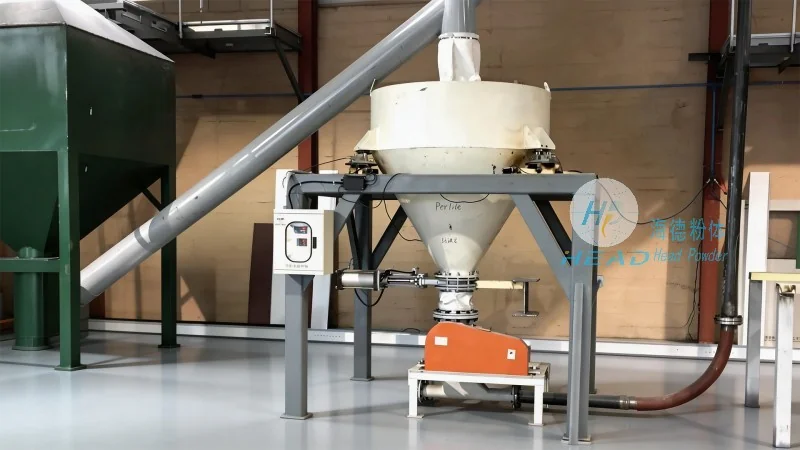
Advantages of Pneumatic Conveying for Industrial Salt Transport
Pneumatic conveying systems utilize air to transport industrial salt from storage silos to processing units or packaging areas. This method eliminates the need for manual handling and minimizes the risk of material contamination. The technology is particularly suitable for handling fine or powdery salt, as it prevents dust dispersion and ensures a clean working environment. Additionally, pneumatic conveying systems can be designed to operate at low or high pressures, allowing for flexible transport distances and heights. The use of air as the conveying medium also reduces the wear and tear on equipment, leading to lower maintenance costs over time.
Design Considerations for Industrial Salt Pneumatic Conveying Systems
The successful implementation of a pneumatic conveying system for industrial salt depends on several key design factors. First, the system must be tailored to the specific characteristics of the salt, including its particle size, moisture content, and flowability. For example, fine-grained salt may require a higher air velocity to ensure proper transport, while coarser salt can be handled with lower velocities. The system design also considers the distance and elevation changes between the salt source and the destination. Headpowder, a leading engineering company based in Shandong, China, specializes in designing customized pneumatic conveying solutions that address these variables effectively. Their expertise in material handling engineering ensures that the systems are optimized for maximum efficiency and minimal energy consumption.
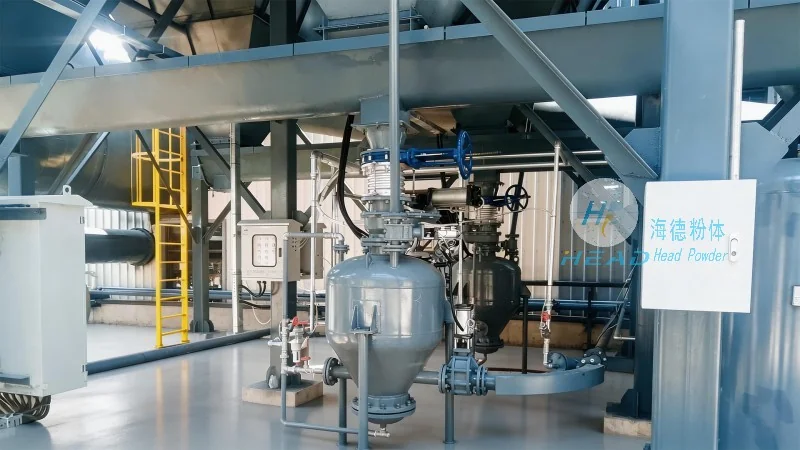
Optimization Strategies for Industrial Salt Transport with Pneumatic Conveying
Optimizing the performance of pneumatic conveying systems for industrial salt involves several strategies. One key approach is the use of appropriate air flow rates and pressure levels. By adjusting these parameters, the system can achieve the desired transport capacity while minimizing energy usage. Another strategy is the implementation of inline filters and cyclones to separate any entrained air from the salt, preventing material loss and maintaining product purity. Headpowder employs advanced control systems that monitor and adjust these parameters in real-time, ensuring consistent performance. Furthermore, the company considers the overall process integration, ensuring that the pneumatic conveying system aligns with other production equipment, such as mixers or packaging machines. This integration reduces downtime and improves the overall productivity of the industrial salt processing facility.
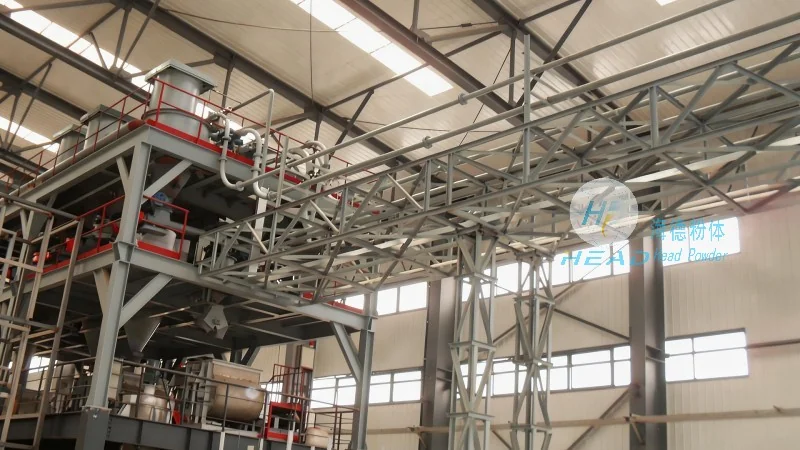
Case Studies and Real-World Applications
Headpowder has successfully implemented pneumatic conveying systems for industrial salt transport in various industrial settings. For instance, a chemical plant in Shandong, China, upgraded its salt handling process to a pneumatic system, resulting in a 30% reduction in labor costs and a 20% decrease in material loss. Another client, a food processing company, utilized a low-pressure pneumatic conveying system to transport salt from storage to production lines, achieving a dust-free environment and improved product quality. These case studies highlight the effectiveness of pneumatic conveying technology in enhancing operational efficiency and safety in industrial salt transport.
Conclusion and Future Trends
Pneumatic conveying technology continues to play a vital role in the efficient transport of industrial salt. As industries strive for higher productivity and sustainability, the optimization of these systems becomes increasingly important. Companies like Headpowder are at the forefront of developing advanced pneumatic conveying solutions that meet the evolving needs of industrial salt processing. By focusing on design customization, energy efficiency, and process integration, these systems not only improve operational performance but also contribute to a safer and more sustainable industrial environment. The future of industrial salt transport is likely to see further advancements in pneumatic conveying technology, driven by innovations in control systems and material handling engineering.




