HeadPowder, a leading engineering firm based in Shandong, China, specializes in providing comprehensive solutions for the pneumatic conveying of sulfur powder. This article explores several effective strategies and systems designed to enhance the efficiency, safety, and reliability of sulfur powder handling in industrial applications.
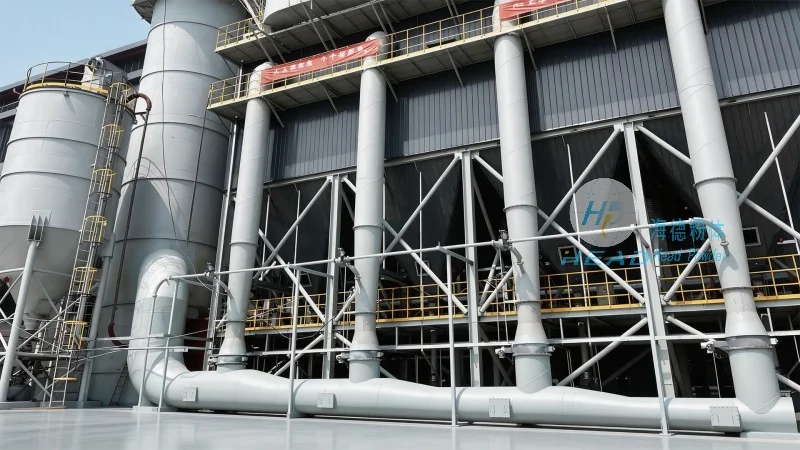
Understanding Pneumatic Conveying Systems for Sulfur Powder
Pneumatic conveying is a critical process in industries dealing with bulk solid materials like sulfur powder. It involves transporting the material through a pipeline using air or other gases as the conveying medium. The primary goal is to move the powder from a source, such as a storage silo or a production line, to a destination like a processing unit or a storage facility. Effective pneumatic conveying systems must address challenges like material segregation, blockage, and dust control to ensure smooth operation and product integrity.
Key Considerations in Sulfur Powder Pneumatic Conveying
Before selecting a pneumatic conveying solution, several factors must be considered to ensure optimal performance. The first is the particle size and density of the sulfur powder, as these properties directly impact the conveying velocity and pressure requirements. Larger or denser particles may require higher air velocities and pressure differentials to move efficiently. Additionally, the moisture content of the sulfur powder is crucial; excessive moisture can lead to clumping or blockages in the pipeline, necessitating pre-drying or moisture control measures.
Option 1: Dilute Phase Pneumatic Conveying
Dilute phase pneumatic conveying is a common method for transporting sulfur powder over moderate distances. In this system, the powder is suspended in a high-velocity air stream, typically at velocities ranging from 20 to 30 meters per second. The air-powder mixture flows through the pipeline, and the powder is separated from the air at the destination using a cyclone or a filter. This method is suitable for applications where the conveying distance is relatively short, and the material is free-flowing. It offers advantages such as low pressure requirements and relatively low capital costs compared to other systems. However, it may not be ideal for long-distance or high-volume applications due to the higher energy consumption associated with maintaining high air velocities.
Option 2: Dense Phase Pneumatic Conveying
Dense phase pneumatic conveying, also known as low velocity conveying, is another effective solution for sulfur powder transport. Unlike dilute phase systems, dense phase systems operate at lower air velocities, typically around 5 to 10 meters per second, and higher pressure differentials. The powder is conveyed in a dense, slurry-like state, which reduces the risk of segregation and blockages. This method is particularly suitable for long-distance conveying or when handling materials that are prone to clumping or abrasive wear on the pipeline. Dense phase systems often use positive displacement blowers or compressors to generate the necessary pressure, ensuring a more controlled and stable flow. The primary advantage is the ability to transport larger quantities of material over longer distances with less energy consumption compared to dilute phase systems. However, the higher pressure requirements and more complex equipment may increase the initial investment and operational costs.
Option 3: Hybrid Pneumatic Conveying Systems
Hybrid pneumatic conveying systems combine elements of both dilute and dense phase systems to achieve optimal performance for specific applications. These systems typically use a combination of high and low velocity zones along the pipeline, allowing for efficient transport of sulfur powder while minimizing energy consumption and material degradation. For instance, a hybrid system might use a dilute phase approach at the beginning of the pipeline to accelerate the powder and then transition to a dense phase section for the remaining distance. This approach is particularly useful when conveying sulfur powder over varying distances or when dealing with materials that have mixed characteristics, such as varying particle sizes or moisture content. Hybrid systems offer flexibility and adaptability, making them suitable for a wide range of industrial scenarios. However, they require more sophisticated control systems and may have higher maintenance requirements due to the complexity of the design.
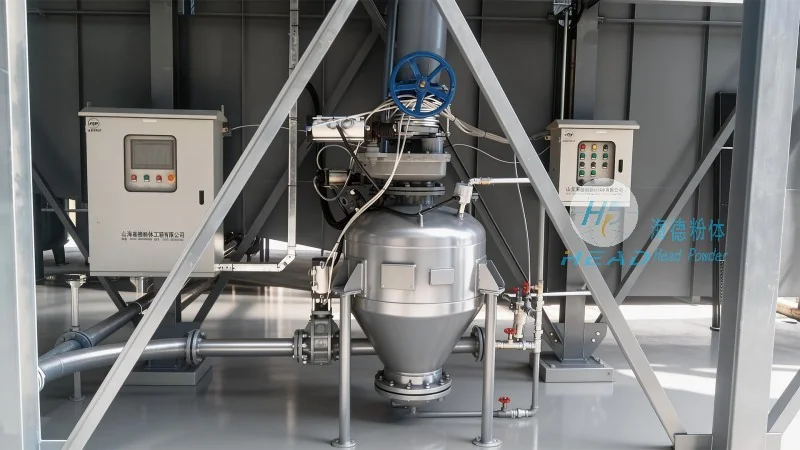
Option 4: Vacuum Pneumatic Conveying
Vacuum pneumatic conveying is a specialized method used for transporting sulfur powder from a source to a destination where the material is collected in a container or a processing unit. This system operates by creating a vacuum at the receiving end, which draws the powder through the pipeline using the air flow. Vacuum systems are particularly effective for applications where the material needs to be transported over short distances or when the source and destination are at different elevations. They are also suitable for handling materials that are sensitive to pressure changes or for situations where the material must be collected in a controlled manner to prevent spillage or contamination. The main advantage of vacuum conveying is the ability to handle materials at lower velocities, reducing the risk of particle degradation and improving product quality. However, vacuum systems may have higher energy consumption compared to positive pressure systems, especially for long-distance or high-volume applications. Additionally, the equipment used in vacuum systems, such as vacuum pumps, may require more maintenance and have higher operational costs.
Equipment and Components for Sulfur Powder Pneumatic Conveying
Regardless of the chosen pneumatic conveying system, several key components are essential for efficient operation. The first is the material feed system, which includes hoppers, feeders, and rotary valves that ensure a consistent and controlled flow of sulfur powder into the pipeline. The hopper design is critical, as it must prevent material segregation and provide sufficient storage capacity to maintain a steady feed rate. The feeder, typically a screw or a rotary valve, regulates the flow rate and prevents overfilling or underfilling, which can lead to blockages or uneven conveying.
The pipeline itself is another critical component, as it must be designed to withstand the pressure and temperature conditions of the conveying process. For sulfur powder, which can be abrasive and corrosive, the pipeline is often made of materials such as stainless steel or polyethylene to prevent wear and degradation. The pipeline diameter and length are also important factors, as they directly impact the pressure drop and energy consumption of the system. Proper insulation may be required to maintain the temperature of the sulfur powder, especially if it is being transported in a liquid or semi-liquid state.
The conveying air system, including the compressor or blower, is responsible for generating the necessary pressure or vacuum to move the sulfur powder. The choice of equipment depends on the system type (dilute, dense, or vacuum) and the specific requirements of the application. For example, a positive displacement blower is commonly used in dense phase systems due to its ability to maintain high pressure, while a centrifugal blower is suitable for dilute phase systems due to its high flow rate and low pressure capability. The air filtration system is also essential to remove dust and particulates from the conveying air, preventing contamination of the sulfur powder and ensuring the longevity of the equipment.
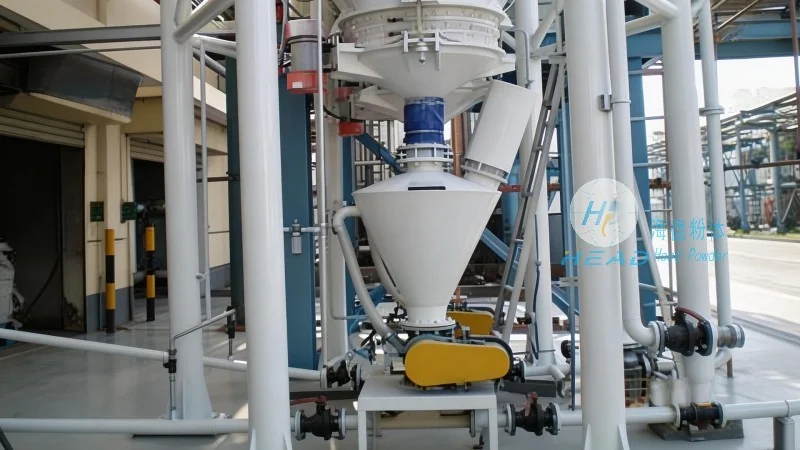
The separation and collection system is the final component of the pneumatic conveying process. This includes cyclones, filters, and dust collectors that separate the sulfur powder from the air stream at the destination. The design of the separation system is critical to ensure high efficiency and minimal loss of material. For example, a cyclone separator uses centrifugal force to separate the powder from the air, while a bag filter or cartridge filter captures fine particles. The collected powder is then discharged into a storage bin or a processing unit, completing the conveying cycle.
Advantages and Challenges of Pneumatic Conveying for Sulfur Powder
Pneumatic conveying offers several advantages for the transport of sulfur powder. One of the primary benefits is the ability to handle the material in a closed system, which reduces dust emissions and improves safety in the workplace. This is particularly important for sulfur powder, which can be hazardous if inhaled or if it comes into contact with moisture. Closed systems also prevent contamination of the material from external sources and maintain product integrity throughout the conveying process.
Another advantage is the flexibility of pneumatic conveying systems. They can be designed to handle a wide range of material characteristics, including varying particle sizes, moisture content, and flowability. This makes them suitable for a variety of industrial applications, from small-scale production lines to large-scale bulk handling operations. Pneumatic conveying also allows for the integration of other processes, such as mixing or drying, into the conveying system, improving overall efficiency and reducing the need for separate equipment.
However, pneumatic conveying also presents some challenges. One of the main challenges is the high energy consumption associated with maintaining the air flow and pressure required for efficient conveying. This can increase operational costs, especially for large-scale or long-distance applications. Additionally, the equipment used in pneumatic conveying systems can be complex and require regular maintenance to ensure optimal performance. Blockages and clogs are also common issues, particularly with materials that are prone to clumping or have high moisture content. Proper system design and regular maintenance are essential to mitigate these challenges and ensure reliable operation.
Conclusion
HeadPowder, with its expertise in engineering solutions, provides tailored pneumatic conveying systems for the efficient and safe transport of sulfur powder. By considering factors such as particle size, moisture content, and conveying distance, industries can select the most appropriate system—whether it be dilute phase, dense phase, hybrid, or vacuum—to meet their specific needs. The key to successful pneumatic conveying lies in the proper design and integration of equipment, as well as regular maintenance and monitoring. With the right system in place, sulfur powder can be transported efficiently, reducing operational costs and improving overall productivity. HeadPowder's commitment to quality and innovation ensures that clients receive reliable and effective solutions for their pneumatic conveying requirements.




