HeadPowder, a leading provider of industrial material handling solutions, specializes in the design and manufacturing of advanced pneumatic conveying systems tailored for various bulk materials, including limestone powder. This article provides an overview of a typical limestone powder pneumatic conveying equipment, detailing its structural components, operational principles, and key features that ensure efficient and reliable material transport in industrial applications.
Company Profile and Location
HeadPowder is represented by Shandong HeadPowder Engineering Co., Ltd., a company based in Shandong, China. With a strong commitment to innovation and quality, HeadPowder delivers customized pneumatic conveying solutions that meet the specific needs of clients across diverse industries. The company’s headquarters and manufacturing facilities are located in Shandong, providing a solid foundation for research, development, and production of high-performance material handling equipment.
Introduction to Limestone Powder Pneumatic Conveying Equipment
Limestone powder, a widely used raw material in industries such as construction, chemical manufacturing, and environmental treatment, requires efficient and dust-free transport methods to maintain product quality and operational safety. Pneumatic conveying systems offer an effective solution by utilizing air pressure to move dry powders through pipelines, eliminating the need for mechanical components like belts or buckets that can cause contamination or wear. The equipment discussed here is specifically designed for handling limestone powder, addressing the unique challenges associated with its fine particle size and potential for dust generation.
Structural Components and Working Principle
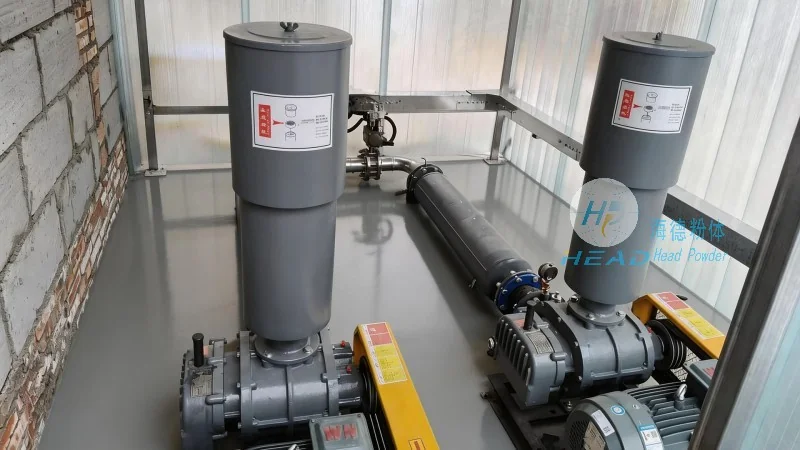
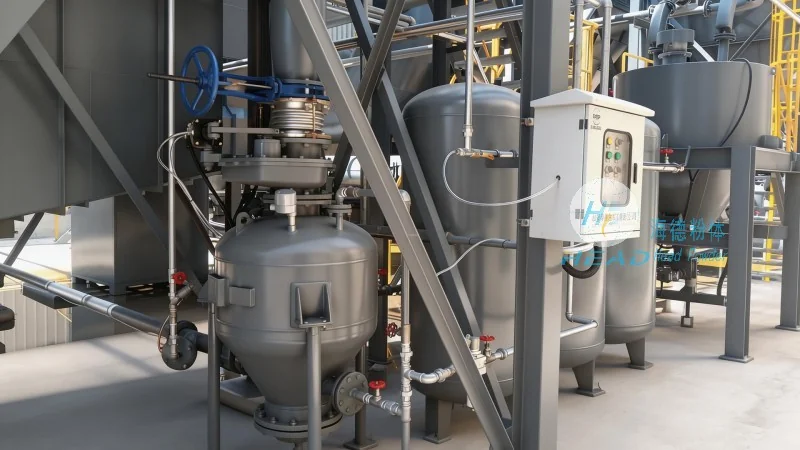
The limestone powder pneumatic conveying equipment typically consists of several key components, each playing a critical role in the material transport process. The main structural elements include a hopper for material storage, a feeder to control the flow rate, a conveying line with appropriate pipe diameter and length, a dust collector to capture airborne particles, and a control system to regulate air pressure and flow. The working principle involves the following steps: first, limestone powder is fed from the hopper into the feeder, which meters the material at a consistent rate. Then, the feeder introduces the powder into the conveying line, where it is mixed with compressed air. The air-powder mixture is then propelled through the pipeline by the pressure differential created by the air compressor. At the receiving end, the mixture is separated using a cyclone or other separation device, allowing the limestone powder to be deposited into a storage bin or processing unit, while the air is filtered and returned to the system or released to the atmosphere.
Key Features and Technical Specifications
HeadPowder’s limestone powder pneumatic conveying equipment is engineered with several features that enhance performance and reliability. These include: a robust hopper design to prevent material bridging and ensure consistent feeding; a variable-speed feeder for precise control of material flow, which is crucial for maintaining stable conveying rates; a high-efficiency dust collector that minimizes environmental impact and ensures compliance with air quality regulations; and an integrated control system that monitors pressure, flow, and temperature, providing real-time feedback and automatic adjustments to optimize operation. Technical specifications may vary based on the specific application requirements, but typical systems can handle limestone powder with particle sizes ranging from 10 to 200 microns, with conveying capacities up to several tons per hour, depending on the system configuration and pipeline layout.
Advantages of Pneumatic Conveying for Limestone Powder
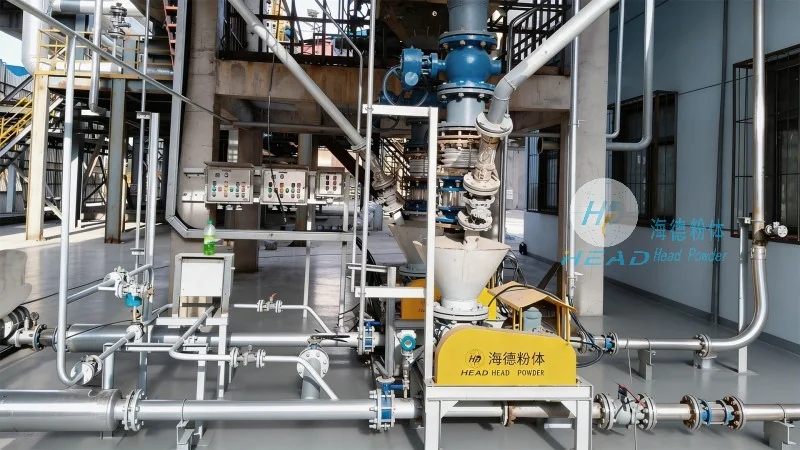
Compared to traditional mechanical conveying methods, pneumatic conveying offers several advantages for limestone powder transport. These include: the ability to handle fine powders without causing particle degradation or segregation; reduced risk of contamination due to the enclosed system; lower maintenance requirements as there are fewer moving parts; and the flexibility to transport materials over long distances or to multiple destinations using branching pipelines. Additionally, pneumatic systems can be designed to operate in a closed loop, minimizing dust emissions and improving workplace safety. These benefits make pneumatic conveying an ideal choice for industries that require high-purity limestone powder and need to maintain strict environmental standards.
Applications and Industry Impact
The limestone powder pneumatic conveying equipment is widely used in various industrial applications where bulk material handling is essential. In the construction industry, it is used to transport limestone powder for cement production, providing a reliable source of raw material for concrete and mortar. In the chemical industry, it facilitates the transport of limestone for flue gas desulfurization processes, helping to reduce emissions and improve environmental compliance. In environmental applications, the equipment is used to handle limestone for water treatment and soil remediation, contributing to sustainable practices. By ensuring efficient and safe material transport, the equipment supports the productivity and sustainability of these industries, while also aligning with the growing demand for clean and efficient industrial processes.




