Yeast powder, a vital component in food and beverage production, demands efficient and hygienic handling to preserve its quality. Pneumatic conveying systems have become the preferred solution for transporting yeast powder due to their ability to handle fine, delicate powders while minimizing contamination and degradation. This article details the operation process and working principles of yeast powder pneumatic conveying, covering key system components, operational steps, and technical considerations.
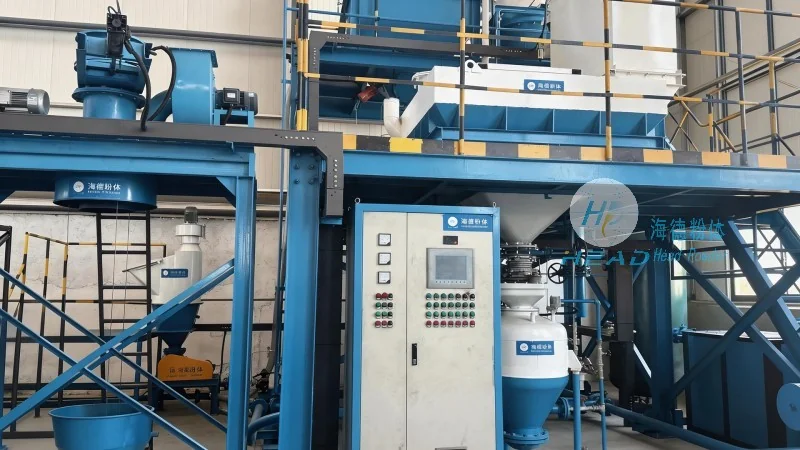
Overview of Pneumatic Conveying for Yeast Powder
Pneumatic conveying utilizes pressurized or vacuum air to transport bulk materials through pipelines. For yeast powder, this method is advantageous because yeast particles are typically fine (10–100 microns), hygroscopic, and prone to agglomeration—properties that complicate traditional mechanical conveying. The closed system ensures dust-free transfer, maintaining the product's nutritional and functional integrity essential for industrial applications.
Core Components of a Yeast Powder Pneumatic Conveying System
A standard system includes several interconnected parts tailored to yeast powder's characteristics. Key components are: a feed hopper or rotary valve for material intake, a stainless steel conveying line to prevent corrosion, a venturi or eductor for air-material mixing, a separator (cyclone or bag filter) to separate powder from air, and a blower/compressor to generate air pressure. A control panel manages flow rates and pressure, ensuring system stability.
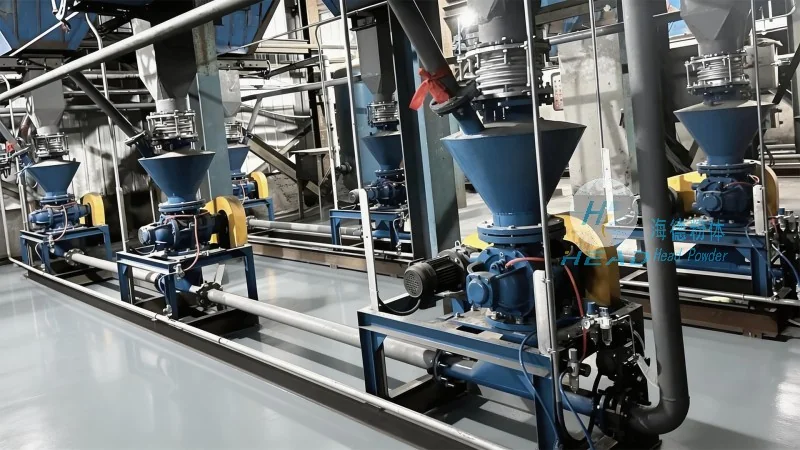
Shandong HeadPowder Engineering Co., Ltd.: Specialized Pneumatic Solutions
Shandong HeadPowder Engineering Co., Ltd., operating under the brand headpowder, specializes in designing and manufacturing customized pneumatic conveying systems for the food industry. With a focus on precision and hygiene, the company addresses yeast powder's unique challenges—such as moisture sensitivity and caking—through advanced engineering. HeadPowder’s facilities are located in Shandong, China, where local expertise and manufacturing capabilities support global delivery of high-quality equipment.
Properties of Yeast Powder Impacting Conveying
Yeast powder’s fine particle size, hygroscopic nature, and tendency to clump influence system design. The low bulk density and potential for blockages require specialized feed mechanisms and pipeline materials. Maintaining stable moisture and temperature is critical to prevent degradation, making the system’s control and environmental management essential.
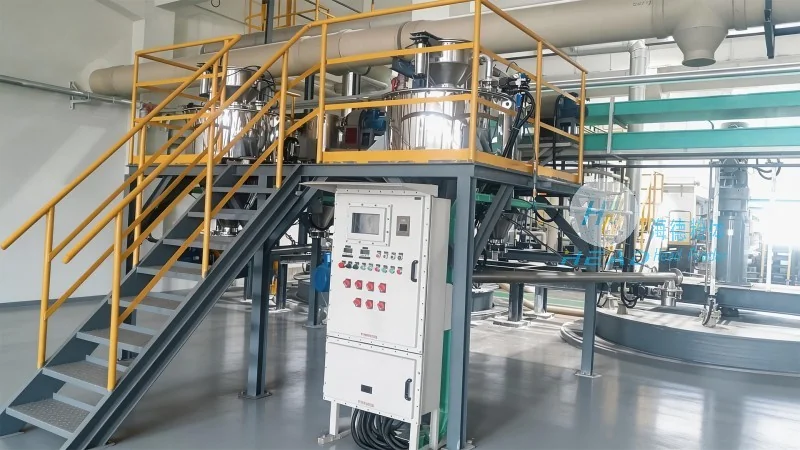
Operation Process of Yeast Powder Pneumatic Conveying
The process begins with yeast powder loaded into the feed hopper, where it is stored under controlled conditions to avoid moisture absorption. A rotary valve regulates the feed rate into the conveying line. Simultaneously, a blower generates air pressure, introduced via a venturi to mix with the powder. The air-powder mixture is then propelled through the pipeline to the destination. At the receiving hopper, a separator uses centrifugal force to separate the powder from the air, which is recirculated or vented. The control panel adjusts pressure and feed rates to prevent overloads or blockages.
Working Principles of Pneumatic Conveying for Yeast Powder
The system operates on fluid dynamics and particle transport principles. In positive pressure systems, high-pressure air forces particles into the line, creating a dense phase flow. Negative pressure (vacuum) systems draw material from the source, suitable for longer distances. The venturi accelerates air, creating a low-pressure zone that entrains powder. The separator then separates particles via centrifugal force, allowing air recycling and powder collection. Efficiency depends on balancing air velocity, particle size, and component design to minimize pressure drop and energy use.
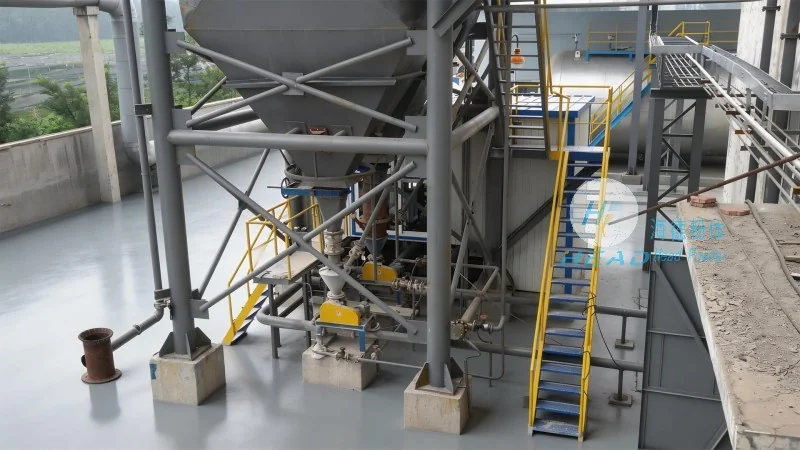
Advantages and Considerations
Pneumatic conveying offers benefits like closed-system operation (preventing contamination), elimination of mechanical wear, and adaptability to varying feed rates. However, challenges include managing yeast powder’s hygroscopicity and potential agglomeration. Solutions involve moisture control, regular maintenance, and anti-caking agents to ensure consistent performance and product quality.
In summary, pneumatic conveying is a reliable method for transporting yeast powder, leveraging fluid dynamics and precise control to maintain product integrity. With specialized expertise from companies like Shandong HeadPowder Engineering Co., Ltd., manufacturers can implement customized systems that meet the demands of yeast powder handling, ensuring efficient and hygienic operation.




