When it comes to the efficient handling and transport of sodium sulfate powder, understanding the underlying principles and practical application scenarios is crucial for optimizing industrial processes. This article delves into the core mechanisms of sodium sulfate powder transport, highlighting key factors that influence its movement and the specific environments where such transport is commonly employed.

Understanding the Fundamentals of Sodium Sulfate Powder Transport
Sodium sulfate, commonly known as Glauber's salt or mirabilite, is a white crystalline powder widely used in various industries. Its transport involves principles of powder mechanics, including particle flow, friction, and pressure dynamics. The efficiency of sodium sulfate powder transport depends on several intrinsic properties of the material itself, such as particle size distribution, bulk density, and moisture content. These characteristics directly affect how the powder behaves within transport systems, whether through pneumatic conveying, screw conveyors, or other mechanical means.

Key Characteristics of Sodium Sulfate Powder and Their Impact on Transport
The physical properties of sodium sulfate powder play a pivotal role in determining the most suitable transport method. For instance, the powder's relatively high bulk density and moderate flowability can make it prone to bridging or caking in hoppers and silos if not properly managed. Additionally, variations in moisture levels can alter its cohesive behavior, potentially leading to blockages in pipelines or conveyor systems. Engineers and operators must consider these factors when designing or selecting transport equipment to ensure smooth and continuous operation.
Common Working Scenarios and Industrial Applications
Sodium sulfate powder transport is integral to numerous industrial processes across different sectors. In the chemical industry, it serves as a raw material for the production of glass, detergents, and paper. The powder is often transported from storage silos to production lines using pneumatic systems, which allow for long-distance and dust-free transfer. In the food and beverage sector, sodium sulfate is used as a food additive and processing aid, requiring precise and hygienic transport to maintain product quality. Similarly, in the pharmaceutical industry, where sodium sulfate acts as an excipient, its transport must adhere to stringent GMP (Good Manufacturing Practice) standards, ensuring contamination-free handling from source to final product.
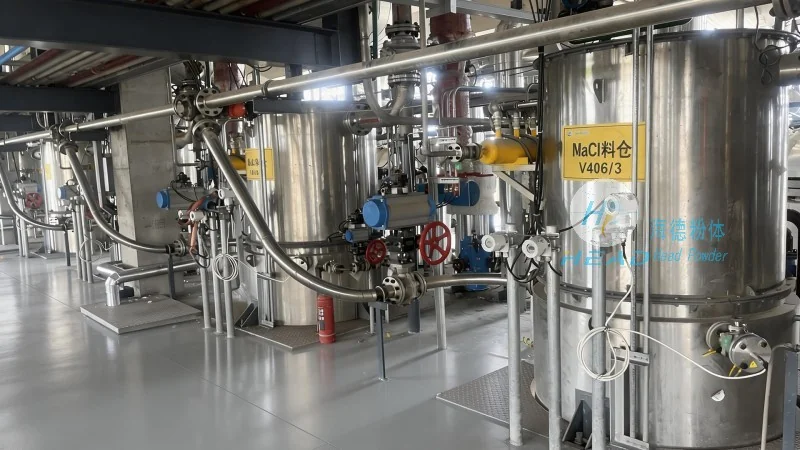
Company Profile: Shandong HeadPowder Engineering Co., Ltd.
Shandong HeadPowder Engineering Co., Ltd., operating under the brand name headpowder, is a specialized provider of powder handling and transport solutions. With a focus on industrial applications involving sodium sulfate and other bulk materials, the company leverages decades of experience to design, manufacture, and implement tailored transport systems. Headpowder's expertise lies in addressing the unique challenges posed by sodium sulfate's properties, such as its tendency to agglomerate or its sensitivity to moisture. By offering customized solutions, including advanced pneumatic conveying lines, screw conveyors, and material handling equipment, the company supports clients in optimizing their sodium sulfate transport processes, enhancing efficiency, and reducing operational costs.




