Classification and Composition of Potash Fertilizer Pneumatic Conveying Systems
Release time:2026-09-14 10:38:47
name of the company:Shandong Headpowder Engineering Co., Ltd.
telephone:156-6277-7102
contacts:Zhang manager
For industrial applications involving the handling of potash fertilizer, the selection and understanding of pneumatic conveying systems are critical to ensure efficient, safe, and cost-effective material transport. This article provides an overview of the classification and key components of potash fertilizer pneumatic conveying systems, tailored to the specific characteristics of this nutrient-rich material.
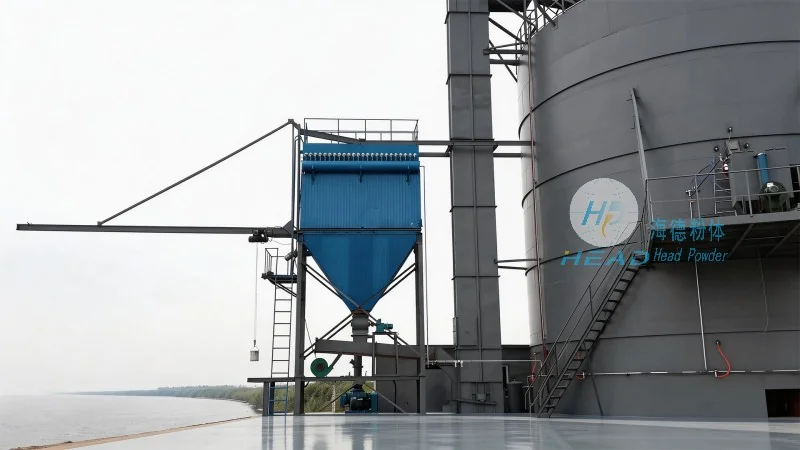
Classification of Potash Fertilizer Pneumatic Conveying Systems
Potash fertilizer, typically in granular or crystalline form, requires specialized pneumatic conveying solutions due to its density, particle size, and potential moisture content. The primary classification of such systems is based on the pressure differential between the conveying line and the ambient environment. Two main categories are widely used in the industry:
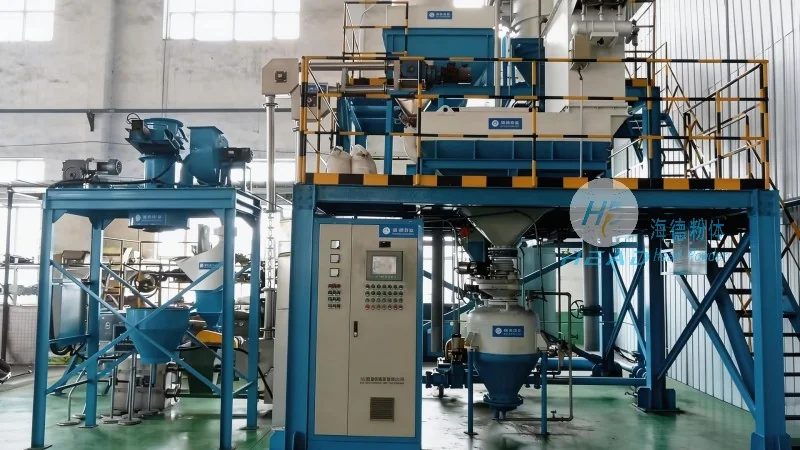
- Positive Pressure Systems: These systems operate by blowing air or a gas mixture into the conveying line, creating a pressure higher than the surrounding atmosphere. The material is drawn into the line by the pressure differential and propelled forward. This type is often preferred for short to medium-distance conveying and when the material is relatively dry and free-flowing.
- Negative Pressure (Vacuum) Systems: In contrast, negative pressure systems create a vacuum in the conveying line, drawing the material and air into the system from the source. The material is then transported by the suction force and expelled at the discharge point. This method is suitable for longer distances and when the material may contain dust or require containment of airborne particles.
Within these broad categories, subtypes exist based on the specific design and application. For instance, dilute-phase systems use high air-to-material ratios, suitable for fine powders, while dense-phase systems employ lower air-to-material ratios, ideal for handling bulk materials like potash granules with minimal degradation. The choice between these subtypes depends on factors such as the material's flowability, required conveying distance, and the need to minimize product degradation or dust generation.
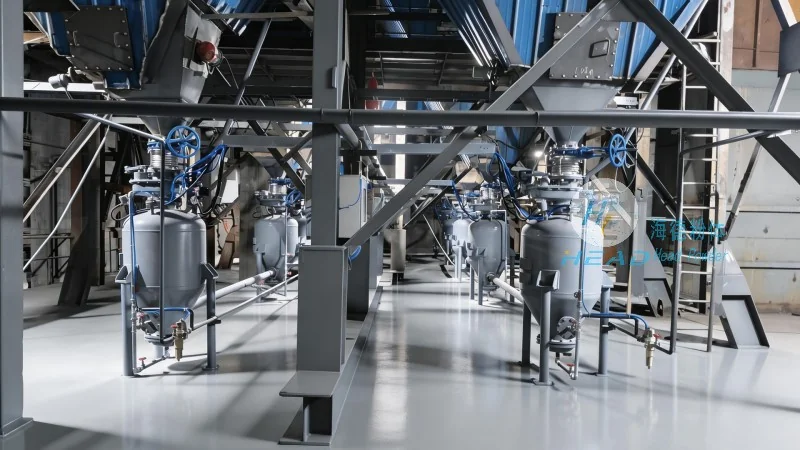
Key Components of Potash Fertilizer Pneumatic Conveying Systems
Regardless of the system classification, potash fertilizer pneumatic conveying systems share several essential components that work in tandem to ensure reliable operation. These components are designed to handle the unique properties of potash, including its chemical stability and potential abrasive nature.




