Shandong HeadPowder Engineering Co., Ltd., headquartered in Shandong, China, specializes in the design and manufacturing of advanced material handling systems. This article provides a detailed overview of the operation process and working principle of an ABS granule material handling system, highlighting its key components, operational steps, and technical performance.
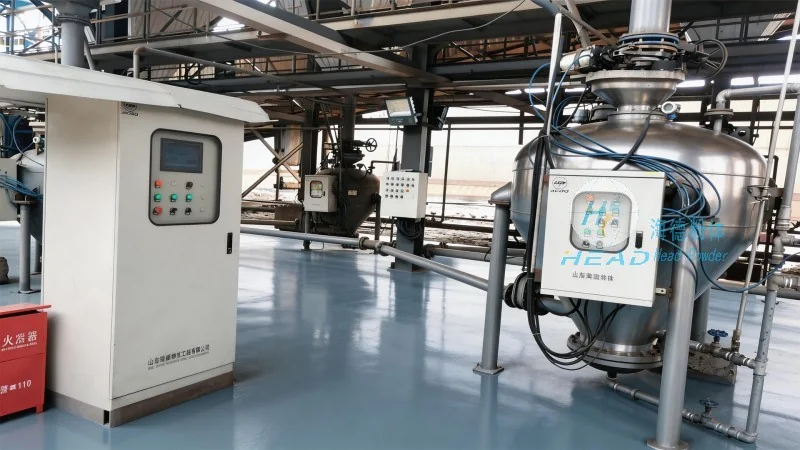
Introduction to the ABS Granule Material Handling System
The ABS granule material handling system is a specialized equipment engineered to efficiently transport and handle ABS (Acrylonitrile Butadiene Styrene) plastic granules from storage to processing areas. ABS is a widely used thermoplastic in various industries, including automotive, electronics, and consumer goods manufacturing. The system ensures safe, reliable, and efficient material transfer, minimizing downtime and improving overall production efficiency.
Key Components and Their Roles
The ABS granule material handling system consists of several critical components, each playing a vital role in the material transfer process. These components include:
1. Feeding Hopper: A hopper that stores the ABS granules and feeds them into the system at a controlled rate. The hopper is typically equipped with a level indicator to monitor the material level and a discharge valve to regulate the flow.
2. Screw Conveyor (or Auger): The primary component for conveying the granules. The screw conveyor consists of a rotating helical screw inside a cylindrical tube. As the screw rotates, it pushes the granules forward along the tube, ensuring continuous and uniform material movement.
3. Drive Unit: A motor and gearbox that powers the screw conveyor. The drive unit provides the necessary torque and speed to move the granules through the system. It is usually equipped with a variable speed drive to adjust the conveying speed based on the material characteristics and required throughput.
4. Control Panel: An electronic control system that monitors and controls the operation of the entire system. The control panel includes sensors for detecting material levels, flow rates, and system status. It also features safety interlocks to prevent accidental operation and ensure operator safety.
5. Exhaust and Dust Collection System: In some designs, an exhaust system is integrated to remove dust and particles generated during the material transfer process. This system helps maintain a clean working environment and prevents dust accumulation in the system.
Operation Process
The operation of the ABS granule material handling system follows a systematic sequence to ensure smooth and efficient material transfer. The process can be broken down into the following steps:
1. Material Loading: The ABS granules are loaded into the feeding hopper from a storage silo or container. The hopper is filled to an appropriate level, ensuring a consistent feed rate.
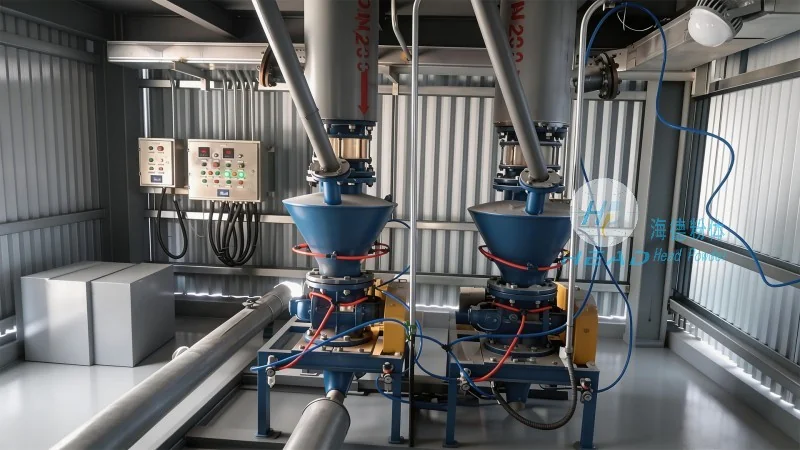
2. Initial Feeding: The discharge valve in the hopper is opened, allowing the granules to flow into the screw conveyor. The control panel monitors the material level in the hopper and adjusts the feed rate as needed.
3. Screw Conveying: The drive unit activates the screw conveyor, causing the helical screw to rotate. The rotating screw pushes the granules forward through the conveyor tube. The speed of the screw is controlled by the variable speed drive to maintain the desired conveying rate.
4. Material Discharge: The granules reach the discharge end of the conveyor and are discharged into the receiving hopper or directly into the processing equipment. The control panel tracks the material flow and stops the system when the receiving hopper is full or when the material level in the feeding hopper is low.
5. System Shutdown: The control panel automatically shuts down the system when the material is fully transferred or when an abnormal condition is detected, such as a blockage or low power supply. The system can also be manually controlled by the operator via the control panel.
Working Principle
The working principle of the ABS granule material handling system is based on the mechanical action of the screw conveyor. The system operates by converting the rotational energy from the drive unit into linear motion, which propels the granules forward. The helical screw design creates a continuous, self-cleaning mechanism that prevents material buildup and ensures smooth material flow.
When the screw rotates, it engages with the granules, lifting and pushing them along the conveyor tube. The pitch and diameter of the screw are carefully designed to match the specific characteristics of the ABS granules, such as size, density, and flowability. The variable speed drive allows for precise control of the conveying speed, enabling the system to handle different material loads and maintain consistent throughput.
The control panel plays a crucial role in the working principle by monitoring key parameters such as material level, flow rate, and system status. Sensors, such as level switches and flow meters, provide real-time data to the control system, which adjusts the operation of the drive unit accordingly. This closed-loop control ensures that the system operates efficiently and safely, minimizing energy consumption and reducing the risk of material blockages or overloading.
Technical Specifications and Performance
The ABS granule material handling system from Shandong HeadPowder Engineering Co., Ltd. is engineered to meet the demanding requirements of modern plastic processing facilities. Key technical specifications include:
1. Conveying Capacity: The system is capable of handling ABS granules at a capacity ranging from 1 to 50 tons per hour, depending on the screw diameter and speed. This capacity is suitable for both small-scale and large-scale production lines.
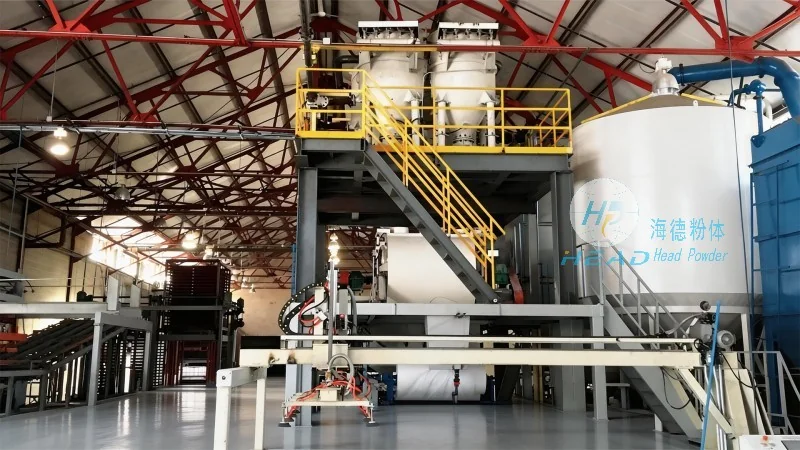
2. Material Handling Range: The system can handle ABS granules with a particle size ranging from 0.5 to 10 mm and a bulk density of 0.9 to 1.1 g/cm³. It is also suitable for other similar plastic granules, such as polycarbonate (PC) and polypropylene (PP).
3. Power Consumption: The system operates with low power consumption, typically ranging from 0.5 to 2 kW per hour, depending on the conveying capacity and speed. This efficiency helps reduce operational costs and environmental impact.
4. Maintenance and Durability: The screw conveyor and other components are made of high-quality materials, such as stainless steel or corrosion-resistant alloys, to ensure long service life and durability. The system is designed for easy maintenance, with quick access to components for cleaning and replacement.
Application Scenarios
The ABS granule material handling system is widely used in various industries where ABS plastic granules need to be transported efficiently. Some common application scenarios include:
1. Plastic Manufacturing Plants: In automotive and electronics manufacturing, the system is used to transport ABS granules from storage to injection molding machines, extruders, and other processing equipment.
2. Chemical Processing Facilities: In chemical plants, the system can handle ABS granules as part of the production process, ensuring safe and reliable material transfer.
3. Recycling Centers: The system is used in recycling facilities to transport recycled ABS granules from storage to processing lines, facilitating the recycling process.
4. Research and Development Labs: In R&D labs, the system is used for small-scale testing and prototyping of ABS plastic products, providing a reliable material handling solution for experimental work.
Overall, the ABS granule material handling system from Shandong HeadPowder Engineering Co., Ltd. offers a robust, efficient, and reliable solution for transporting ABS plastic granules. With its advanced design and control features, the system ensures optimal performance, minimal downtime, and high productivity in various industrial applications.




