Flake graphite, a key industrial material, often requires efficient and reliable transport methods for processing and distribution. The pneumatic conveying system, particularly designed for flake graphite, offers a solution that integrates principles of fluid dynamics and material handling technology. This article explores the fundamental principles behind such systems and highlights the specific operational scenarios where they excel in performance, as developed by Shandong HeadPowder Engineering Co., Ltd. (headpowder).
Core Principles of Flake Graphite Pneumatic Conveying Systems
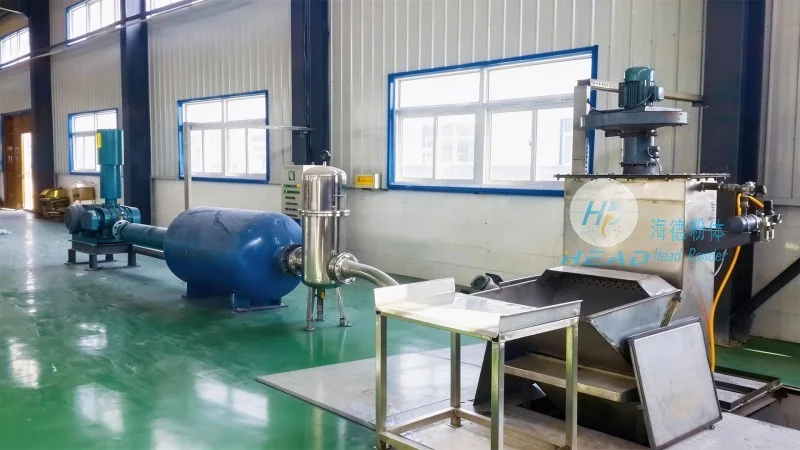
The operation of a flake graphite pneumatic conveying system is grounded in the principles of air movement and particle suspension. At its essence, the system uses a stream of air to transport solid particles, in this case, flake graphite, through a pipeline network. The key components include a material feed hopper, a conveying line, a dust separator, and a collection tank. The feed hopper ensures a consistent supply of graphite flakes, while the conveying line, typically made of corrosion-resistant materials like stainless steel or specialized polymers, prevents material degradation and system blockages. The dust separator, often a cyclone or bag filter, removes fine particles from the air stream, ensuring compliance with environmental regulations and maintaining system efficiency. The collection tank then stores the transported graphite, ready for subsequent processing steps.
A critical principle is the balance between air velocity and particle size. For flake graphite, which has a relatively high density and specific shape, the air velocity must be sufficient to lift and suspend the particles without causing excessive wear on the system components. This requires precise control of the air pressure and flow rate, typically managed by a blower or compressor. The system's design also considers the particle's aerodynamic properties, such as its shape factor and surface roughness, to optimize the conveying efficiency. By adhering to these principles, the system ensures a stable and continuous flow of material, minimizing downtime and operational costs.
Key Operational Scenarios and Application Characteristics
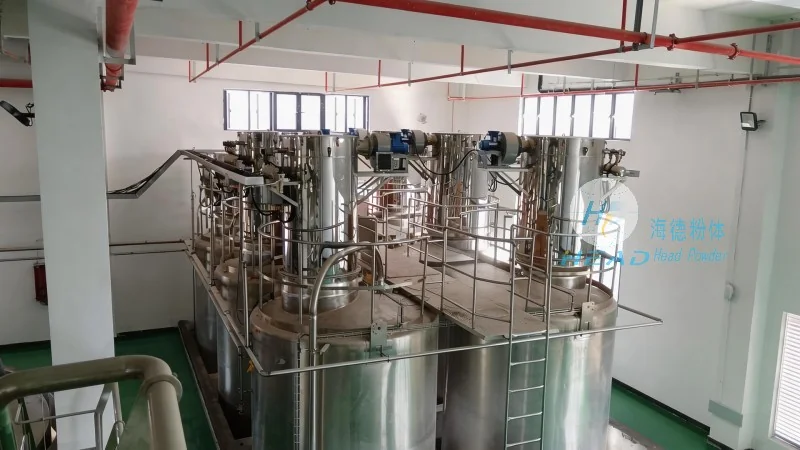
The effectiveness of flake graphite pneumatic conveying systems is demonstrated across various industrial settings, each presenting unique challenges and requirements. One primary scenario involves the transport of graphite from raw material storage to processing facilities, such as grinding or refining units. In this context, the system must handle large volumes of material while maintaining low maintenance costs and high throughput. The design often incorporates multiple conveying lines or a network of pipelines to distribute the material to different processing stages, ensuring smooth workflow and operational efficiency.
Another common operational scenario is the transfer of graphite between different production lines or facilities, such as from a mining site to a manufacturing plant. Here, the system may need to cover longer distances and operate under varying environmental conditions, including temperature fluctuations and humidity. The robust construction of the conveying components, including corrosion-resistant materials and durable seals, is essential to withstand these conditions and maintain performance. Additionally, the system's ability to handle varying particle sizes and moisture content is crucial, as flake graphite can have different characteristics depending on its source and processing history.
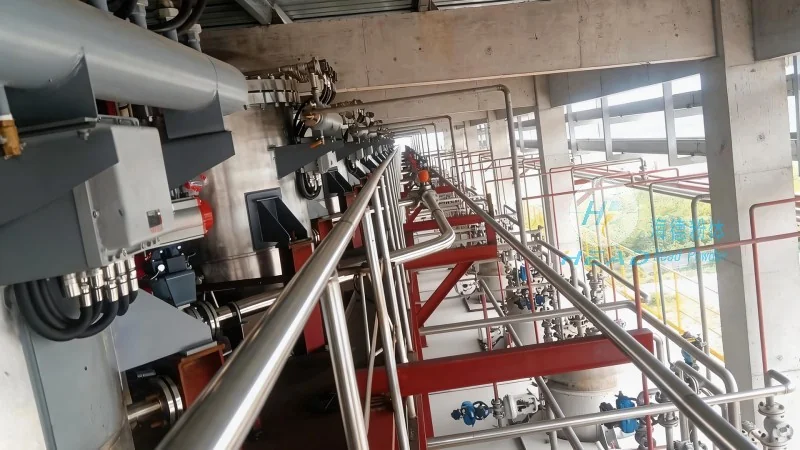
A third scenario involves the handling of graphite in high-purity applications, such as in the production of lubricants, batteries, or advanced composites. In these cases, the system must ensure minimal contamination and particle loss. This is achieved through the use of high-efficiency dust separators and sealed conveying lines, which prevent the introduction of external particles and maintain the purity of the material. The system's design also considers the need for gentle handling of the flake graphite, as excessive impact or abrasion can damage the particles and affect their performance in downstream applications.
Advantages and Practical Considerations in Industrial Use
Implementing a flake graphite pneumatic conveying system offers several advantages over traditional material handling methods, such as belt conveyors or bucket elevators. One significant benefit is the ability to transport material in a closed system, which reduces dust emissions and improves workplace safety. This is particularly important for flake graphite, which can generate fine particles that are hazardous if inhaled. The closed system also helps maintain the material's quality by preventing exposure to moisture or contaminants from the environment.
Another advantage is the flexibility of the system, which can be easily adapted to different operational needs. For example, the conveying line can be reconfigured to change the direction or distance of material transport, and the air flow rate can be adjusted to accommodate varying material volumes. This adaptability makes the system suitable for a wide range of industrial applications, from small-scale processing to large-scale production facilities.
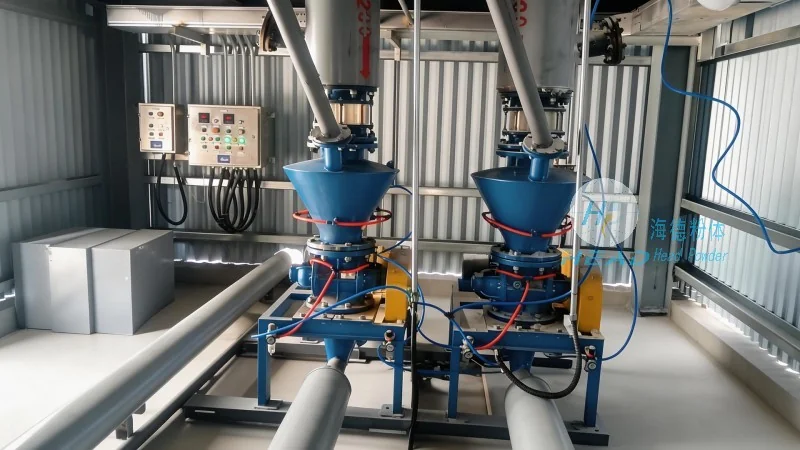
However, there are practical considerations that must be addressed when deploying such a system. The initial investment cost can be higher compared to traditional methods, primarily due to the specialized components and engineering required. Additionally, the system requires regular maintenance to ensure optimal performance, including cleaning of the dust separator, checking for wear on the conveying line, and monitoring the air pressure and flow rate. Proper training of operators is also essential to prevent system malfunctions and ensure safe operation.
Conclusion: Tailoring Solutions for Flake Graphite Handling
In conclusion, flake graphite pneumatic conveying systems represent a sophisticated and effective solution for the transport of this critical industrial material. By leveraging principles of fluid dynamics and material science, these systems provide efficient, safe, and reliable handling of flake graphite across various operational scenarios. The success of such systems depends on careful design, precise control, and regular maintenance, ensuring that they meet the specific needs of industrial applications while maximizing performance and minimizing operational costs. As a leader in material handling solutions, Shandong HeadPowder Engineering Co., Ltd. (headpowder) continues to innovate and provide tailored systems that enhance the efficiency and safety of flake graphite processing operations.




