Resin granule material pneumatic conveying lines are advanced industrial systems designed to transport resin particles efficiently and reliably. These systems are widely used in various industries, including plastics manufacturing, chemical processing, and material handling, where the seamless movement of resin granules is critical for production continuity and operational efficiency.
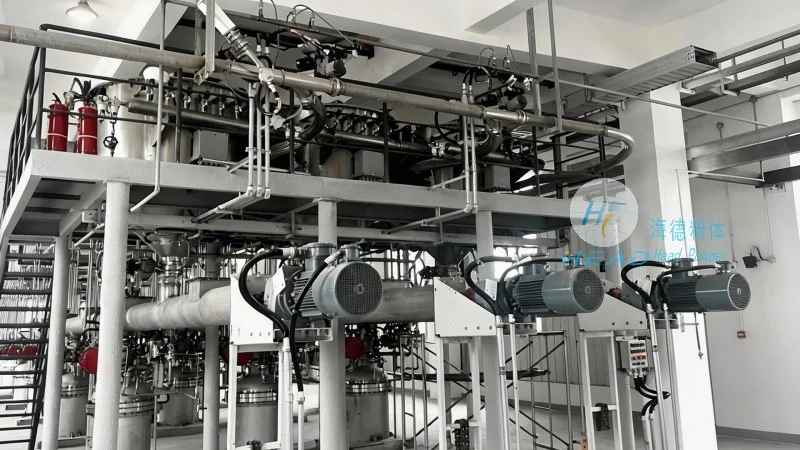
Overview of Pneumatic Conveying Technology for Resin Granules
Pneumatic conveying technology utilizes air or gas as the medium to transport solid materials like resin granules through a pipeline. Unlike traditional mechanical conveyors, which rely on physical contact and moving parts, pneumatic systems offer advantages such as reduced contamination, lower maintenance requirements, and the ability to handle a wide range of particle sizes and densities. For resin granules, which are often sensitive to moisture and contamination, pneumatic conveying lines provide a clean and controlled environment that preserves material quality.
Key Components of a Resin Granule Pneumatic Conveying Line
The operation of a resin granule pneumatic conveying line involves several key components that work in tandem to ensure smooth material transport. These components typically include a material feeder, a conveying pipeline, a control system, and a dust collection or separation unit. The material feeder is responsible for introducing resin granules into the system, ensuring a consistent flow rate. The conveying pipeline, often made of corrosion-resistant materials like stainless steel or special plastics, transports the granules using compressed air or gas. The control system monitors and regulates the air pressure, flow rate, and material feed to maintain optimal performance. Finally, the dust collection or separation unit removes any airborne particles, ensuring compliance with environmental regulations and maintaining a clean working environment.
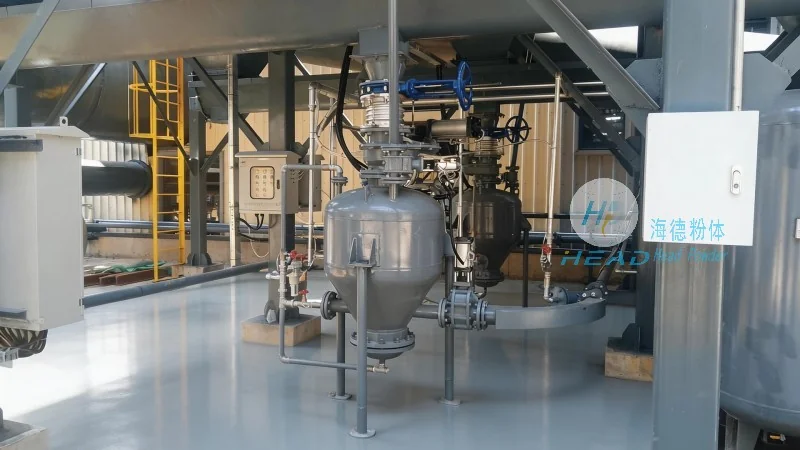
Operation Process of Resin Granule Pneumatic Conveying Lines
The operation process of a resin granule pneumatic conveying line can be broken down into several sequential steps. First, the resin granules are loaded into the material feeder, which may be a hopper or a screw feeder, depending on the system design. The feeder then releases the granules into the conveying pipeline at a controlled rate. Simultaneously, compressed air is introduced into the pipeline, creating a flow that propels the granules forward. As the granules travel through the pipeline, they are carried by the air stream, which may be in a dilute-phase or dense-phase mode, depending on the system configuration. The dilute-phase mode uses lower air velocities to transport granules over longer distances, while the dense-phase mode uses higher air velocities to move granules more quickly over shorter distances. At the receiving end of the pipeline, the granules are deposited into a storage tank or processing equipment. The control system continuously monitors the pressure and flow rates to adjust the air supply and material feed as needed, ensuring stable operation and preventing blockages or overloading.
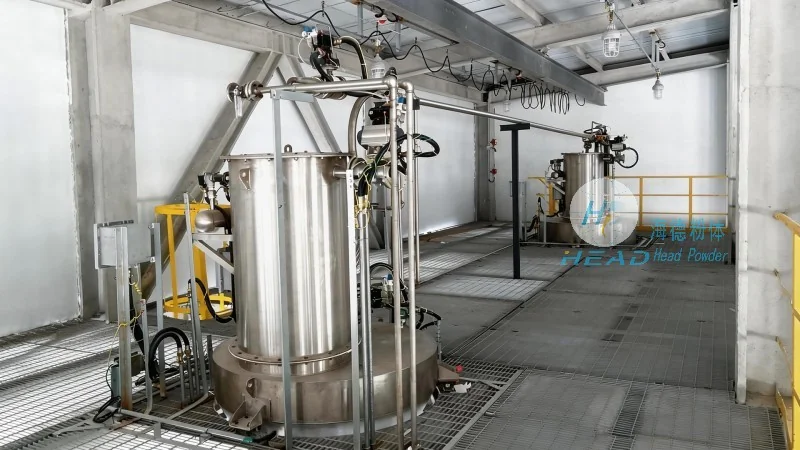
Working Principle of Resin Granule Pneumatic Conveying Lines
The working principle of a resin granule pneumatic conveying line is based on the fundamental principles of fluid dynamics and particle motion. When compressed air is introduced into the conveying pipeline, it creates a pressure differential that generates a flow of air through the system. The resin granules are entrained by this air flow, and their movement is governed by the balance between the drag force exerted by the air and the gravitational force acting on the particles. In the dilute-phase mode, the particles are suspended in the air stream, moving at a velocity that is typically higher than the terminal velocity of the particles in still air. This allows for efficient transport over long distances without significant particle degradation. In the dense-phase mode, the particles are more closely packed, and the air flow is higher, which reduces the risk of particle attrition and ensures a more controlled delivery of the granules. The separation unit at the end of the pipeline uses cyclonic or baghouse technology to remove any residual particles from the air stream, preventing dust emissions and maintaining a clean environment.
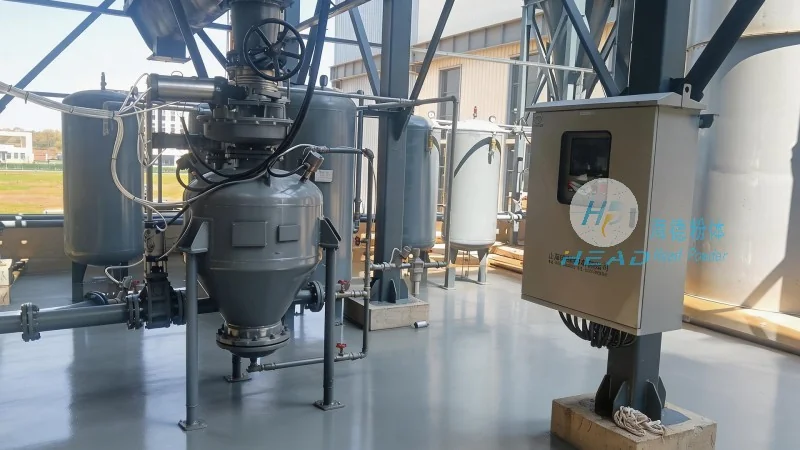
Advantages of Resin Granule Pneumatic Conveying Lines
Resin granule pneumatic conveying lines offer several advantages over traditional mechanical conveying systems. One of the primary benefits is the reduction of contamination, as the system is enclosed and uses filtered air, preventing exposure to external contaminants. This is particularly important for resin granules, which are often used in applications where purity is critical, such as in the production of high-quality plastics or specialty chemicals. Another advantage is the lower maintenance requirements, as there are fewer moving parts compared to mechanical conveyors, reducing the risk of wear and tear and minimizing downtime. Additionally, pneumatic systems can handle a wide range of particle sizes and densities, making them versatile for various resin types. The ability to transport materials over long distances without the need for intermediate storage or transfer points also enhances operational efficiency and reduces the risk of material loss or degradation.
Applications of Resin Granule Pneumatic Conveying Lines
Resin granule pneumatic conveying lines are used in a variety of industrial applications where the efficient and reliable transport of resin particles is essential. In the plastics manufacturing industry, these systems are commonly used to transport resin granules from storage silos to processing equipment, such as extruders or injection molding machines. This ensures a continuous supply of material, minimizing production interruptions and improving overall productivity. In chemical processing plants, pneumatic conveying lines are used to transport resin granules between different processing stages, such as drying, mixing, and compounding. This allows for a streamlined production process, where materials are moved quickly and efficiently from one stage to the next. Additionally, in material handling facilities, pneumatic conveying lines are used to transport resin granules to storage areas or to other processing units, improving the overall logistics and inventory management.




