Understanding the principles and operational characteristics of nano calcium carbonate powder conveying lines is crucial for industries that rely on efficient material handling of fine powders. These systems are engineered to address the unique challenges posed by nano calcium carbonate, a widely used additive in various manufacturing processes.
Technical Principles of Nano Calcium Carbonate Powder Conveying Lines
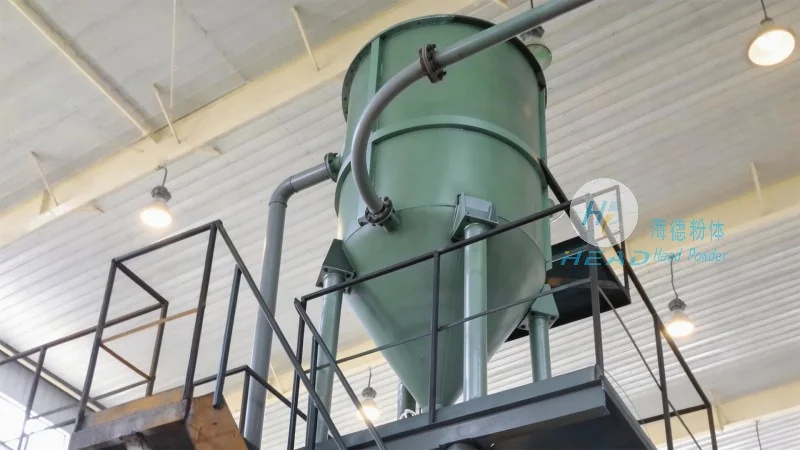
At the core of these conveying lines is the application of advanced material handling technologies tailored to the properties of nano calcium carbonate. The primary challenge with nano calcium carbonate is its fine particle size (typically ranging from 0.01 to 5 microns) and high surface area, which can lead to agglomeration and poor flowability. To address this, conveying systems often employ positive pressure air delivery, where compressed air is used to push the material through a pipeline, or negative pressure (vacuum) systems that draw material from a source. Both methods incorporate high-efficiency rotary airlocks and flexible hose conveyors to ensure smooth material transfer. Additionally, the use of anti-static coatings on equipment and regular grounding measures helps mitigate the risk of electrostatic discharge, which is common in handling fine powders.
Working Scene Characteristics and Application Scenarios
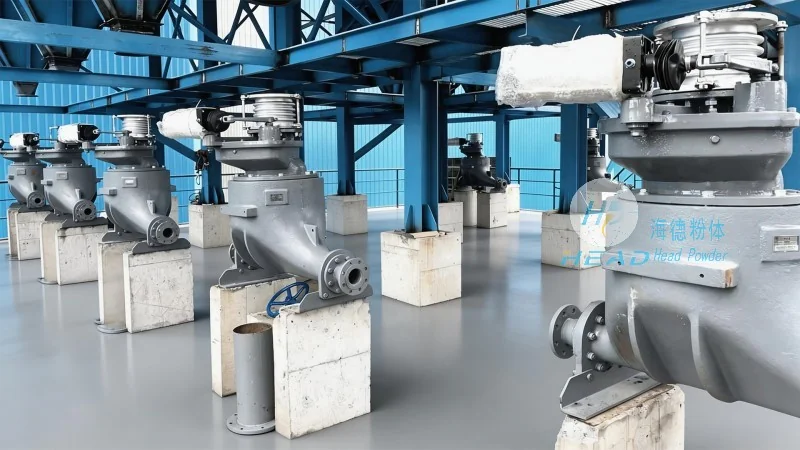
The working scene characteristics of nano calcium carbonate powder conveying lines are defined by their adaptability to diverse industrial environments. These systems are commonly employed in sectors such as plastics, rubber, coatings, and paper manufacturing, where nano calcium carbonate serves as a key additive to enhance product properties like opacity, strength, and whiteness. The operational advantages include improved process efficiency, reduced downtime due to blockages, and enhanced safety through controlled dust management. In industrial settings, the conveying lines are typically integrated into larger production lines, ensuring seamless material transfer from storage silos to processing equipment.
Operational Advantages and Technical Innovations
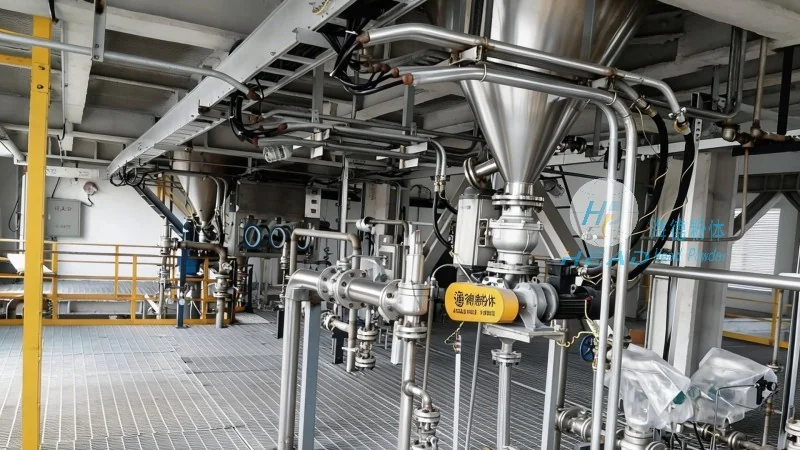
One of the key advantages of modern nano calcium carbonate powder conveying lines is their ability to maintain the quality of the material throughout the handling process. Advanced systems utilize low-velocity air flow and gentle agitation to prevent particle degradation or agglomeration. Additionally, the integration of real-time monitoring and control systems allows for dynamic adjustments to flow rates and pressure, optimizing performance based on real-time conditions. This level of control is particularly important in applications where the uniformity of the nano particles is critical to the final product's quality. For instance, in plastic compounding, consistent particle distribution directly impacts the final product's mechanical properties and optical clarity.
Company Profile and Professional Solutions
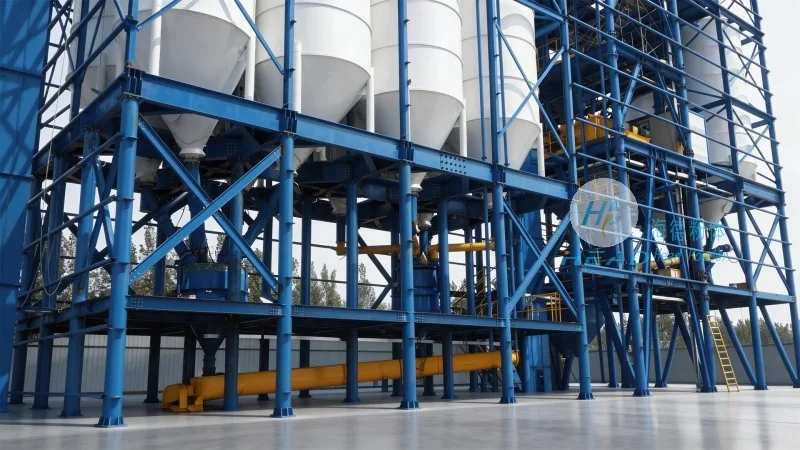
Shandong HeadPowder Engineering Co., Ltd., operating under the brand name headpowder, specializes in the design and manufacturing of customized powder conveying solutions for industrial applications. With a strong presence in China, the company leverages its expertise in material science and engineering to develop systems that meet the specific needs of clients. The company's facilities are located in Shandong, China, where it employs a team of skilled engineers and technicians dedicated to delivering high-quality, reliable conveying lines. By combining technical innovation with practical application knowledge, headpowder provides comprehensive support to industries seeking efficient and effective handling of nano calcium carbonate powders. The company's solutions are tailored to address the unique challenges of each client's production environment, ensuring optimal performance and longevity of the conveying equipment.




