Resin powder, a crucial material in various industrial applications, requires efficient and reliable conveying systems to ensure smooth production processes. The choice of conveying method significantly impacts operational efficiency, material quality, and overall cost-effectiveness. This article provides a detailed comparison of common resin powder conveying methods, highlighting their advantages and disadvantages, to assist industrial professionals in selecting the most suitable solution for their specific needs.
Introduction to Resin Powder Conveying
Resin powders are widely used in sectors such as coatings, adhesives, and plastics manufacturing. Their fine particle size and potential for static electricity make conventional conveying methods challenging. Effective conveying systems must address issues like material flow, dust control, and equipment maintenance. Understanding the different conveying technologies available is essential for optimizing production lines and minimizing downtime.
1. Screw Conveyors (Auger Conveyors)
Screw conveyors are one of the most common methods for transporting resin powders. These systems consist of a rotating screw (auger) inside a trough, which moves material from the inlet to the outlet through gravity and mechanical force. The primary advantages of screw conveyors include their simplicity, low maintenance requirements, and ability to handle a wide range of materials, including those with varying moisture content. They are particularly effective for horizontal or slightly inclined applications, making them suitable for short to medium-distance transport. However, screw conveyors have limitations when dealing with highly abrasive or sticky resin powders, as the screw and trough can experience wear and clogging. Additionally, they are less efficient for vertical lifting due to the need for higher torque and potential material degradation from repeated shear forces.
2. Pneumatic Conveying Systems
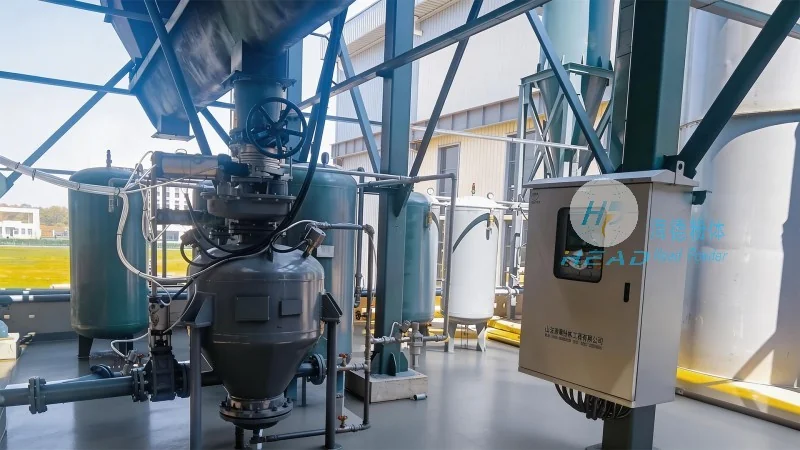
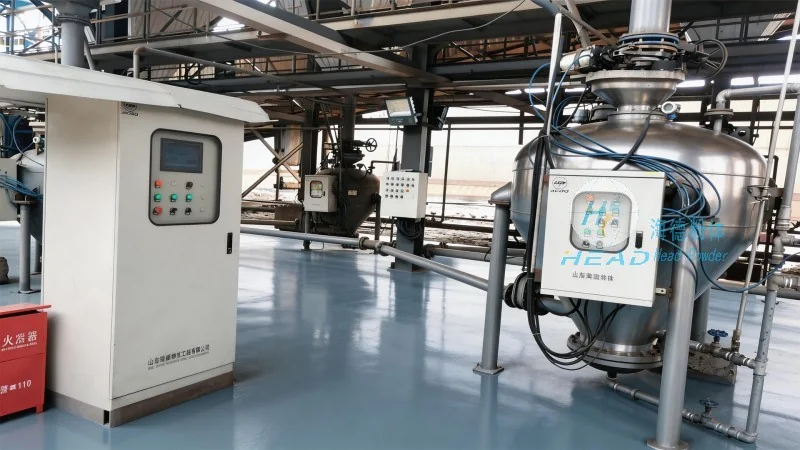
Pneumatic conveying uses air or other gases to transport resin powders through a pipeline. This method can be categorized into pressure and vacuum systems. Pressure systems push material with compressed air, while vacuum systems draw material using a vacuum pump. Pneumatic conveying offers several benefits, including the ability to transport materials over long distances, vertical lifting capabilities, and minimal material degradation due to the lack of mechanical contact. It is also effective for handling fine powders that are prone to dust and static. However, pneumatic systems require significant energy input, especially for pressure systems, and can be susceptible to blockages if the powder is too cohesive or contains large particles. Maintenance costs are higher due to the need for filters, air compressors, and regular cleaning of the pipeline.
3. Vibratory Conveyors
Vibratory conveyors utilize vibrations to move resin powders along a trough. The system consists of a conveyor bed that is excited by an electromagnetic or mechanical vibration source, causing the material to flow by a combination of gravity and vibration-induced motion. The advantages of vibratory conveyors include gentle material handling, which reduces particle breakage and degradation, and the ability to handle sticky or abrasive powders without excessive wear. They are also suitable for both horizontal and vertical transport and can be designed to handle high volumes with minimal energy consumption. However, vibratory conveyors may not be as efficient for very fine powders that tend to settle or clog the trough. Additionally, the equipment requires regular maintenance to ensure consistent vibration levels and prevent mechanical failures.
4. Bucket Elevators
Bucket elevators are vertical conveying systems that use a continuous chain with attached buckets to lift resin powders from a lower to a higher level. This method is highly effective for vertical transport over long distances and is commonly used in industries where vertical space is limited. The primary advantages of bucket elevators include high capacity, efficient vertical lifting, and the ability to handle a wide range of materials, including those with high moisture content or abrasive properties. They are also relatively simple to operate and maintain compared to other vertical systems. However, bucket elevators have limitations when dealing with very fine powders that may escape through the bucket gaps or cause wear on the buckets and chains. The equipment is also more expensive to install and may require more space for the vertical structure.
5. Belt Conveyors
Belt conveyors use a continuous belt to transport resin powders horizontally or at a slight incline. The material is placed on the belt at the inlet and moves to the outlet as the belt rotates. Belt conveyors are widely used in various industries due to their simplicity, low cost, and ability to handle large volumes of material. The advantages include high throughput, low maintenance, and the ability to transport materials over long distances. They are particularly effective for handling bulk quantities of resin powders and can be integrated with other equipment such as feeders and classifiers. However, belt conveyors are less suitable for fine powders that may scatter or create dust, as the open design can lead to material loss and environmental issues. They also require regular tensioning and cleaning to prevent clogging and maintain efficiency.
Conclusion and Recommendations
Selecting the appropriate resin powder conveying method depends on several factors, including the material properties (particle size, moisture content, abrasiveness), transport distance, and required capacity. For short horizontal distances with low to medium capacity, screw conveyors or belt conveyors may be sufficient. For vertical lifting or long-distance transport, pneumatic systems or bucket elevators are more suitable. Vibratory conveyors offer a balanced solution for gentle handling and moderate distances. Ultimately, the choice should consider the trade-offs between initial cost, operational efficiency, and maintenance requirements to ensure optimal performance and longevity of the conveying system.




