For industries that require precise material handling and consistent product quality, the automatic blending and metering pneumatic conveying equipment stands as a critical piece of technology. This equipment is designed to efficiently transport, measure, and blend various bulk materials with high accuracy and reliability. Understanding its functionality and the underlying design principles is essential for businesses seeking to optimize their production processes. In this article, we delve into the specifics of such equipment, highlighting its importance, key components, and the engineering behind its operation. The information is presented with a focus on practical applications and the technical aspects that make these systems effective in diverse industrial settings.
Understanding Automatic Blending and Metering Pneumatic Conveying Equipment
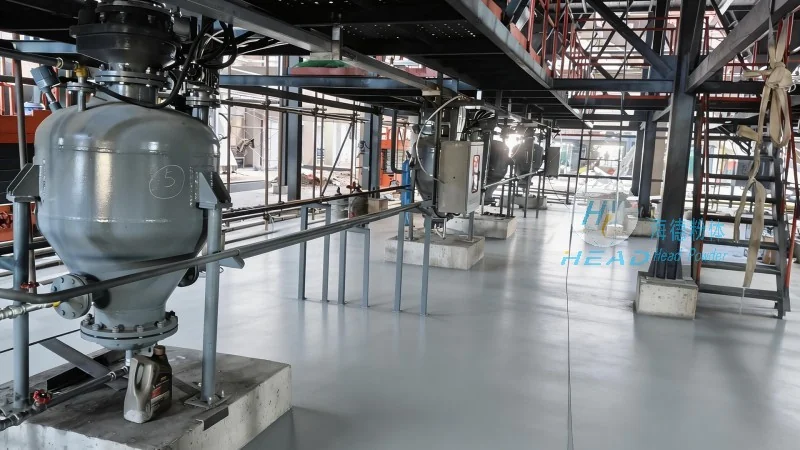
The automatic blending and metering pneumatic conveying equipment is a sophisticated system engineered to handle the transport of bulk materials through an air-driven process. Unlike traditional mechanical conveyors, this equipment utilizes compressed air to move powders, granules, and other particulate materials from one location to another. The core function of the system is to ensure that materials are conveyed with minimal loss, high accuracy in measurement, and consistent blending ratios. This is particularly valuable in industries such as pharmaceuticals, food processing, chemicals, and mining, where product uniformity and compliance with strict quality standards are paramount. The equipment typically consists of a series of components, including a hopper for material storage, a metering device to control the flow rate, a pneumatic conveyor line, and a blending chamber where materials are mixed to achieve the desired composition. Each component is meticulously designed to work in harmony, ensuring that the final product meets the required specifications.
Design Principles Behind the Equipment
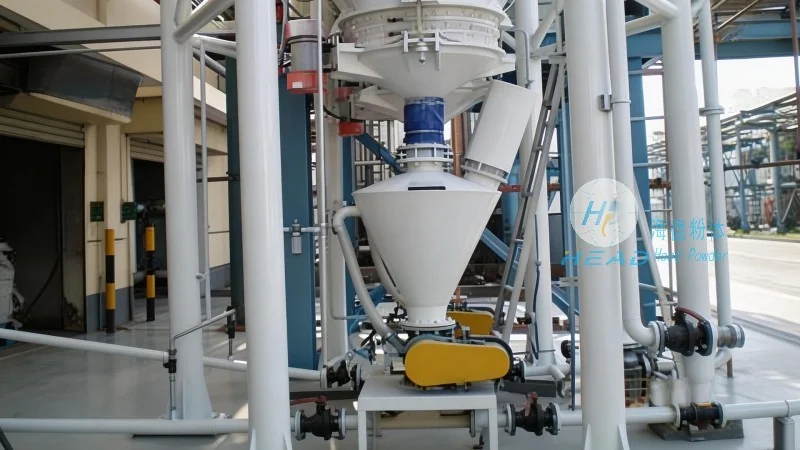
The design of automatic blending and metering pneumatic conveying equipment is based on several fundamental principles that ensure its efficiency and reliability. The primary principle is the use of air as the conveying medium, which allows for the transport of materials without direct contact, reducing the risk of contamination and material degradation. The system operates under a pressure or vacuum environment, depending on the specific application. In pressure systems, compressed air is used to push materials through the pipeline, while in vacuum systems, air is drawn to pull materials. The design also incorporates precise metering mechanisms, such as rotary valves or gravimetric scales, to control the flow rate of each material. These mechanisms are calibrated to deliver the exact amount of material required for the blending process, ensuring consistent ratios and preventing over or under-dosing. The blending chamber is designed with mixing paddles or agitators that rotate at controlled speeds to achieve thorough mixing. The entire system is equipped with sensors and control panels that monitor parameters like pressure, flow rate, and material level, allowing for real-time adjustments and maintaining process stability. The engineering behind this equipment also emphasizes energy efficiency, with features such as variable speed drives and optimized air flow to minimize energy consumption while maximizing performance.
Key Features and Applications
Automatic blending and metering pneumatic conveying equipment offers several key features that make it a preferred choice for many industries. One of the most significant features is its ability to handle a wide range of materials, from fine powders to coarse granules, without clogging or damaging the equipment. The system is also designed for high throughput, capable of processing large volumes of material in a short period, which is essential for high-demand production lines. Another important feature is the integration of advanced control systems that allow for automated operation, reducing the need for manual intervention and minimizing human error. This automation enhances process consistency and improves overall productivity. The equipment is also highly customizable, with options to adjust the conveyor line length, material handling capacity, and blending ratios to suit specific production requirements. In terms of applications, this equipment is widely used in the pharmaceutical industry for the precise mixing of active ingredients and excipients, in the food industry for blending spices and flavorings, in the chemical industry for mixing reagents and catalysts, and in the mining industry for transporting ore and other minerals. The versatility and precision of the system make it indispensable for any operation that requires consistent and high-quality material handling.
Company Overview: Shandong HeadPowder Engineering Co., Ltd.
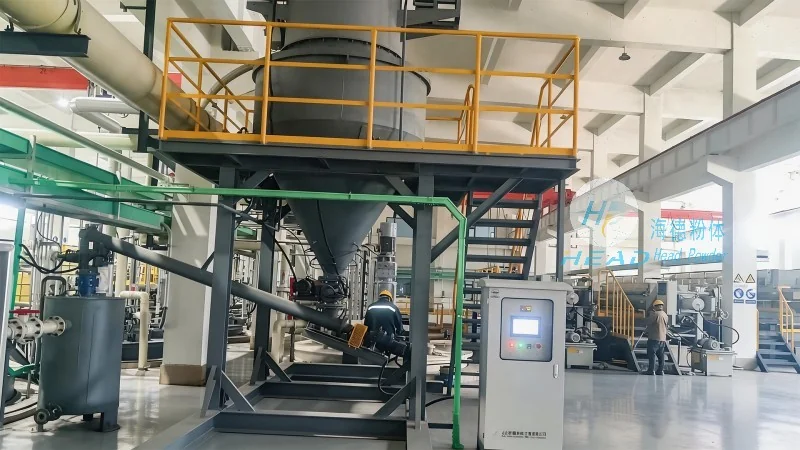
At the forefront of providing advanced material handling solutions is Shandong HeadPowder Engineering Co., Ltd., a leading manufacturer specializing in automatic blending and metering pneumatic conveying equipment. HeadPowder, as the company is commonly known, has established itself as a trusted partner for businesses seeking reliable and efficient material transport systems. With a strong commitment to innovation and quality, the company has developed a range of products tailored to meet the diverse needs of various industries. HeadPowder's equipment is designed and manufactured with precision engineering, ensuring that each component meets the highest standards of performance and durability. The company's facilities are equipped with state-of-the-art technology and skilled professionals who are dedicated to delivering products that exceed customer expectations. HeadPowder is headquartered in Shandong, China, where the company has a strong presence and a dedicated team focused on research, development, and customer support. The company's mission is to provide cutting-edge solutions that enhance operational efficiency and product quality for its clients, contributing to their long-term success. By leveraging years of experience and expertise in the field, HeadPowder continues to be a key player in the global market for material handling equipment.




