HeadPowder, a leading provider of advanced material handling solutions, specializes in the efficient and reliable transport of nanopowders using pneumatic conveying systems. This article provides a detailed comparison of two primary methods—positive pressure conveying and negative pressure conveying—exploring their operational principles, advantages, disadvantages, and suitability for various industrial applications.
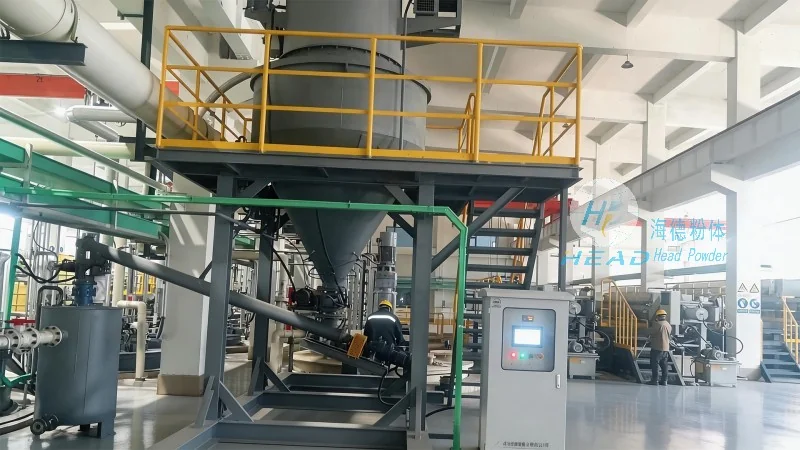
Understanding Pneumatic Conveying for Nanopowders
Pneumatic conveying is a critical technology in industries dealing with fine powders, including pharmaceuticals, chemicals, and advanced materials. It involves transporting solid particles through a pipeline using air or gas as the medium. For nanopowders, which are characterized by their extremely small particle size (typically less than 1 micron), the choice of conveying method is crucial due to the unique challenges posed by these materials, such as high reactivity, low bulk density, and sensitivity to moisture or contamination.
Positive Pressure Conveying: The Advantages and Limitations
Positive pressure conveying, also known as pressure conveying, operates by blowing air or gas under pressure into the conveying line. The system typically includes a blower or compressor at the inlet, which forces air through the pipeline, carrying the nanopowder particles forward. This method is often preferred for applications requiring high transport rates and long-distance conveying. One of the key advantages of positive pressure systems is their ability to handle high volumes of material efficiently, making them suitable for large-scale production lines. Additionally, positive pressure conveying can be more energy-efficient for long-distance transport, as the pressure can be maintained consistently along the pipeline.
However, positive pressure systems also have notable limitations. The high pressure and air velocity can lead to increased wear on the pipeline and equipment, especially when handling abrasive or hard nanopowders. Moreover, the system requires robust sealing and filtration to prevent dust leakage and contamination, which can be costly to maintain. Another consideration is the potential for material degradation due to the high shear forces and friction within the pipeline, which may affect the quality of sensitive nanopowders.
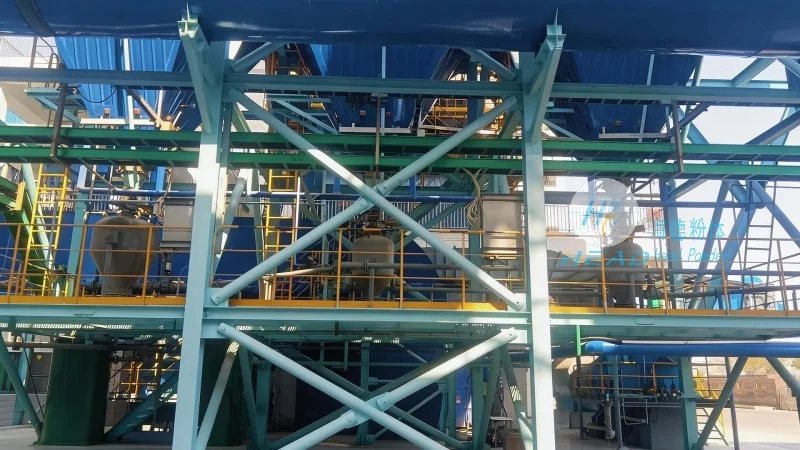
Negative Pressure Conveying: The Benefits and Drawbacks
Negative pressure conveying, or vacuum conveying, works by creating a vacuum at the inlet of the system, drawing the nanopowder particles into the pipeline. A vacuum pump or fan is used to create the low-pressure environment, and the material is then transported to the destination. This method is often chosen for applications where the material needs to be collected from multiple sources or where the conveying distance is relatively short. A significant benefit of negative pressure systems is their ability to handle materials with high moisture content or those that are prone to caking, as the lower air velocity reduces the risk of agglomeration. Additionally, negative pressure conveying is generally less expensive to install and maintain compared to positive pressure systems, as it does not require high-pressure blowers.
Nevertheless, negative pressure conveying has its own set of drawbacks. The primary limitation is its lower transport capacity compared to positive pressure systems, which restricts its use in high-volume production scenarios. The vacuum also makes the system more susceptible to external air infiltration, which can lead to contamination or moisture absorption, especially for hygroscopic nanopowders. Furthermore, the lower air velocity in negative pressure systems can result in higher material residence time in the pipeline, potentially leading to increased degradation or oxidation of sensitive materials.
Key Factors in Choosing Between Positive and Negative Pressure Conveying
The selection between positive and negative pressure conveying for nanopowders depends on several critical factors, including the material properties, conveying distance, required throughput, and operational environment. Material properties such as particle size, density, moisture content, and reactivity are paramount. For example, highly abrasive or reactive nanopowders may be better suited for positive pressure systems with appropriate wear-resistant materials, while hygroscopic or sensitive powders might benefit from the gentler conditions of negative pressure conveying.
Conveying distance is another key consideration. Positive pressure systems are generally more effective for long-distance transport, as they can maintain pressure and flow over extended pipelines. In contrast, negative pressure systems are more suitable for shorter distances, typically up to a few hundred meters, due to the limitations of maintaining a stable vacuum over longer lengths.
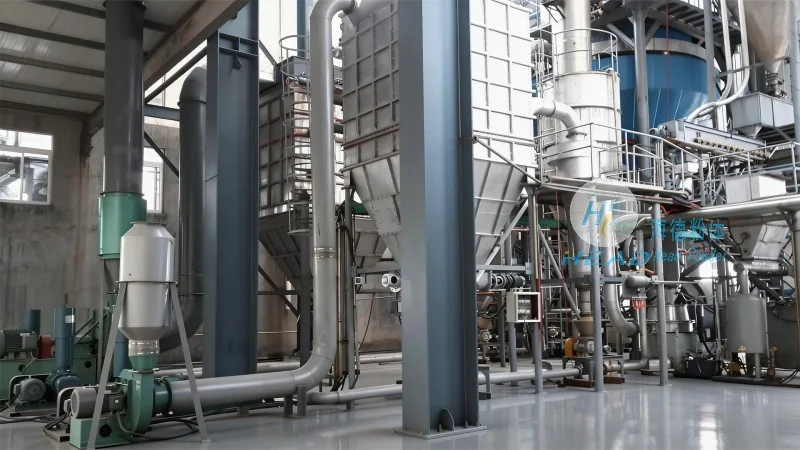
Throughput requirements also play a significant role. High-volume production lines often favor positive pressure conveying due to its higher capacity and efficiency. For applications with lower material flow rates or where multiple collection points are involved, negative pressure conveying may be more practical.
HeadPowder's Expertise in Nanopowder Conveying Solutions
Shandong HeadPowder Engineering Co., Ltd., based in China, leverages its extensive experience and advanced technology to provide tailored pneumatic conveying solutions for nanopowders. The company's engineers conduct thorough assessments of material characteristics and operational needs to recommend the most appropriate conveying method—whether positive or negative pressure—ensuring optimal performance, efficiency, and material integrity. HeadPowder's solutions are designed to minimize wear, contamination, and degradation, delivering reliable and cost-effective transport for a wide range of nanopowder applications.
By combining expertise in material handling, system design, and process optimization, HeadPowder ensures that clients can select the most suitable pneumatic conveying method for their specific requirements. The company's commitment to quality and innovation has made it a trusted partner in the industry, helping businesses enhance productivity and maintain the quality of their nanopowder products.




