Pneumatic conveying systems are widely used in the handling of petroleum coke powder due to their ability to transport bulk materials efficiently over long distances with minimal maintenance. The design and selection of these systems require careful consideration of material properties, operational parameters, and equipment compatibility. This article provides a detailed overview of the design calculations and equipment selection processes for petroleum coke powder pneumatic conveying, presented by Shandong HeadPowder Engineering Co., Ltd., a leading engineering firm based in Shandong, China.
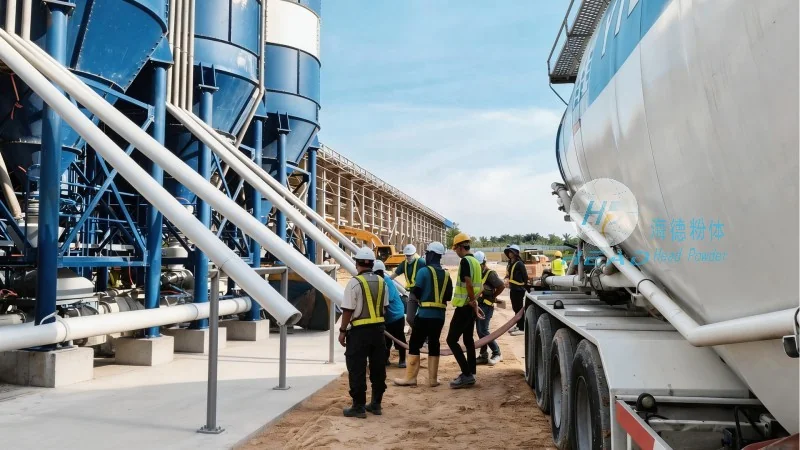
Pneumatic Conveying Design Fundamentals for Petroleum Coke Powder
The successful design of a petroleum coke powder pneumatic conveying system starts with a thorough understanding of the material's physical characteristics. Key properties such as bulk density, particle size distribution, moisture content, and flowability directly impact the system's performance. Engineers at Shandong HeadPowder Engineering Co., Ltd. conduct comprehensive material analysis to determine these properties, which are then used as inputs for the design calculations. The system design also considers operational factors like the required conveying capacity, pipeline length, and elevation changes, ensuring the final solution meets the client's specific needs.
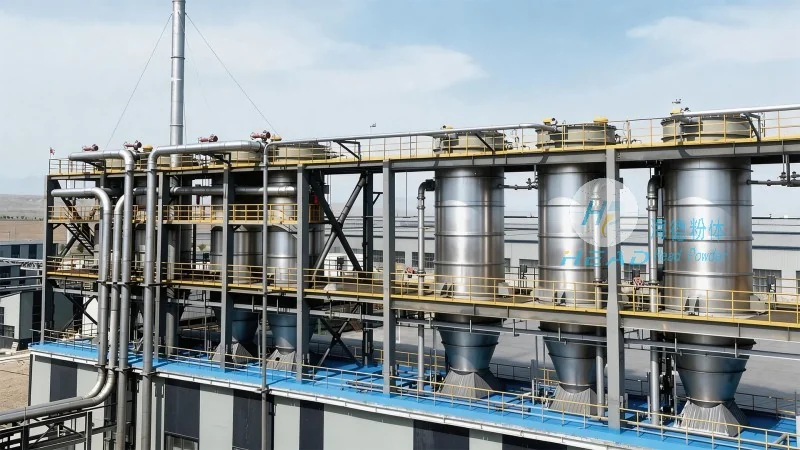
Key Design Calculations for Petroleum Coke Powder Pneumatic Conveying
Several critical calculations are essential for the accurate design of a petroleum coke powder pneumatic conveying system. The first is the determination of the minimum air velocity required to lift and transport the powder particles. This is calculated using the Stokes number and the particle Reynolds number, which take into account the powder's density, particle size, and the pipeline diameter. The air velocity must be sufficient to overcome the gravitational force acting on the particles but not so high as to cause excessive pressure losses or particle attrition. Another crucial calculation is the pressure drop across the pipeline, which is influenced by factors such as pipe roughness, particle size, and air velocity. The Darcy-Weisbach equation is modified for particulate flow to estimate the pressure drop per unit length of the pipeline. By summing these pressure drops along the entire conveying path, engineers can determine the total pressure required from the blower or compressor. Additionally, the required air volume is calculated based on the air velocity and the cross-sectional area of the pipeline, ensuring the system can handle the desired flow rate without excessive energy consumption.
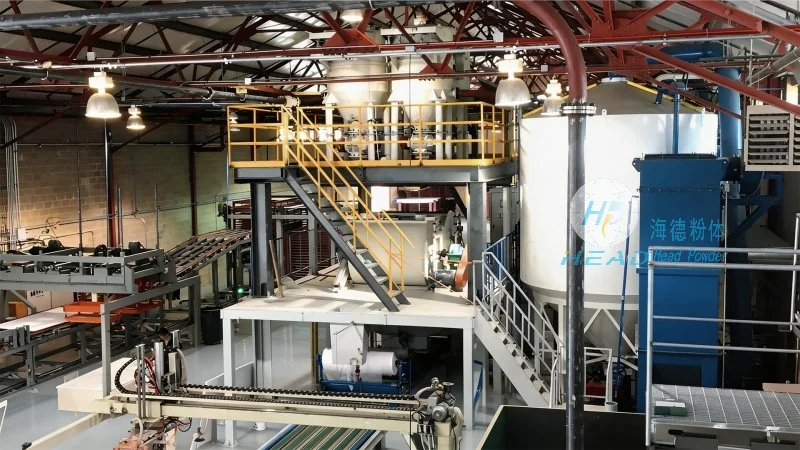
Equipment Selection for Petroleum Coke Powder Pneumatic Conveying
The selection of appropriate equipment is a critical step in ensuring the reliability and efficiency of a petroleum coke powder pneumatic conveying system. The main components include the material feeder, conveying pipeline, air separation system, and dust collection unit. For the material feeder, rotary valves are commonly used for their ability to provide a consistent and controlled feed rate, preventing surges or blockages in the system. Screw feeders are also used in some applications, especially where a higher feed rate is required. The conveying pipeline is typically made of stainless steel or PVC, selected based on the powder's corrosiveness and abrasiveness. Stainless steel is preferred for its resistance to corrosion and wear, while PVC is used for its lower cost and lighter weight. The air separation system, often a cyclone separator or a baghouse filter, is designed to remove the powder from the air stream and prevent dust emissions. Cyclone separators are effective for larger particles, while baghouse filters are used for finer powders. Shandong HeadPowder Engineering Co., Ltd. works with leading manufacturers to provide equipment that is compatible with the specific characteristics of petroleum coke powder, ensuring optimal performance and longevity.




