For industrial applications involving the handling of fine powders like fermentation powder, pneumatic conveying systems offer an efficient and reliable solution. This article delves into the operation process and working principle of a specialized pneumatic conveying line designed for such materials, highlighting the technical aspects and operational efficiency provided by Shandong HeadPowder Engineering Co., Ltd., a leading manufacturer based in China.
Introduction to Pneumatic Conveying Systems for Fermentation Powder
Pneumatic conveying, or pneumatic transport, is a method of transporting bulk materials through a pipeline using a gas stream, typically air or other gases. In the context of fermentation powder, which is often used in baking and food production, this technology ensures safe, dust-free, and continuous material transfer from storage to processing units. The system is engineered to handle the unique properties of fermentation powder, such as its fine particle size and potential for static electricity, ensuring minimal product degradation and optimal performance.
Key Components of the Fermentation Powder Pneumatic Conveying Line
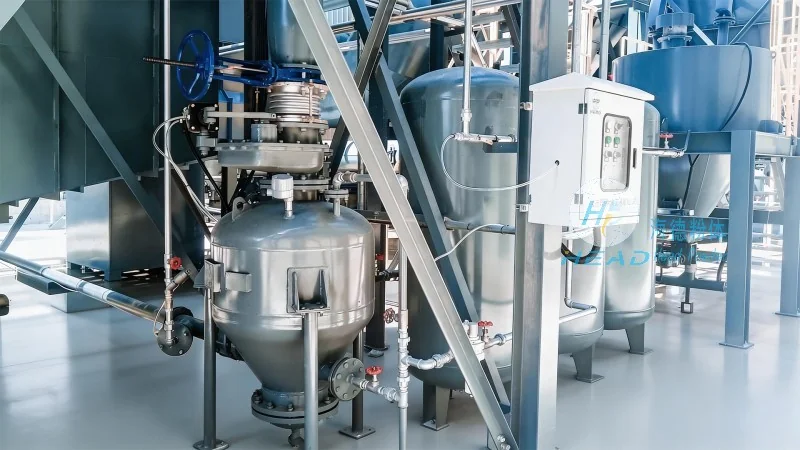
The pneumatic conveying line for fermentation powder typically consists of several critical components that work in tandem to achieve efficient material transport. These components include the material hopper or silo, a feeder mechanism (often a rotary valve or screw feeder), a conveying pipeline system, a positive displacement blower or air compressor, and a receiver or discharge hopper. Each component plays a vital role in the overall operation, ensuring that the fermentation powder is moved smoothly and without interruption.
Operation Process of the Fermentation Powder Pneumatic Conveying Line
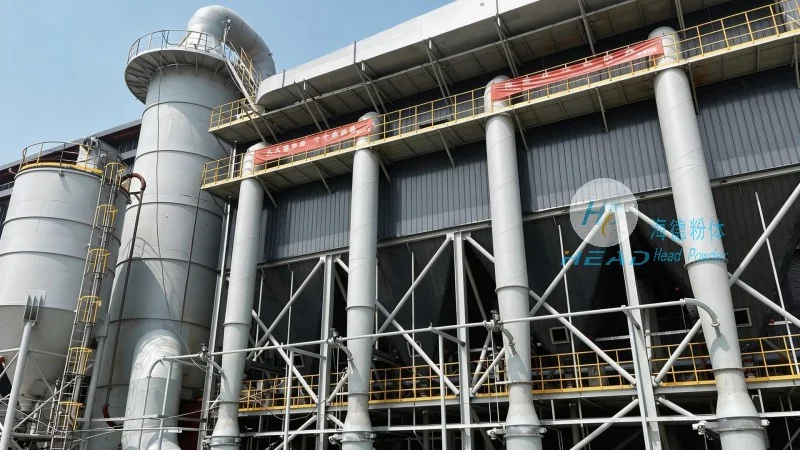
The operation process of the fermentation powder pneumatic conveying line begins with the material being stored in a hopper or silo. The feeder mechanism, usually a rotary valve or a screw feeder, regulates the flow of fermentation powder from the storage vessel into the conveying pipeline. Simultaneously, the positive displacement blower generates a high-pressure air stream that travels through the pipeline. As the air flows, it draws the fermentation powder particles into the pipeline, creating a slurry-like mixture known as a "conveying stream." The mixture is then transported through the pipeline to the discharge point, where the air and powder are separated. The air is typically filtered and recycled back into the system, while the fermentation powder is collected in the receiver hopper for further processing.
Working Principle of the Fermentation Powder Pneumatic Conveying Line
The working principle of the pneumatic conveying line relies on the principles of fluid dynamics and particle transport. The positive displacement blower creates a pressure differential between the inlet and outlet of the pipeline. This pressure difference generates a flow of air that entrains the fermentation powder particles into the conveying stream. The velocity of the air is crucial; it must be sufficient to overcome the gravitational force acting on the powder particles and any frictional losses within the pipeline. The system is designed to maintain a consistent air flow rate and pressure to ensure stable and continuous material transport. The separation of air and powder at the discharge point is achieved through a cyclone separator or a filter, which allows the air to be recirculated while the powder is collected.
Technical Advantages and Applications
The pneumatic conveying line for fermentation powder offers several technical advantages that make it an ideal choice for industrial applications. These include the ability to handle fine powders without the need for mechanical components that could cause product contamination or damage. The system is also dust-free, reducing the risk of product contamination and improving workplace safety. Additionally, the continuous operation of the system ensures high throughput and minimal downtime, making it suitable for high-volume production environments. Shandong HeadPowder Engineering Co., Ltd. specializes in designing and manufacturing such systems tailored to the specific needs of clients in the food and baking industries, ensuring optimal performance and reliability.
Conclusion
In conclusion, the operation process and working principle of a fermentation powder pneumatic conveying line are intricate yet efficient, leveraging advanced engineering to handle fine powders with precision. The system, developed by Shandong HeadPowder Engineering Co., Ltd., based in China, combines robust components and intelligent design to ensure reliable material transport. By understanding the operation process and working principles, users can appreciate the technical sophistication and practical benefits of pneumatic conveying systems in modern industrial applications.




