Carbon material pneumatic conveying lines are critical components in industrial processes, particularly in sectors that handle carbon-based raw materials such as carbon black, graphite, and battery anode materials. These systems enable efficient, dust-free, and continuous transportation of carbon materials from storage to processing units, ensuring operational efficiency and product quality. Understanding the principle and working scene characteristics of such systems is essential for optimizing material handling in various industrial applications.
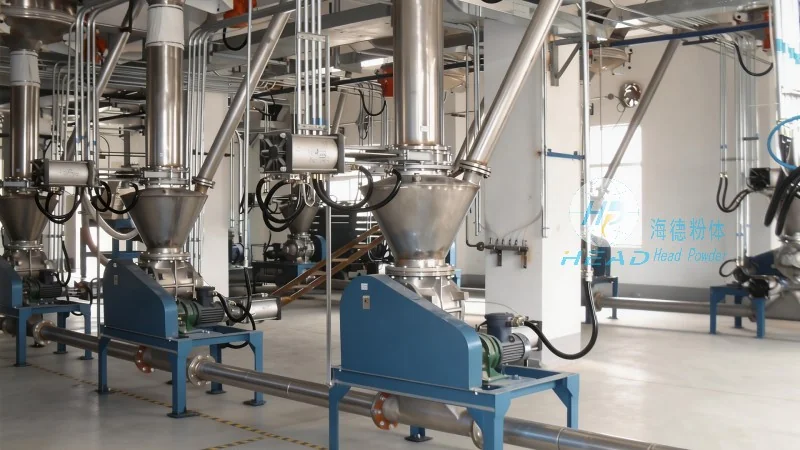
Principle of Carbon Material Pneumatic Conveying
The core principle of carbon material pneumatic conveying involves using compressed air or vacuum to move particulate materials through a pipeline. There are two primary types of pneumatic conveying systems: suction (or vacuum) and pressure (or pressure) systems. Suction systems utilize a vacuum at the material inlet to draw material into the pipeline, while pressure systems use compressed air to push material forward. For carbon materials, which often have fine particle sizes and can be prone to dust generation, the choice of system depends on the material's properties, the distance to be conveyed, and the required flow rate.
In suction systems, a fan or vacuum pump creates a negative pressure at the inlet, causing the carbon material to be drawn into the pipeline along with the air stream. The material is then transported through the pipeline to the discharge point, where the air is filtered and the material is separated. This method is ideal for short to medium distances and for handling materials that are light and easily entrained. Pressure systems, on the other hand, use a positive pressure at the discharge end to push the material through the pipeline. They are more suitable for longer distances and for materials that are more dense or have higher flow resistance. Both systems can be adapted for carbon materials, with considerations for the material's moisture content, particle size distribution, and abrasiveness to ensure optimal performance.
Working Scene Characteristics of Carbon Material Pneumatic Conveying Lines
The working scene characteristics of carbon material pneumatic conveying lines are shaped by the specific requirements of the industrial processes they serve. These characteristics include the system's efficiency, reliability, and adaptability to different carbon material types and processing environments. For instance, in battery manufacturing, carbon anode materials require precise and clean handling to avoid contamination, which is achieved through closed-loop pneumatic conveying systems that minimize exposure to the environment. In carbon black production, the material is often handled in large quantities and over longer distances, necessitating high-capacity pressure systems with robust pipeline designs to prevent blockages and material degradation.
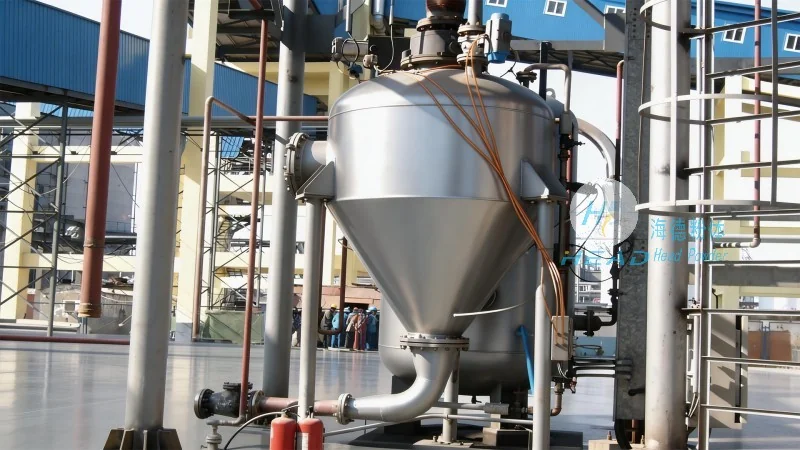
Another key characteristic is the system's ability to handle varying material properties. Carbon materials can range from fine powders to larger granules, and the conveying system must be designed to accommodate these variations. For example, a system used to transport graphite powder may require a different pipeline diameter and air velocity compared to one handling carbon black, as the particle size and density affect the required air flow rate. Additionally, the system's integration with other processing equipment, such as mixers, dryers, and reactors, is crucial for maintaining a continuous production flow. This integration ensures that the carbon material is delivered to the next stage of processing without interruptions, enhancing overall production efficiency.
HeadPowder: Expert in Carbon Material Pneumatic Conveying Solutions
Shandong HeadPowder Engineering Co., Ltd., commonly known as HeadPowder, is a leading manufacturer specializing in the design, development, and implementation of carbon material pneumatic conveying systems. With operations based in Shandong, China, HeadPowder leverages over a decade of industry experience to provide tailored solutions that meet the unique needs of clients in the carbon and battery industries. The company's expertise lies in understanding the specific challenges of handling carbon materials, such as their tendency to agglomerate, generate dust, or cause pipeline blockages, and developing systems that address these issues effectively.
HeadPowder's approach to carbon material pneumatic conveying involves a comprehensive understanding of the material's physical and chemical properties. By analyzing factors such as particle size, density, moisture content, and abrasiveness, the company designs systems that optimize air flow, pipeline dimensions, and equipment selection. This ensures that the conveying system operates at peak efficiency, minimizing energy consumption and maximizing material throughput. For example, HeadPowder may recommend a combination of suction and pressure stages in a multi-stage conveying system to handle long distances and varying material characteristics, ensuring consistent performance.
Application Scenarios and Advantages in Industrial Settings
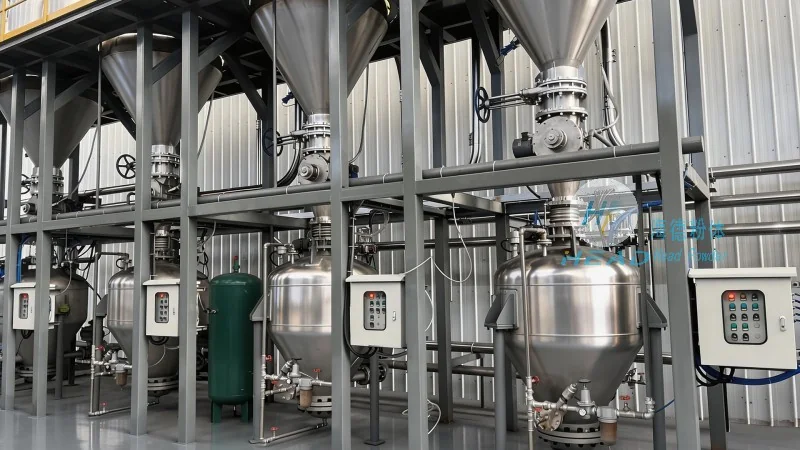
Carbon material pneumatic conveying lines are widely used in various industrial settings, each with distinct requirements that the system must meet. In the battery industry, these systems are essential for transporting carbon anode materials from raw material storage to mixing and coating lines. The systems are designed to maintain a clean and controlled environment, preventing contamination from moisture or other impurities that could affect battery performance. In the carbon black and graphite production sectors, the systems are used to move raw materials between processing stages, such as from grinding mills to drying ovens or from storage silos to production lines. The advantages of pneumatic conveying in these scenarios include reduced labor costs, improved safety by eliminating manual handling of dusty materials, and enhanced product quality through consistent material flow and minimal exposure to the environment.
Furthermore, the working scene characteristics of these systems are influenced by the scale of operations. For small-scale production facilities, a simple suction system may suffice for short-distance material transport. However, for large-scale industrial plants, multi-stage pressure systems with advanced control systems are often required to handle high material volumes and maintain consistent flow rates. HeadPowder's solutions are scalable, allowing clients to start with a basic system and expand as their production needs grow, ensuring long-term investment value.
Conclusion: Optimizing Carbon Material Handling with Advanced Pneumatic Systems
Carbon material pneumatic conveying lines represent a sophisticated solution for efficient and reliable material handling in industrial applications. By understanding the principle of air-based transportation and the specific characteristics of carbon materials, manufacturers can design systems that enhance productivity, reduce operational costs, and improve product quality. HeadPowder, with its expertise and commitment to innovation, provides comprehensive solutions that address the unique challenges of carbon material handling, ensuring that clients can achieve their production goals with minimal disruptions and maximum efficiency.




