Calcium hydroxide, commonly known as slaked lime, is a widely used chemical in various industrial applications, including water treatment, construction, and environmental remediation. The efficient and reliable transportation of this material from storage to processing units is crucial for maintaining operational efficiency and product quality. This article explores the principle and working scenario characteristics of pneumatic conveying lines specifically designed for calcium hydroxide, highlighting how these systems enhance material handling processes.
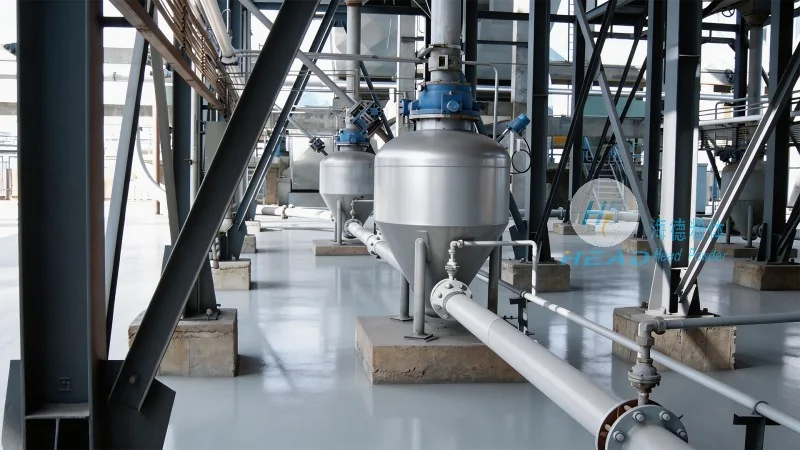
Understanding Pneumatic Conveying Systems for Calcium Hydroxide
Pneumatic conveying is a method of transporting bulk materials through a pipeline using air or other gas as the conveying medium. Unlike mechanical systems that rely on belts, screws, or buckets, pneumatic systems utilize the force of air to move material, offering several advantages such as reduced equipment wear, lower maintenance costs, and the ability to handle fine or dusty powders without clogging. For calcium hydroxide, which is often in a fine powder form, pneumatic conveying is particularly effective because it minimizes particle degradation and ensures consistent flow rates.
The core principle of a pneumatic conveying line involves creating a pressure differential between the material feed point and the discharge point. Air is introduced into the system, typically at a pressure higher than the ambient air, and is used to draw the calcium hydroxide particles into the pipeline. The system can operate in either positive pressure or negative pressure (suction) modes, depending on the application requirements. Positive pressure systems are commonly used for long-distance or high-capacity conveying, as they can maintain consistent air pressure and prevent material backflow. Negative pressure systems, on the other hand, are suitable for applications where dust control is a priority, as they draw material into the system while keeping the environment clean.
Key Working Scenario Characteristics of Calcium Hydroxide Pneumatic Conveying Lines
The working scenario characteristics of calcium hydroxide pneumatic conveying lines are tailored to the specific needs of industrial processes. These systems are designed to handle the unique properties of calcium hydroxide, such as its hygroscopic nature (ability to absorb moisture from the air) and its potential to form clumps or agglomerates. To address these challenges, the conveying lines often incorporate features like inline mixers, agitators, or vibration devices to break up clumps and maintain a uniform particle size distribution.
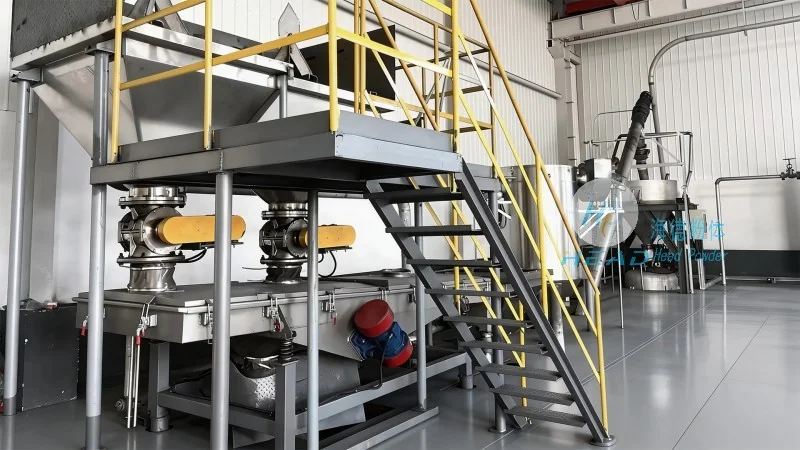
Another critical characteristic is the system's ability to handle varying material flow rates and pressure requirements. Industrial processes may require adjustments to the conveying rate based on production schedules or material availability. Modern pneumatic conveying systems are equipped with variable frequency drives (VFDs) and adjustable air valves that allow operators to modulate the air flow and pressure, ensuring optimal material transport without overloading the system. This flexibility is essential for maintaining consistent product quality and preventing equipment damage.
Dust control is a significant concern in calcium hydroxide handling due to its fine particle size and potential to create airborne dust. Pneumatic conveying systems are designed with dust collection and filtration systems to minimize environmental impact and ensure workplace safety. These systems typically include cyclone separators, bag filters, or electrostatic precipitators that capture and remove dust particles from the air before it is released into the environment. Additionally, the pipeline design may incorporate smooth, non-stick surfaces to prevent material buildup and reduce the risk of clogging.
Application Scenarios and Operational Benefits
Calcium hydroxide pneumatic conveying lines are widely used in various industrial settings, including water treatment plants, paper mills, and construction material manufacturers. In water treatment, for example, the material is used to adjust pH levels in water supplies, and the conveying system ensures a steady supply of calcium hydroxide to the treatment tanks. In the construction industry, it is used as a component in concrete and mortar, and the pneumatic system facilitates efficient delivery to mixing sites.
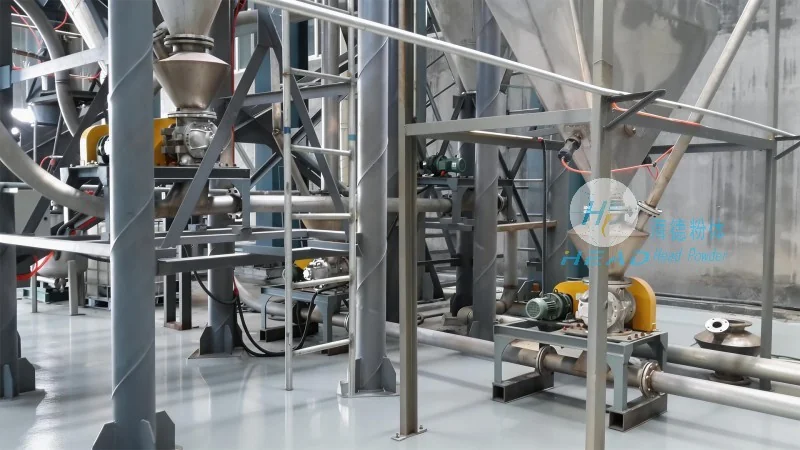
One of the primary operational benefits of these systems is their ability to reduce labor costs and improve safety. By automating the material handling process, the need for manual loading and unloading is minimized, reducing the risk of workplace injuries and exposure to dust. Additionally, the consistent flow rates provided by pneumatic conveying systems help maintain stable production processes, leading to higher product yields and lower waste. The systems also contribute to energy efficiency by using less power compared to traditional mechanical conveying methods, especially for long-distance or high-volume applications.
Company Overview: Shandong HeadPowder Engineering Co., Ltd.
HeadPowder, a leading manufacturer of industrial material handling solutions, specializes in designing and manufacturing pneumatic conveying systems tailored to the needs of various industries. With a focus on innovation and quality, the company has developed advanced technologies to enhance the performance and reliability of calcium hydroxide conveying lines. HeadPowder's products are engineered to meet the specific requirements of each application, ensuring optimal material transport and operational efficiency.
HeadPowder's facilities are located in Shandong, China, where the company leverages its local expertise and resources to deliver high-quality products and services. The company's commitment to customer satisfaction and technical excellence has made it a trusted partner for businesses in the chemical, construction, and environmental sectors. By combining advanced engineering with practical application knowledge, HeadPowder provides comprehensive solutions that address the unique challenges of calcium hydroxide handling.




