

[Nanoparticle Pneumatic Conveying of Calcium Carbonate: What It Is and Its Design Principles]
Understanding the pneumatic conveying of nano calcium carbonate powder is crucial for industries that rely on efficient material handling and processing. This technology involves the transport of fine powder particles, such as nano calcium carbonate, using a gas stream, typically air or other gases. The process is widely used in various applications, from manufacturing to industrial processing, due to its ability to handle delicate materials without the need for mechanical components that might cause contamination or degradation.
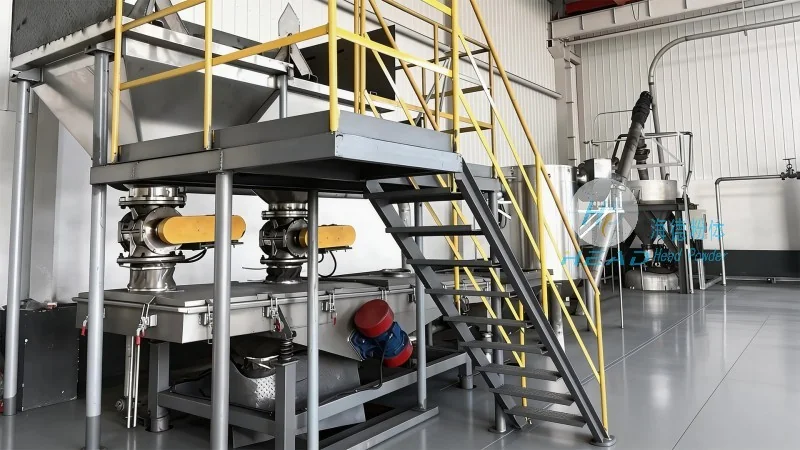
What is Pneumatic Conveying of Nano Calcium Carbonate Powder?
Pneumatic conveying of nano calcium carbonate powder refers to the method of transporting these fine particles through a pipeline using a pressurized or vacuum gas stream. Unlike traditional mechanical conveying systems, which rely on screws, belts, or buckets, pneumatic systems use fluid dynamics to move the material. This approach is particularly advantageous for nano-sized particles because it minimizes particle agglomeration and maintains the integrity of the powder, which is critical for applications where particle size and surface properties are key factors.
The primary goal of this technology is to achieve efficient, clean, and continuous transport of nano calcium carbonate, a material commonly used in plastics, coatings, and other industrial products. By utilizing a gas stream, the system can handle materials that are difficult to convey mechanically, such as those with low bulk density or high moisture content. The process also allows for the integration of other operations, such as drying or mixing, within the conveying line, enhancing overall process efficiency.
Key Characteristics of Nano Calcium Carbonate
Nano calcium carbonate (n-CaCO₃) is a fine powder with particle sizes typically ranging from 20 to 200 nanometers. Its small particle size contributes to several beneficial properties, including improved dispersion in polymers, enhanced whiteness, and better mechanical strength in end products. However, these characteristics also make the powder more susceptible to agglomeration and handling challenges during transport. Therefore, the design of the pneumatic conveying system must account for these properties to ensure reliable and consistent material flow.
Design Principles for Pneumatic Conveying Systems
The design of a pneumatic conveying system for nano calcium carbonate powder involves several critical principles to ensure optimal performance. The first consideration is the type of conveying system, which can be categorized as either pressure (or positive pressure) or vacuum (or negative pressure) systems. Pressure systems use a blower or compressor to push the material through the pipeline, while vacuum systems use a vacuum pump to draw the material into the line. The choice between these systems depends on factors such as the distance to be covered, the volume of material to be conveyed, and the need for material recovery.
Another crucial design principle is the selection of the appropriate gas velocity. The gas velocity must be high enough to prevent particle settling in the pipeline but low enough to avoid excessive wear and energy consumption. For nano calcium carbonate, the optimal gas velocity is typically determined through experiments or simulations to balance these factors. The gas-to-solid ratio (G/S ratio) is also a key parameter, representing the mass flow rate of gas to the mass flow rate of solids. An optimal G/S ratio ensures that the particles are fully suspended and transported efficiently without causing excessive pressure drops or energy losses.
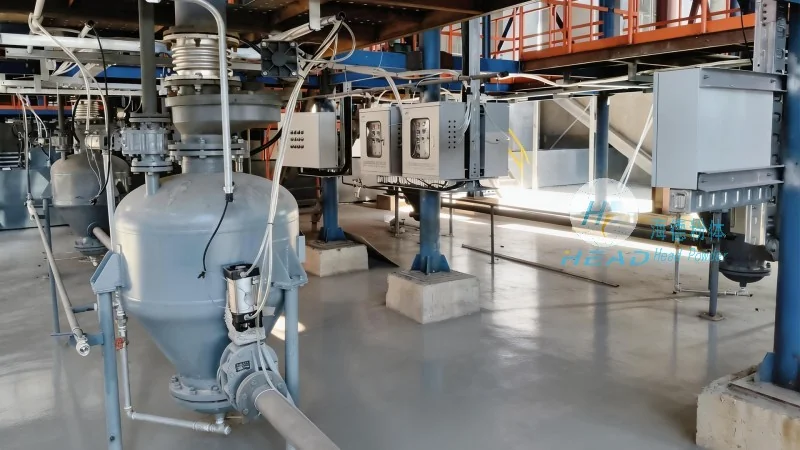
Pipeline design is another critical aspect of the system. The diameter and length of the pipeline, as well as the number and type of bends, affect the pressure drop and energy consumption of the system. For nano calcium carbonate, which has a high surface area and can cause more friction with the pipeline walls, the use of smooth, corrosion-resistant materials, such as stainless steel or PTFE-coated pipes, is recommended to minimize particle degradation and system wear. Additionally, the inclusion of features like expansion joints and vibration dampers can help mitigate the effects of particle impact and pressure fluctuations.
Components and Functionality of the Conveying System
A typical pneumatic conveying system for nano calcium carbonate powder consists of several key components. The primary components include a material feed system, a gas source (blower or vacuum pump), a conveying line, and a discharge or collection system. The material feed system is responsible for introducing the powder into the pipeline, often using a rotary valve or a feeder that can handle fine powders without clogging. The gas source provides the necessary pressure or vacuum to move the material, and the conveying line transports the gas and solid mixture to the destination. The discharge system, which may include a cyclone separator or a filter, separates the powder from the gas stream and collects it in a container.
Each component plays a vital role in the overall performance of the system. For example, the material feeder must be designed to handle the specific properties of nano calcium carbonate, such as its low bulk density and tendency to form dust. The feeder may include features like a hopper with a vent to prevent pressure buildup and a rotating mechanism to ensure consistent material flow. The gas source must be capable of delivering the required pressure or vacuum at the appropriate flow rate, and the blower or pump must be selected based on the system's power requirements and efficiency.
Advantages and Challenges of Pneumatic Conveying for Nano Calcium Carbonate
Pneumatic conveying of nano calcium carbonate powder offers several advantages over traditional mechanical systems. These include the ability to handle fine, delicate materials without contamination, the flexibility to integrate with other processes, and the reduced risk of material degradation due to minimal mechanical contact. Additionally, the system can be designed to operate in a closed loop, minimizing dust emissions and improving safety in the workplace.
However, there are also challenges associated with this technology. One of the main challenges is the high energy consumption required to move the fine particles through the pipeline. The pressure drop in the system can be significant, especially for long distances or high material flow rates. Another challenge is the potential for particle agglomeration, which can lead to blockages in the pipeline or reduced conveying efficiency. To address these challenges, engineers often employ advanced control systems and optimization techniques to improve the system's performance and efficiency.
Applications and Industry Use Cases
The pneumatic conveying of nano calcium carbonate powder is widely used in various industries due to its ability to handle delicate materials efficiently. In the plastics industry, for example, nano calcium carbonate is used as a filler to improve the mechanical properties of polymers. The pneumatic conveying system allows manufacturers to add the filler to the polymer melt in a controlled manner, ensuring uniform dispersion and consistent product quality. Similarly, in the coatings and paints industry, nano calcium carbonate is used to enhance the whiteness and opacity of the final product. The ability to convey the powder in a clean and efficient manner is crucial for maintaining the quality of these products.
In addition to these applications, the technology is also used in the production of paper, ceramics, and other industrial products. The versatility of pneumatic conveying makes it a suitable solution for a wide range of industries that require the transport of fine powders. By understanding the design principles and characteristics of the system, manufacturers can optimize their processes and improve overall productivity.
Conclusion
Pneumatic conveying of nano calcium carbonate powder is a sophisticated technology that combines fluid dynamics and material science to achieve efficient and reliable transport of fine particles. The design of the system must account for the unique properties of nano calcium carbonate, including its small particle size and susceptibility to agglomeration. By carefully selecting the components, optimizing the gas-to-solid ratio, and designing the pipeline appropriately, engineers can develop a system that meets the specific needs of the application.
Companies such as Shandong HeadPowder Engineering Co., Ltd., based in China, specialize in providing solutions for the pneumatic conveying of nano calcium carbonate and other fine powders. With their expertise in material handling and process engineering, they offer customized systems that enhance the efficiency and quality of industrial processes. The use of pneumatic conveying technology not only improves the handling of nano calcium carbonate but also contributes to the overall sustainability and productivity of modern manufacturing operations.