Barite, a mineral primarily composed of barium sulfate (BaSO₄), is widely utilized across multiple industrial sectors due to its high density and chemical stability. Pneumatic conveying represents a sophisticated method for transporting bulk barite materials through pipelines using air or other gases as the conveying medium. This technology offers distinct advantages over conventional material handling solutions such as belt conveyors or bucket elevators, including enhanced flexibility in system layout, reduced dust generation, and the capability to operate in hazardous environments. This article delves into the core principles of barite pneumatic conveying, explores the classification of pneumatic conveying systems based on operational characteristics, and examines practical applications across diverse industries.
Understanding Pneumatic Conveying Systems
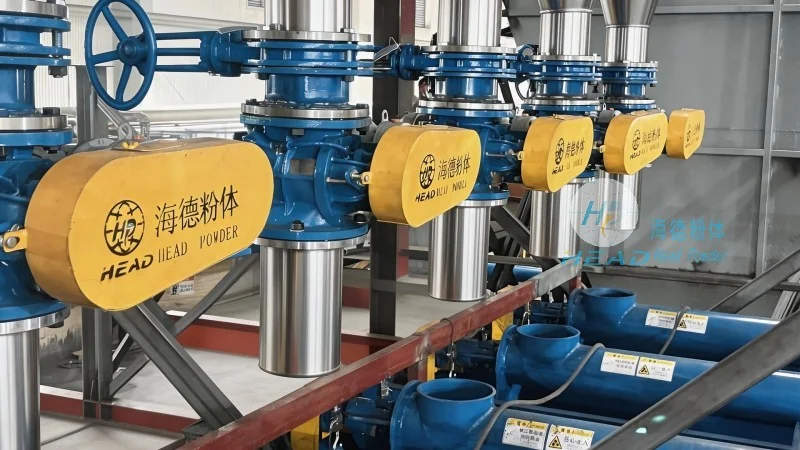
Pneumatic conveying systems are engineered to move dry bulk materials like barite through a closed or open pipeline network. The fundamental components of such a system typically include a material feed hopper, a conveying pipeline, a gas source (generally a blower or compressor), and a discharge device. The process begins with feeding barite material into the hopper, where it is then drawn into the conveying line by the moving air stream. The air velocity within the pipeline must be sufficient to overcome gravitational and frictional forces acting on the particles, ensuring stable and efficient transport. Two primary types of pneumatic conveying systems exist: dilute-phase and dense-phase, each with unique operational characteristics and suitability for different material handling requirements.
Classification of Pneumatic Conveying Systems
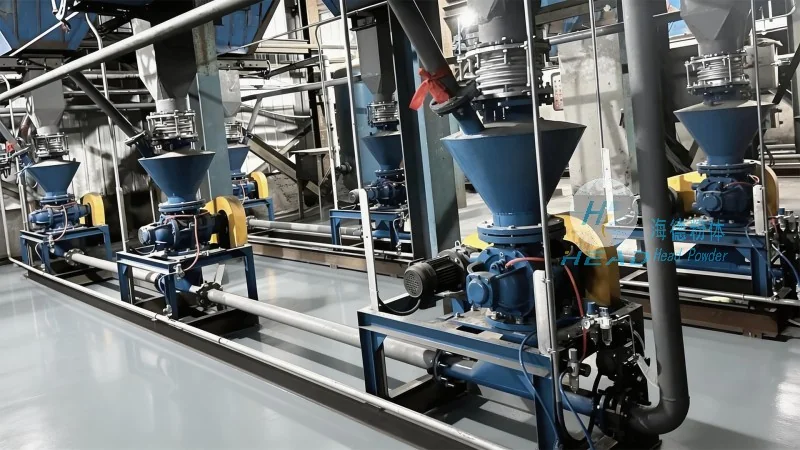
Based on the air-to-material ratio and conveying medium velocity, pneumatic conveying systems are categorized into two main types: dilute-phase and dense-phase. Dilute-phase systems operate at higher air velocities (typically 20-30 m/s) and lower air-to-material ratios (1-5 m³ of air per kg of material), resulting in a relatively low particle concentration within the air stream. This method is well-suited for transporting fine powders or granular materials over short to medium distances. Dense-phase systems, conversely, operate at lower air velocities (5-15 m/s) and higher air-to-material ratios (10-20 m³ of air per kg of material), creating a higher particle concentration in the pipeline. This approach is ideal for handling abrasive or sensitive materials, as it minimizes particle impact and wear on system components.
Applications of Barite Pneumatic Conveying
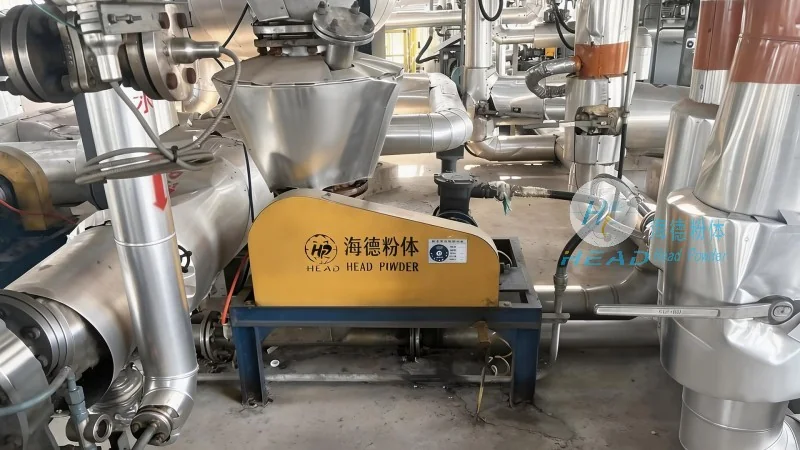
Barite is commonly employed as a weighting agent in the oil and gas industry, particularly in drilling fluids to increase density and prevent blowouts. Pneumatic conveying is an effective method for transporting barite from storage silos to processing facilities or directly to drilling sites. This technology ensures controlled material delivery, maintaining consistent density and preventing contamination. In addition to the oil and gas sector, barite serves as a filler or pigment in the manufacturing of paint, plastics, and rubber. Pneumatic conveying systems are utilized to transport barite from raw material storage to production lines, ensuring a continuous supply of high-quality material. Another application is in the pharmaceutical industry, where barite is used as an inert filler in tablets and capsules. The ability to handle fine powders and maintain product purity makes pneumatic conveying suitable for this application.
Advantages of Using Pneumatic Conveying for Barite
Compared to traditional material handling methods, pneumatic conveying offers several advantages when applied to barite transport. One key benefit is the reduction of dust exposure for operators, as the material is contained within the pipeline system. This improves workplace safety and compliance with environmental regulations. Additionally, pneumatic conveying systems can be installed in complex layouts, allowing for flexible routing around obstacles or existing infrastructure. The technology also minimizes material degradation, as particles are not subjected to excessive impact or friction during transport. This is particularly important for barite, which may be abrasive and prone to wear if handled improperly. Furthermore, pneumatic conveying can be integrated with other processing equipment, such as mixers or classifiers, to create a seamless material handling process. The ability to control flow rate and pressure within the system allows for precise material delivery, ensuring optimal performance in downstream applications.
Challenges and Considerations in Barite Pneumatic Conveying
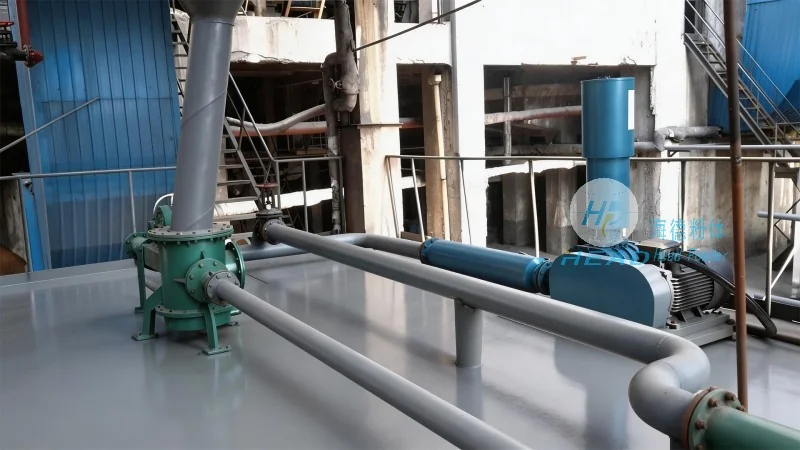
While pneumatic conveying offers numerous benefits, there are also challenges and considerations that must be addressed when transporting barite. One primary challenge is the potential for particle segregation, where larger or heavier particles may settle and cause blockages in the pipeline. This can be mitigated by using appropriate system designs, such as inclined pipelines or vibration systems, to maintain uniform particle distribution. Another consideration is the wear on system components, especially the pipeline and valves, due to the abrasive nature of barite. Regular maintenance and the use of wear-resistant materials are essential to ensure system longevity and efficiency. Additionally, the energy consumption of pneumatic conveying systems can be significant, particularly for long-distance or high-volume transport. Optimizing air velocity and system design can help reduce energy costs while maintaining effective material transport. Finally, the selection of the appropriate conveying system (dilute-phase or dense-phase) depends on the specific characteristics of the barite material, including particle size, density, and moisture content. Proper system sizing and configuration are critical to achieving optimal performance and minimizing operational costs.




