Lysine is a critical amino acid widely used in the food and animal feed industries, and efficient material handling is essential for its production and processing. Pneumatic conveying, a technology that uses air or gas to transport solid materials like lysine, offers a flexible and effective solution for various industrial applications. This article provides an introduction to the working principles and classification of lysine pneumatic conveying systems, along with practical applications and considerations for implementation.
Fundamental Working Principles of Lysine Pneumatic Conveying
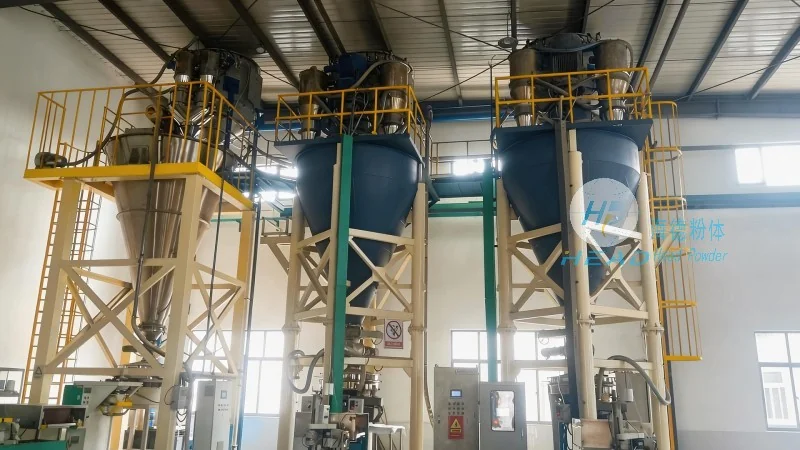
Pneumatic conveying operates by transporting solid particles, such as lysine granules, through a pipeline using a moving air or gas stream. The core principle involves creating a pressure differential between the inlet and outlet of the conveying system. There are two primary types of pneumatic conveying based on the pressure differential: positive pressure and negative pressure systems.
Positive pressure systems, also known as pressure conveying, maintain a pressure higher than atmospheric pressure within the conveying pipeline. Air is supplied by a blower or compressor, and the pressure pushes the lysine particles forward. This method is suitable for long-distance and high-volume conveying, as it can handle larger distances and higher throughput compared to negative pressure systems.
Negative pressure systems, or vacuum conveying, create a pressure lower than atmospheric pressure in the pipeline. The system draws lysine particles into the pipeline using a vacuum pump, and the air flow pulls the material along. Negative pressure systems are often used for short-distance conveying, especially in applications where dust control and environmental protection are critical, as they minimize dust emissions and are more suitable for indoor or enclosed environments.
In both systems, the air velocity and the concentration of lysine particles in the air stream are crucial. Proper air velocity ensures that the lysine particles are fully entrained and transported without settling or blockages. The concentration of particles affects the system's efficiency and energy consumption, with higher concentrations generally requiring higher air velocities to maintain flow.
Classification of Lysine Pneumatic Conveying Systems
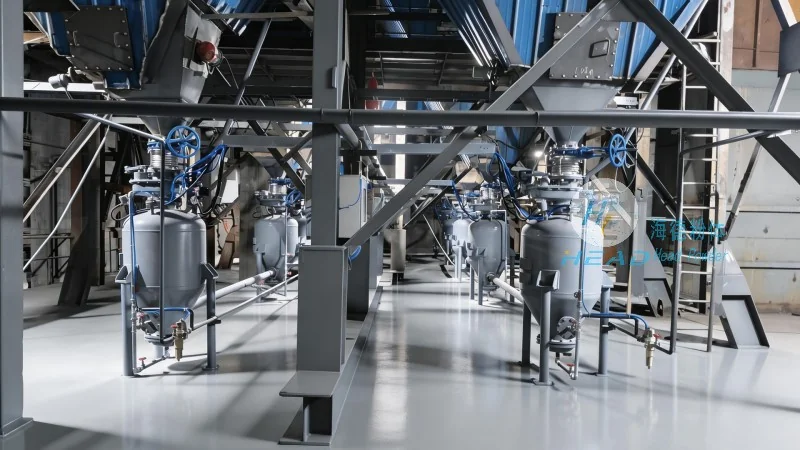
Lysine pneumatic conveying systems can be classified based on several factors, including the pressure type, the phase of the conveying medium, and the method of particle transport. The most common classifications are based on pressure and phase.
By pressure type, systems are divided into positive pressure and negative pressure systems, as described above. Positive pressure systems are further categorized into dense phase and dilute phase systems. Dense phase conveying involves a higher concentration of lysine particles in the air stream, with lower air velocities, which results in a more stable and less turbulent flow. This method is ideal for transporting sensitive materials like lysine, as it reduces particle breakage and ensures a smoother flow. Dilute phase conveying, on the other hand, uses lower particle concentrations and higher air velocities, making it suitable for shorter distances and less demanding applications.
By phase, systems are categorized as either dilute phase or dense phase. Dilute phase systems are characterized by low particle concentrations (typically less than 10% by volume) and high air velocities, which allow for efficient and low-cost conveying over moderate distances. Dense phase systems, with higher particle concentrations (up to 60% by volume) and lower air velocities, are more energy-intensive but provide better control over particle movement and are better suited for handling delicate or abrasive materials like lysine.
Other classifications include the method of particle transport, such as drag-type or pressure-type systems. Drag-type systems use a rotating screw or conveyor to move lysine particles along the pipeline, while pressure-type systems rely solely on the air flow. The choice of classification depends on the specific requirements of the lysine production process, including the distance to be covered, the volume of material to be conveyed, and the physical properties of the lysine particles.
Typical Application Scenarios in Lysine Production and Processing
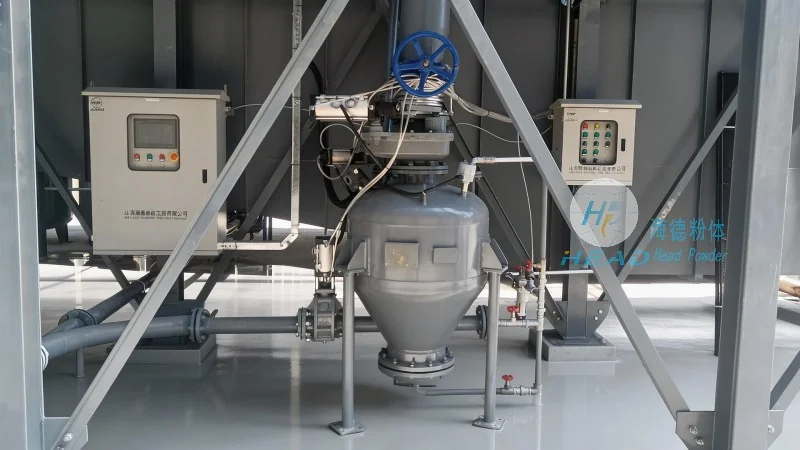
Lysine pneumatic conveying is widely used in various stages of lysine production and processing. In the raw material handling stage, it is used to transport raw materials such as corn, soybean meal, and other feedstocks to the production facility. The positive pressure system is often preferred for this stage due to its ability to handle large volumes and long distances.
During the production process, pneumatic conveying is used to transfer intermediate products, such as lysine intermediates or partially processed lysine, between different processing units. For example, after the lysine is crystallized, it needs to be transported to the drying and packaging units. The negative pressure system may be used in this stage to minimize dust emissions and maintain a clean environment.
In the final packaging stage, lysine is often packaged in bulk containers or bags. Pneumatic conveying is used to transfer the finished product from the storage silos to the packaging line. The system ensures that the lysine is handled gently, preventing damage to the granules and maintaining product quality.
HeadPowder, a leading engineering company based in Shandong, China, specializes in providing customized pneumatic conveying solutions for lysine manufacturers. The company's expertise in powder handling technology allows them to design and implement systems that meet the specific needs of lysine production, ensuring efficient and reliable material transport throughout the entire production process.
Key Considerations for Implementing Lysine Pneumatic Conveying Solutions
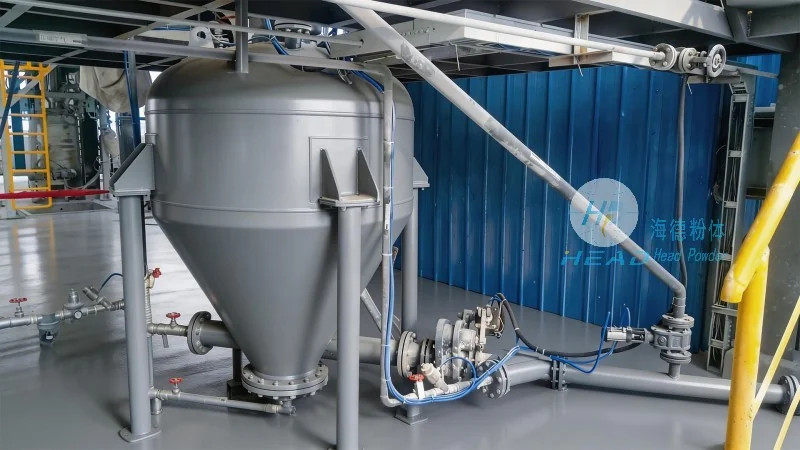
When implementing a lysine pneumatic conveying system, several factors must be considered to ensure optimal performance and efficiency. The first consideration is the physical properties of the lysine particles, including their size, density, and flowability. Lysine granules typically have a certain size distribution, and their density affects the air velocity required for conveying. The flowability of the lysine, which is influenced by moisture content and particle shape, determines the type of conveying system that is most suitable.
The distance and volume of material to be conveyed are also critical factors. Longer distances require higher air pressures and more powerful blowers, while larger volumes may necessitate multiple pipelines or larger diameter pipes. The system's energy consumption is a key consideration, as it directly impacts operational costs. Dense phase conveying, while more energy-intensive, often results in lower overall costs due to reduced material handling time and lower maintenance requirements.
Environmental and safety considerations are also important. Lysine is a fine powder that can create dust, which may be hazardous if not properly controlled. Pneumatic conveying systems, especially negative pressure systems, are effective in minimizing dust emissions and maintaining a safe working environment. Additionally, the system must be designed to prevent blockages and ensure smooth operation, as blockages can lead to system failures and downtime.
HeadPowder Engineering Co., Ltd., headquartered in Shandong, China, offers comprehensive services to address these considerations. The company provides detailed engineering, equipment selection, and installation support to ensure that the lysine pneumatic conveying system is tailored to the specific requirements of the client. Their team of experts works closely with lysine manufacturers to design systems that maximize efficiency, minimize costs, and ensure product quality.




