HeadPowder, a leading manufacturer in the field of material handling technology, specializes in the design, development, and production of advanced pneumatic conveying systems tailored for the transportation of rare earth crystal powders. This article provides a detailed overview of the classification and essential components of such systems, highlighting the technical aspects and functional design that ensure efficient and reliable operation in industrial applications.
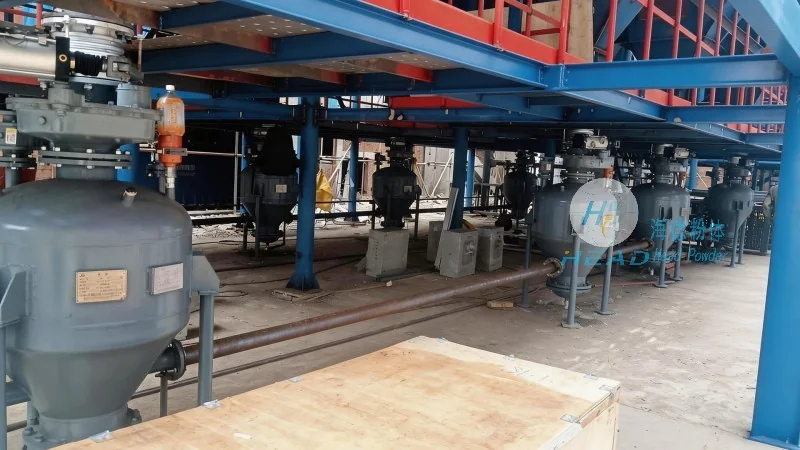
Introduction to Rare Earth Crystal Powder Pneumatic Conveying Systems
HeadPowder Engineering Co., Ltd., based in Shandong, China, is dedicated to delivering high-performance solutions for the pneumatic transport of rare earth crystal powders. These systems are engineered to handle the unique properties of rare earth materials, such as their fine particle size, high reactivity, and potential for dust explosion risks. The classification of pneumatic conveying systems is primarily based on the gas velocity and the resulting flow regime, which directly impacts the system's efficiency, energy consumption, and suitability for specific powder characteristics.
Classification of Pneumatic Conveying Systems for Rare Earth Crystal Powders
There are two main categories of pneumatic conveying systems used for rare earth crystal powders: dilute-phase and dense-phase systems. Dilute-phase systems operate at higher gas velocities, typically above 20 m/s, and rely on the suspension of particles in the air stream. This method is suitable for short to medium-distance transport and for powders with low to moderate dust explosion risks. Dense-phase systems, on the other hand, operate at lower gas velocities, often below 10 m/s, and use a higher proportion of solids to gas, creating a plug flow or slurry-like movement. Dense-phase systems are preferred for longer distances, higher pressure requirements, and for materials that are more prone to agglomeration or dust explosion hazards.
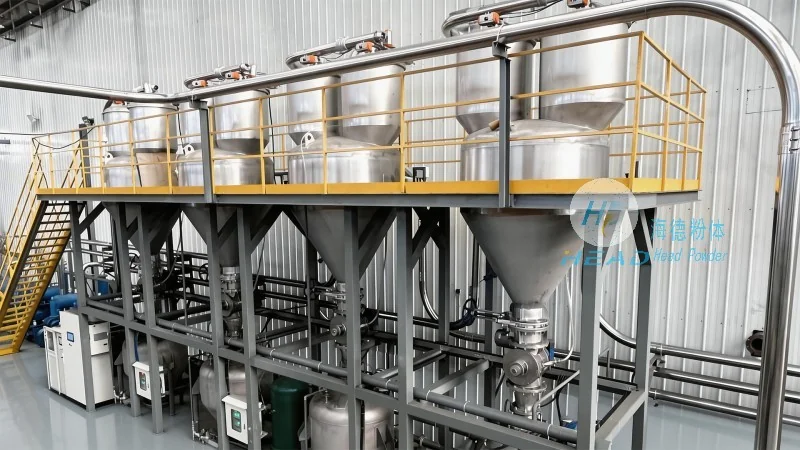
Key Components of a Rare Earth Crystal Powder Pneumatic Conveying System
The effective operation of a rare earth crystal powder pneumatic conveying system depends on several critical components, each designed to perform specific functions and ensure the safe and efficient transport of the material. The main components include:
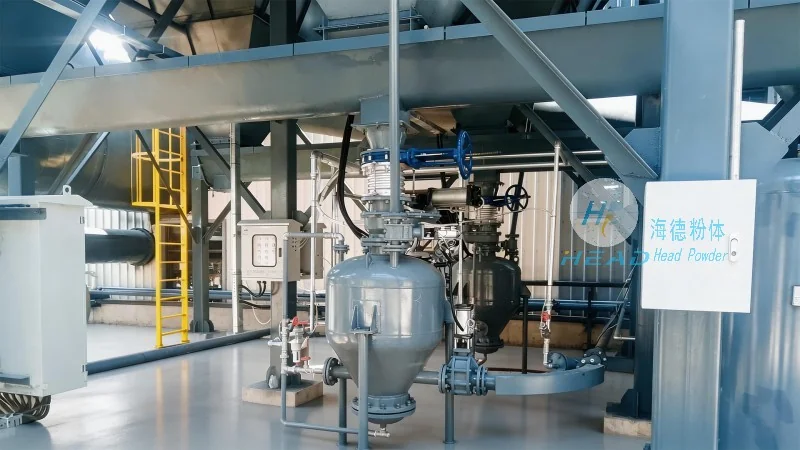
- Feed Hopper and Material Feeder: The feed hopper is used to store the rare earth crystal powder, providing a consistent supply to the feeder. The feeder, such as a rotary valve or a screw feeder, regulates the flow rate of the powder into the system, ensuring a controlled and steady feed to the conveying line.
- Pneumatic Conveying Unit: This is the core of the system, responsible for generating the air flow and transporting the powder. It typically consists of a blower or a compressor that supplies the necessary air pressure and volume. The unit may include a filter to remove any particles from the air stream, protecting the equipment and ensuring clean operation.
- Conveying Pipeline: The pipeline is made of materials resistant to corrosion and abrasion, such as stainless steel or special alloys, to withstand the chemical and mechanical stresses of rare earth powders. The pipeline design, including the use of bends, elbows, and straight sections, is optimized to minimize pressure loss and maintain the flow stability of the powder-air mixture.
- Separation and Collection System: At the receiving end, the system includes a separator to separate the powder from the air stream. This may involve a cyclone separator, a bag filter, or a combination of both. The separated powder is collected in a receiving hopper, while the clean air is discharged back to the environment or recirculated if necessary.
- Control and Monitoring System: A sophisticated control system is integrated to monitor and regulate the operation of the conveying system. This includes sensors for pressure, flow rate, and temperature, as well as control valves and actuators to adjust the feeder speed and blower output. The system ensures that the operation remains within safe parameters and optimizes energy consumption.
Design Considerations for Safe and Efficient Operation
When designing a pneumatic conveying system for rare earth crystal powders, several factors must be considered to ensure safety and efficiency. These include the particle size distribution and density of the powder, the dust explosion risk classification, the required transport distance and pressure, and the environmental regulations. HeadPowder Engineering Co., Ltd. employs advanced engineering principles and materials science to address these considerations, ensuring that the system meets the highest standards of performance and safety.
Applications and Benefits
Rare earth crystal powder pneumatic conveying systems are widely used in various industries, including chemical manufacturing, metallurgy, and electronics. The benefits of these systems include reduced labor costs, improved safety by minimizing manual handling of powders, increased production efficiency through continuous operation, and the ability to transport materials over long distances without the need for intermediate storage or handling. The systems are also designed to be flexible, allowing for easy integration with existing production lines and future expansion.




