HeadPowder, a professional manufacturer based in Shandong, China, specializes in the development and production of advanced pneumatic conveying systems tailored for the organic fertilizer industry. With a focus on efficient material handling solutions, the company has established itself as a key player in providing reliable equipment for granule transport in agricultural applications.
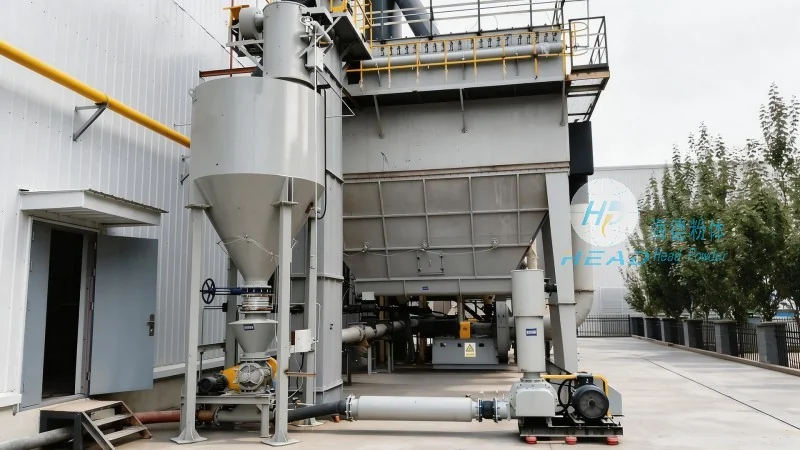
Organic Fertilizer Granule Pneumatic Conveying Systems: An Overview
Organic fertilizer granule pneumatic conveying systems are designed to efficiently transport bulk organic fertilizer granules from storage silos or production lines to processing units, packaging stations, or storage facilities. These systems utilize air as the primary medium to move granular materials, eliminating the need for mechanical components like belts or buckets that may cause contamination or wear. The technology is widely adopted in the fertilizer industry due to its ability to maintain product purity, reduce labor costs, and enhance operational efficiency.
The Structural Design and Working Principle of Pneumatic Conveying Equipment
The core components of an organic fertilizer granule pneumatic conveying system typically include a feeding device, a conveying pipeline network, a gas source (blower or compressor), and a control system. The feeding device, often a rotary valve or a screw feeder, ensures a consistent and controlled flow of granules into the system. The conveying pipeline, made from materials resistant to corrosion and abrasion (such as stainless steel or special plastic), transports the granules through the system. The gas source provides the necessary air pressure to move the granules, while the control system monitors and adjusts the flow rate and pressure to maintain optimal operation.
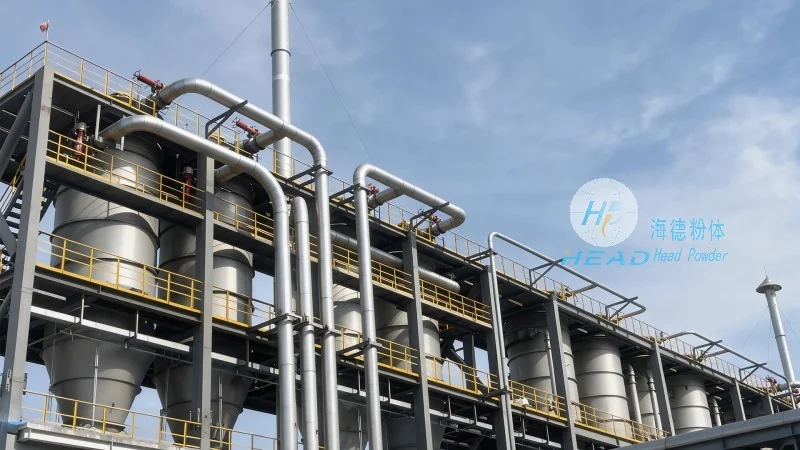
Key Advantages of Pneumatic Conveying for Organic Fertilizer Granules
Implementing pneumatic conveying systems for organic fertilizer granules offers several advantages over traditional mechanical methods. Firstly, it minimizes product contamination by avoiding direct contact with metal or other materials. Secondly, the system reduces labor requirements as it automates the material handling process, allowing for continuous operation. Thirdly, it improves safety by eliminating the need for manual handling of heavy or dusty materials. Additionally, the flexibility of pneumatic conveying allows for easy integration with existing production lines and can be scaled to accommodate varying production volumes.
Application Scenarios in the Organic Fertilizer Industry
Organic fertilizer granule pneumatic conveying systems are commonly used in various stages of the fertilizer production and distribution process. In the production phase, they transport raw materials from storage to mixing and granulation units. During the packaging stage, they move finished granules from the production line to packaging machines. For storage facilities, the systems can transfer granules between silos or storage tanks, ensuring efficient inventory management. The adaptability of these systems makes them suitable for both small-scale and large-scale fertilizer operations, providing a reliable solution for material transport in the agricultural sector.
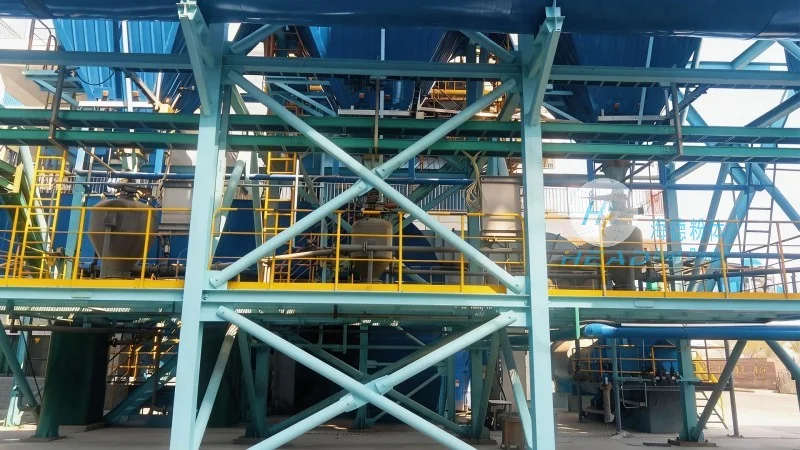
Technical Considerations for Optimal Performance
To ensure the optimal performance of organic fertilizer granule pneumatic conveying systems, several technical factors must be considered. The particle size and density of the granules are critical, as they affect the air velocity required for effective transport. The system design must account for the specific characteristics of the fertilizer, such as its moisture content and abrasiveness, to prevent equipment wear and maintain efficiency. Regular maintenance, including cleaning of pipelines and checking the condition of the gas source, is essential to prolong the lifespan of the equipment and maintain consistent performance. Additionally, the control system should be equipped with sensors to monitor pressure, flow rate, and temperature, allowing for real-time adjustments and troubleshooting.
Conclusion: The Role of HeadPowder in Advancing Pneumatic Conveying Technology
HeadPowder Engineering Co., Ltd., with its headquarters in Shandong, China, continues to innovate in the field of organic fertilizer granule pneumatic conveying systems. By combining advanced engineering with a deep understanding of the fertilizer industry's needs, the company provides customized solutions that enhance operational efficiency, product quality, and safety. The company's commitment to quality and customer satisfaction has made it a trusted partner for businesses seeking reliable material handling equipment in the agricultural sector. As the demand for efficient and sustainable fertilizer production grows, HeadPowder remains at the forefront of developing cutting-edge pneumatic conveying technologies that meet the evolving needs of the industry.




