Shandong HeadPowder Engineering Co., Ltd., based in Shandong, China, specializes in the design, manufacturing, and installation of advanced material handling systems. The company focuses on providing efficient and reliable solutions for transporting various powders, including high-purity materials like aluminum nitride. This article details the operation process and working principle of a pneumatic conveying system specifically designed for aluminum nitride material handling.
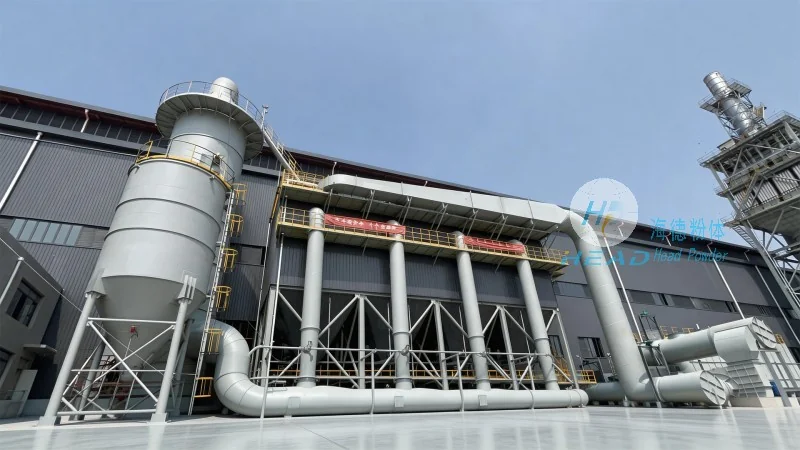
Overview of the Pneumatic Conveying System
The pneumatic conveying system for aluminum nitride material is a closed-loop system that utilizes compressed air to transport the material from the storage hopper to the processing equipment. The system is composed of several key components, including a hopper, a feeder, a conveying line, a filter, and a receiver. Each component plays a crucial role in ensuring the smooth and efficient operation of the system.
Working Principle of the System
The core of the pneumatic conveying system is the use of air pressure to move the material. The process begins with the material being fed from the storage hopper into the feeder. The feeder then meters the material at a controlled rate into the conveying line. Simultaneously, compressed air is introduced into the conveying line, creating a flow that carries the material particles along the pipe. The air velocity is carefully controlled to ensure that the material is transported without causing excessive wear or degradation. The conveying line may include bends, expansions, or other components that are designed to maintain the material's flow and prevent blockages.
Operation Process Step-by-Step
1. Material Loading: The aluminum nitride material is stored in a large hopper. The hopper is equipped with a level indicator to monitor the material volume. When the material level drops to a certain point, an alarm is triggered to indicate the need for refilling.
2. Feeding and Metering: The material is discharged from the hopper into a rotary or vibratory feeder. The feeder regulates the flow rate of the material, ensuring a consistent and controlled feed into the conveying line. This step is critical to prevent overloading the system and to maintain the desired air-to-material ratio.
3. Conveying: Compressed air is supplied to the conveying line from a compressor. The air is introduced at the inlet of the conveying line, creating a high-velocity flow that lifts and transports the aluminum nitride particles. The air velocity is typically maintained at a level that is sufficient to overcome the gravitational force and frictional resistance of the material.
4. Filtering and Cleaning: As the material is conveyed, it passes through a filter system that removes any fine particles or dust from the air stream. The filtered air is then discharged to the atmosphere, while the collected material is returned to the system or disposed of as per the plant's waste management procedures.
5. Receiving and Discharging: The material is deposited into a receiver or processing equipment at the end of the conveying line. The receiver is designed to handle the material flow and prevent any backflow or spillage. The material is then transferred to the next stage of the production process, such as mixing, compounding, or sintering.
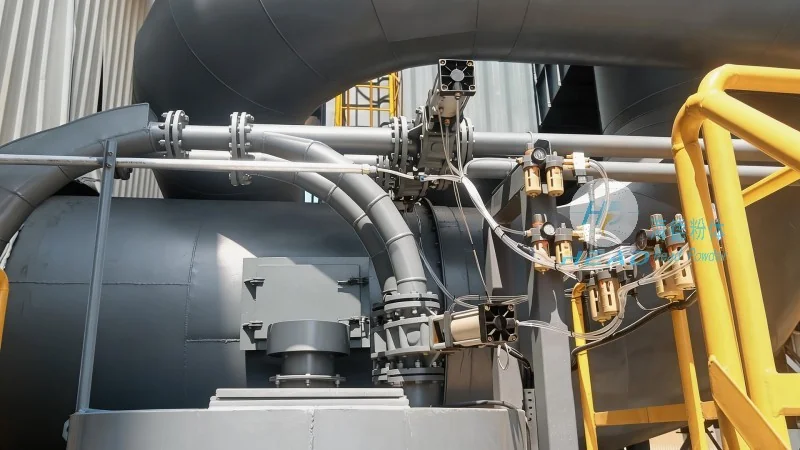
Key Components and Their Functions
The pneumatic conveying system for aluminum nitride material includes several essential components, each with a specific function:
Hopper: The storage vessel for the aluminum nitride material. It is designed to hold a large quantity of material and is equipped with a discharge valve to control the material flow.
Feeder: The device that meters the material at a controlled rate. Common types include rotary feeders, vibratory feeders, and screw feeders. The choice of feeder depends on the material's properties, such as particle size, density, and flowability.
Compressor: The equipment that generates the compressed air required for conveying. The compressor must be capable of providing sufficient pressure and volume to maintain the desired air velocity in the conveying line.
Conveying Line: The pipeline through which the material and air are transported. The line is typically made of stainless steel or other corrosion-resistant materials to prevent contamination and wear from the aluminum nitride particles.
Filter: The system that removes fine particles from the air stream. This is crucial for maintaining air quality and preventing dust accumulation in the plant. The filter may include a pre-filter and a final filter, such as a baghouse or cartridge filter.
Receiver: The vessel that collects the conveyed material. It is designed to handle the material flow and prevent any backflow or spillage. The receiver may be equipped with a discharge valve or a conveyor to transfer the material to the next process.
Advantages of the Pneumatic Conveying System
The pneumatic conveying system for aluminum nitride material offers several advantages over traditional material handling methods, such as belt conveyors or bucket elevators:
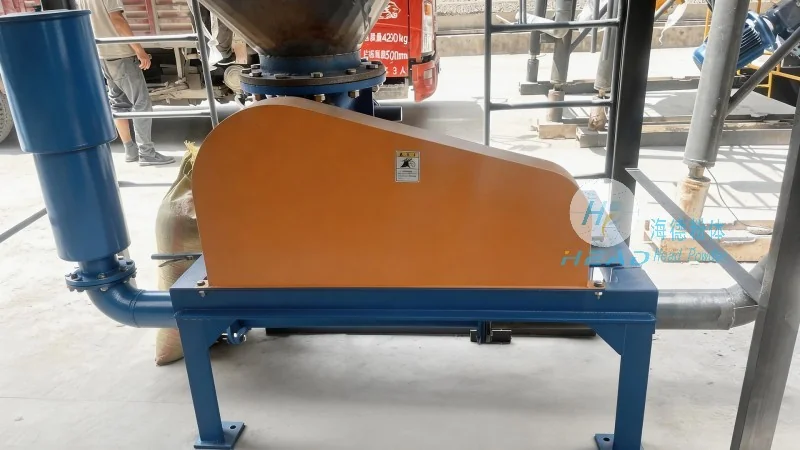
Efficiency: The system can transport material over long distances with minimal energy consumption. The use of compressed air allows for a continuous and uninterrupted flow of material.
Flexibility: The system can be easily reconfigured to handle different material types or to change the conveying distance. The components can be added or removed as needed to adapt to changing production requirements.
Sanitation: The closed-loop system prevents contamination from the environment and minimizes dust exposure. This is particularly important for high-purity materials like aluminum nitride, which are used in semiconductor and electronics applications.
Cost-Effectiveness: Although the initial investment may be higher than traditional systems, the long-term operational costs are lower due to reduced maintenance and material loss.
Maintenance and Safety Considerations
Proper maintenance and safety measures are essential to ensure the reliable operation of the pneumatic conveying system. Regular inspections of the components, such as the hopper, feeder, and filter, are necessary to detect any signs of wear or damage. The system should be equipped with safety features, such as pressure relief valves and emergency shut-off switches, to prevent accidents and equipment damage.
Additionally, the system should be designed to handle the specific properties of aluminum nitride material, such as its high temperature resistance and chemical stability. The components should be made of materials that are compatible with the material and can withstand the operating conditions.
Conclusion
The pneumatic conveying system for aluminum nitride material is an efficient and reliable solution for material handling in various industrial applications. By understanding the operation process and working principle of the system, users can optimize its performance and ensure its long-term operation. Shandong HeadPowder Engineering Co., Ltd. provides comprehensive solutions for the design and implementation of such systems, ensuring that clients receive high-quality equipment and services tailored to their specific needs.




