HeadPowder, a leading engineering firm based in Shandong, China, specializes in the design and implementation of advanced pneumatic conveying systems for handling gypsum ash materials. This article provides a detailed overview of the operational process and underlying principles of such systems, highlighting their efficiency and reliability in industrial applications.
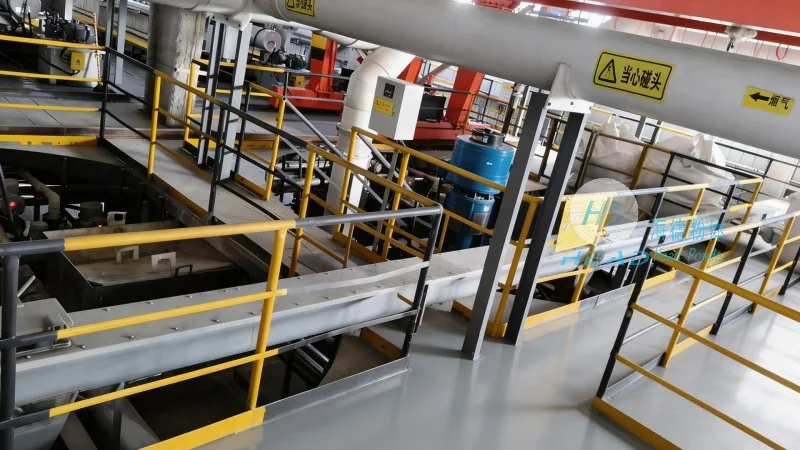
Introduction to Gypsum Ash Pneumatic Conveying Systems
Gypsum ash, a byproduct commonly generated in industrial processes such as power generation and chemical manufacturing, requires efficient and safe handling methods for transportation and disposal. Pneumatic conveying systems offer a solution that minimizes dust exposure, reduces material loss, and enhances overall operational safety compared to traditional methods like bucket elevators or belt conveyors. HeadPowder's expertise lies in customizing these systems to meet the specific demands of clients, ensuring optimal performance in diverse industrial settings.
The Operational Process of Pneumatic Conveying
The operation of a gypsum ash pneumatic conveying system involves several key steps that ensure the smooth and continuous transport of material from the source to the destination. The process begins with the material being fed into the system, typically through a hopper or a silo. An air compressor then generates a high-pressure airflow that draws the material into the conveying line. As the material travels through the pipeline, it is suspended in the air stream, allowing it to be transported over long distances without the need for intermediate storage or transfer points.
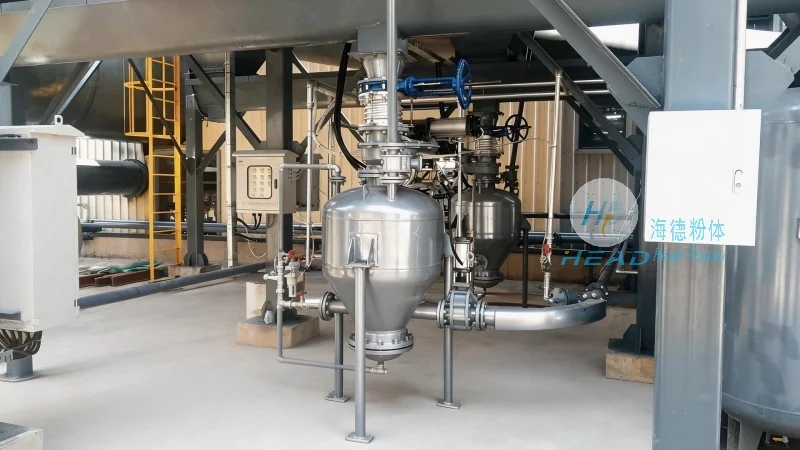
During the conveying process, the system maintains a consistent air pressure and flow rate to prevent blockages and ensure uniform material movement. The use of appropriate pipe diameters, bends, and valves is crucial for maintaining the flow dynamics and preventing material deposition. HeadPowder's engineers carefully design the system's components to match the specific characteristics of gypsum ash, including its particle size, density, and moisture content, to optimize the conveying efficiency.
Working Principle of Pneumatic Conveying Technology
The core principle of pneumatic conveying is the use of compressed air to create a fluidized state of the material, allowing it to be transported as a slurry or a suspended particle stream. There are two main types of pneumatic conveying systems: dilute-phase and dense-phase. Dilute-phase systems operate at higher air velocities, typically 20-30 meters per second, and are suitable for short to medium distances and low to medium material loads. Dense-phase systems, on the other hand, use lower air velocities and higher material concentrations, making them ideal for long-distance transport and handling of high-density materials like gypsum ash.
In a dilute-phase system, the material is carried in a relatively low concentration, with the air acting as the primary medium for transport. This method is efficient for short distances but may require larger air volumes and higher energy consumption. Dense-phase systems, however, use a higher proportion of material in the conveying stream, reducing the air volume needed and minimizing energy costs. HeadPowder's systems often incorporate a combination of both phases to achieve the best balance between efficiency and energy consumption, depending on the client's operational requirements.
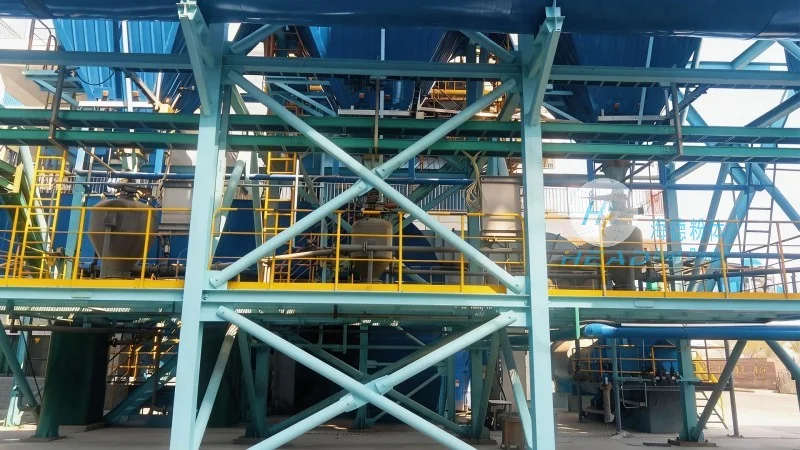
Key Components and Their Functions
A gypsum ash pneumatic conveying system consists of several critical components that work in tandem to ensure reliable operation. The primary components include the air compressor, which generates the necessary pressure and airflow; the hopper or silo, which stores and feeds the material; the conveying pipeline, which transports the material; and the control system, which monitors and regulates the process. Each component plays a vital role in maintaining the system's performance and safety.
The air compressor is responsible for providing the high-pressure air required to move the material. It is typically a positive displacement type, such as a rotary screw or a reciprocating compressor, chosen based on the system's capacity and pressure needs. The hopper or silo ensures a steady supply of material, preventing blockages and maintaining consistent flow rates. The conveying pipeline is designed with appropriate diameters and materials to withstand the pressure and abrasion caused by the material and air. The control system, often equipped with sensors and automation, monitors parameters like pressure, flow rate, and material level, allowing for real-time adjustments to optimize performance and prevent issues like blockages or overloading.
Advantages of Pneumatic Conveying for Gypsum Ash
Compared to traditional material handling methods, pneumatic conveying systems offer several advantages that make them ideal for handling gypsum ash. One of the most significant benefits is the reduction in dust exposure, as the material is contained within the pipeline and the air is filtered before being released. This not only improves workplace safety but also minimizes environmental impact. Additionally, pneumatic conveying reduces material loss and contamination, as the material is not exposed to external elements during transport. The systems also offer flexibility in terms of layout, allowing for vertical, horizontal, or inclined transport paths, and can be easily integrated with existing industrial processes.
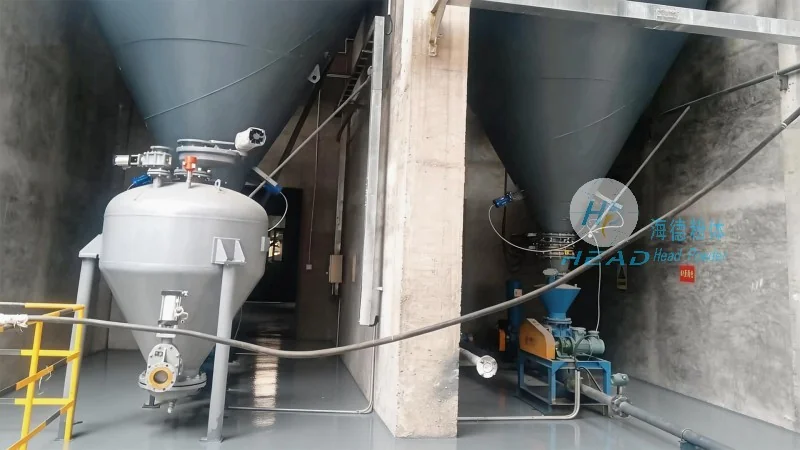
Another advantage is the energy efficiency of modern pneumatic conveying systems. By optimizing the air pressure and flow rate, HeadPowder's systems minimize energy consumption while maintaining high conveying rates. The use of dense-phase technology further reduces energy costs, making the systems economically viable for long-term operation. Furthermore, the systems are relatively low maintenance, with fewer moving parts compared to traditional conveyors, reducing downtime and maintenance costs.
Customization and Application Examples
HeadPowder specializes in customizing pneumatic conveying systems to meet the unique needs of each client. The company's engineers work closely with clients to understand their specific requirements, including the material characteristics, transport distances, and operational constraints. Based on this information, they design and implement systems that are tailored to the client's needs, ensuring optimal performance and cost-effectiveness.




