Shandong HeadPowder Engineering Co., Ltd., a leading enterprise based in Shandong, China, specializes in the design, manufacturing, and supply of advanced pneumatic conveying systems tailored for calcined limestone applications. This article provides a detailed overview of the operational process and working principles of our calcined limestone pneumatic conveying system equipment, highlighting key components, system flow, and technical considerations.
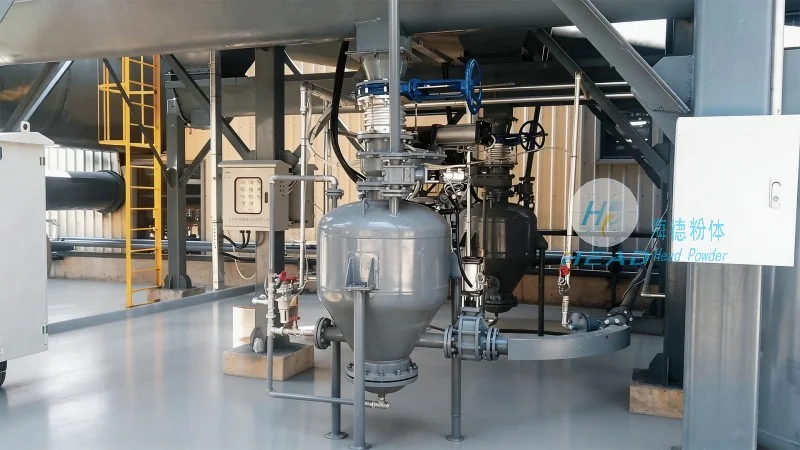
Overview of the Calcined Limestone Pneumatic Conveying System
The calcined limestone pneumatic conveying system is engineered to efficiently transport calcined limestone from storage silos or processing units to downstream equipment such as ball mills, classifiers, or storage facilities. The system integrates multiple components, including a feeding hopper, a rotary airlock valve, a positive displacement blower or pressure vessel, a pipeline network, and a dust collection system. Each component plays a critical role in ensuring reliable, low-maintenance operation and optimal material handling performance.
Key Components and Their Functions
1. Feeding Hopper: The hopper is designed to store and feed calcined limestone into the system. It features a conical bottom and a discharge outlet connected to a rotary airlock valve, which controls the material flow rate and prevents backflow. The hopper is typically equipped with a level indicator to monitor material inventory and an aeration system to prevent material bridging or caking.
2. Rotary Airlock Valve: This component acts as a controlled gate between the hopper and the pipeline. It uses a rotating drum with slots to allow material to pass into the conveying line while maintaining a sealed environment. The valve ensures consistent material flow and prevents air leakage, which could affect the conveying efficiency.
3. Positive Displacement Blower or Pressure Vessel: The system utilizes a positive displacement blower or a pressure vessel to generate the necessary air pressure for material transport. The blower compresses air and forces it through the pipeline, creating a high-velocity air stream that entrains the calcined limestone particles. The pressure vessel, when used, stores compressed air to provide a steady pressure source, reducing the energy consumption and noise levels compared to continuous blower operation.
4. Pipeline Network: The conveying pipeline is constructed from corrosion-resistant materials, such as stainless steel or PVC, to withstand the chemical properties of calcined limestone and prevent material buildup or corrosion. The pipeline includes bends, elbows, and straight sections, with appropriate support structures to maintain alignment and prevent sagging. The diameter of the pipeline is carefully selected based on the material flow rate and particle size to ensure efficient air-solid flow.
5. Dust Collection System: To comply with environmental regulations and maintain a clean working environment, the system incorporates a dust collection system. This typically includes a cyclone separator or a baghouse filter that captures fine limestone particles from the exhaust air. The collected material is returned to the hopper or disposed of as per operational requirements, ensuring minimal environmental impact.
Operation Process of the Pneumatic Conveying System
The operation of the calcined limestone pneumatic conveying system follows a sequential process to ensure smooth material transport. The steps are as follows:
1. Material Loading: Calcined limestone is loaded into the feeding hopper from a bulk storage silo or a processing unit. The hopper is filled to an appropriate level, and the material is kept aerated to prevent caking.
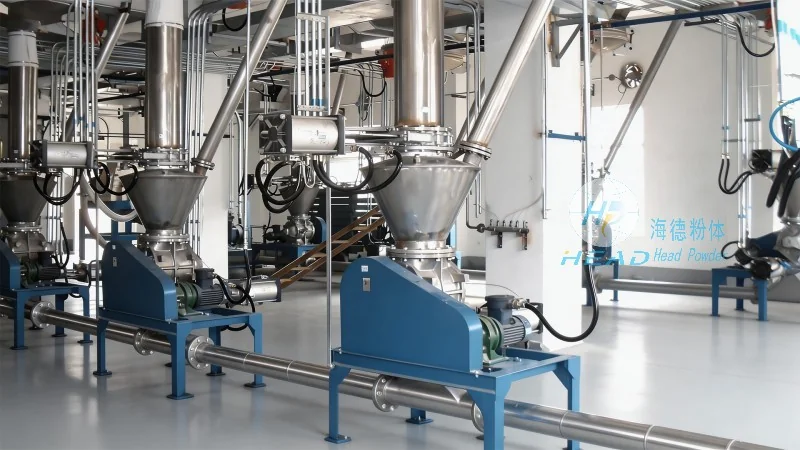
2. Material Feeding: The rotary airlock valve opens, allowing calcined limestone to flow from the hopper into the pipeline. The valve rotation speed is adjusted to control the material feed rate, which is synchronized with the air flow from the blower.
3. Air Entrainment: The positive displacement blower generates high-pressure air, which is introduced into the pipeline. The air stream entrains the calcined limestone particles, forming a dense phase or dilute phase flow depending on the system design. The air velocity is maintained above the minimum conveying velocity to prevent particle deposition.
4. Material Transport: The air-limestone mixture travels through the pipeline network to the destination point, such as a ball mill or a storage silo. The pipeline design, including bends and elbows, is optimized to minimize pressure drop and maintain consistent flow velocity.
5. Material Discharge: At the receiving end, a rotary airlock valve or a pressure relief valve is used to control the discharge of calcined limestone into the downstream equipment. The valve ensures a controlled and steady material flow, preventing overloading or blockage.
6. Air Exhaust and Dust Collection: The exhaust air from the conveying line is directed to the dust collection system. The cyclone or baghouse filter separates the limestone particles from the air, and the cleaned air is discharged to the atmosphere. The collected material is either returned to the hopper or disposed of as required.
Working Principle of the Pneumatic Conveying System
The working principle of the calcined limestone pneumatic conveying system is based on the fundamental concept of air-solid flow. The system operates by creating a high-velocity air stream that entrains the calcined limestone particles, transporting them through the pipeline. The key principles include:
1. Fluidization and Entrainment: The air stream in the pipeline fluidizes the calcined limestone particles, reducing their effective density and allowing them to be carried by the air flow. The minimum conveying velocity is determined by the particle size, density, and air properties, ensuring that the particles remain suspended and do not settle.
2. Pressure and Flow Control: The positive displacement blower or pressure vessel maintains a consistent pressure in the pipeline, which is crucial for maintaining the air velocity and preventing pressure drops that could lead to material deposition. The flow rate of the air and material is controlled by adjusting the blower speed or the rotary airlock valve rotation speed.
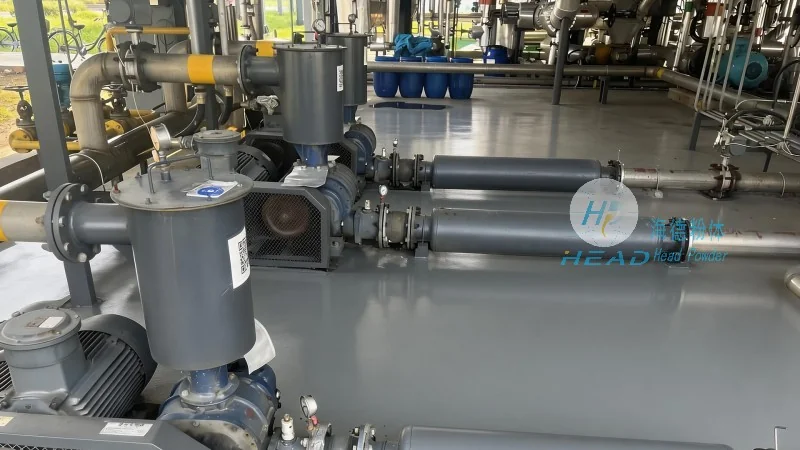
3. System Balance and Efficiency: The system is designed to achieve a balance between air and material flow rates to maximize conveying efficiency and minimize energy consumption. The pressure drop across the pipeline and components is minimized through proper pipeline sizing, smooth bends, and regular maintenance. This ensures that the system operates at optimal performance with low operational costs.
4. Environmental Compliance: The dust collection system is integral to the working principle, as it captures and recovers fine limestone particles from the exhaust air. This not only complies with environmental regulations but also reduces material loss and improves overall system efficiency by returning the captured material to the process.
Technical Advantages and Applications
The calcined limestone pneumatic conveying system offered by Shandong HeadPowder Engineering Co., Ltd. provides several technical advantages, making it suitable for various industrial applications:
1. High Efficiency and Reliability: The system ensures consistent and reliable material transport, with minimal downtime due to its robust design and automated control features. The positive displacement blower or pressure vessel provides a stable pressure source, reducing the risk of material blockages or system failures.
2. Low Maintenance and Long Service Life: The use of corrosion-resistant materials and well-designed components minimizes maintenance requirements and extends the service life of the system. The rotary airlock valves and blower components are designed for easy replacement and maintenance, reducing operational costs.
3. Environmental Friendliness: The integrated dust collection system ensures that the system operates in compliance with environmental regulations, minimizing dust emissions and protecting the working environment. The system also reduces material loss by recovering fine particles, improving overall material utilization.
4. Customization and Scalability: The system can be customized to meet specific application requirements, including different material flow rates, particle sizes, and pipeline lengths. It is scalable to accommodate varying production capacities, making it suitable for both small-scale and large-scale industrial operations.
For industries handling calcined limestone, such as cement manufacturing, chemical processing, or mineral processing, this pneumatic conveying system offers a reliable and efficient solution for material transport. The combination of advanced components, optimized design, and robust operation ensures that the system meets the highest standards of performance and reliability.




