Shandong HeadPowder Engineering Co., Ltd., commonly known as headpowder, is a professional provider of material handling solutions. Headquartered in Shandong, China, the company specializes in designing and manufacturing advanced pneumatic conveying systems tailored for various industrial applications, including the transportation of styrene materials. This article explores the working principle and key features of such systems, highlighting how they efficiently and safely handle styrene, a critical chemical widely used in the production of plastics and resins.
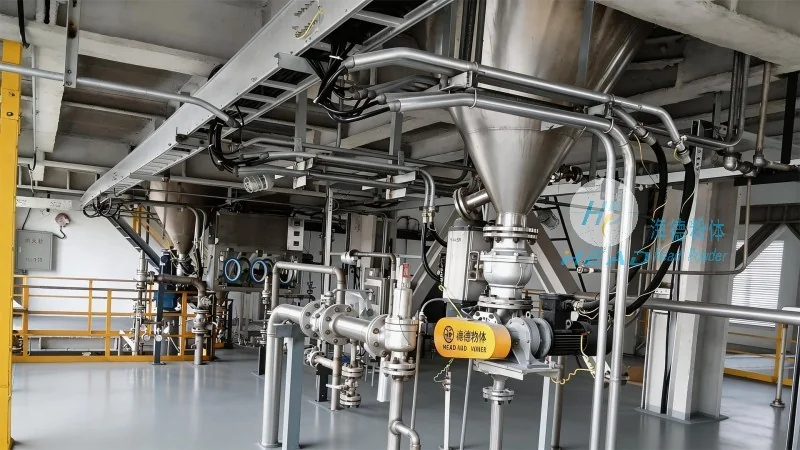
Overview of Pneumatic Conveying Systems for Styrene Materials
Pneumatic conveying systems are mechanical systems that use air or other gases to transport bulk materials, such as powders or granules, from one location to another. In the context of styrene, which is a volatile and potentially hazardous chemical, these systems must be engineered with stringent safety and efficiency standards. The systems are designed to handle the unique properties of styrene, including its tendency to generate static electricity and its flammability, ensuring safe and reliable operation in industrial settings.
The Working Principle of Styrene Material Pneumatic Conveying Systems
The core mechanism of a styrene material pneumatic conveying system involves the use of compressed air to create a flow that propels the material through a pipeline. There are two primary types of pneumatic conveying systems: positive pressure and negative pressure (or vacuum) systems. For styrene, positive pressure systems are often preferred due to their ability to handle the material's characteristics more effectively and maintain a consistent flow.
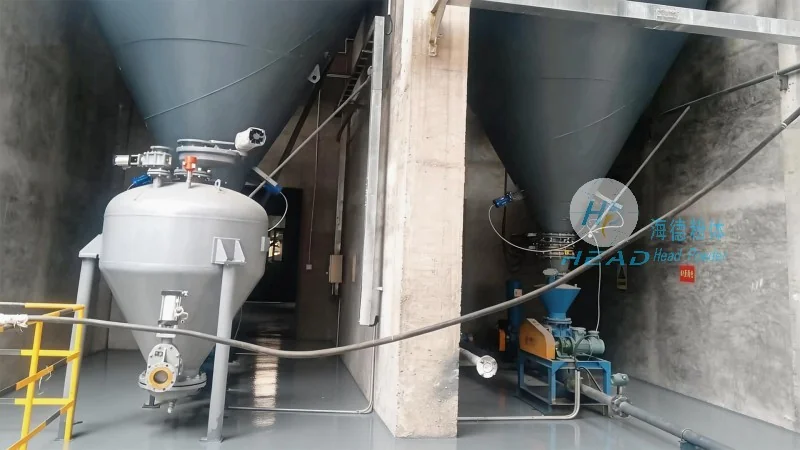
In a positive pressure system, compressed air is introduced at the material inlet, creating a high-pressure environment that pushes the styrene particles along the pipeline. The system typically includes a hopper for material storage, a feeder to control the flow rate, a conveying line, and a receiver for the material at the destination. The air and material mixture travels through the pipeline, with the air velocity maintained at a level sufficient to keep the particles suspended and prevent clogging. At the receiving end, the air is separated from the material, often through a cyclone or other separation equipment, and the air is either vented or recirculated, depending on the system design.
Key Features and Advantages of Styrene Material Pneumatic Conveying Systems
Several key features make pneumatic conveying systems an ideal choice for styrene material handling. Firstly, these systems offer high efficiency in terms of material transport, with the ability to move large quantities of styrene over long distances with minimal labor. The systems are also highly flexible, allowing for changes in the layout or destination of the material without significant modifications. Additionally, pneumatic conveying is a closed system, which helps in maintaining the purity of the styrene and preventing contamination from external sources.
From a safety perspective, modern styrene pneumatic conveying systems incorporate advanced safety features. These include explosion-proof designs, static grounding and bonding systems to prevent static discharge, and overpressure protection to safeguard against accidental explosions. The systems are also equipped with monitoring and control devices that allow operators to track the flow rate, pressure, and other critical parameters in real-time, ensuring optimal performance and safety.
Application and Operational Considerations
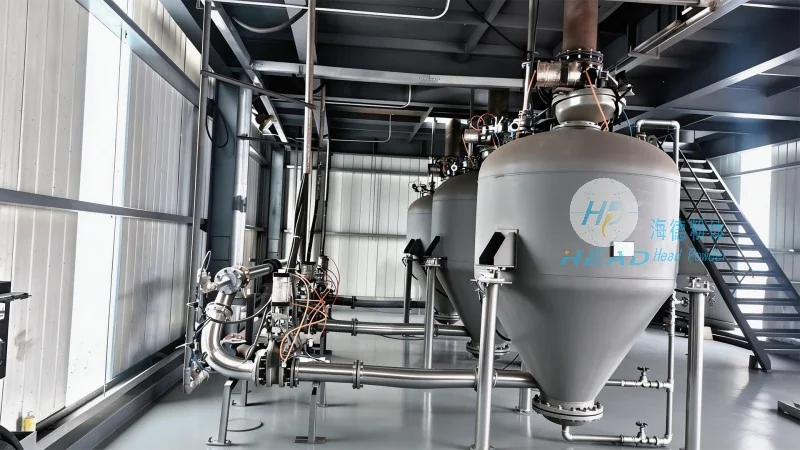
The application of styrene material pneumatic conveying systems varies across different industrial sectors, such as petrochemical plants, plastics manufacturing facilities, and chemical processing units. In these settings, the systems are integrated into the production line to transport styrene from storage tanks or reactors to processing equipment, such as polymerization reactors or mixing units. The operational considerations include maintaining the correct air pressure and flow rate to avoid material degradation or system damage, as well as regular maintenance to ensure the system's longevity and reliability.
Conclusion
Styrene material pneumatic conveying systems, as provided by Shandong HeadPowder Engineering Co., Ltd., represent a sophisticated solution for the efficient and safe handling of styrene in industrial applications. By leveraging advanced engineering and safety features, these systems ensure reliable material transport while minimizing risks associated with the handling of volatile chemicals. The company's expertise in designing customized pneumatic conveying solutions makes it a trusted partner for industries seeking to optimize their styrene material handling processes.




