

What is a Quantitative Feeding Material Pneumatic Conveying Equipment? What are its Design Principle
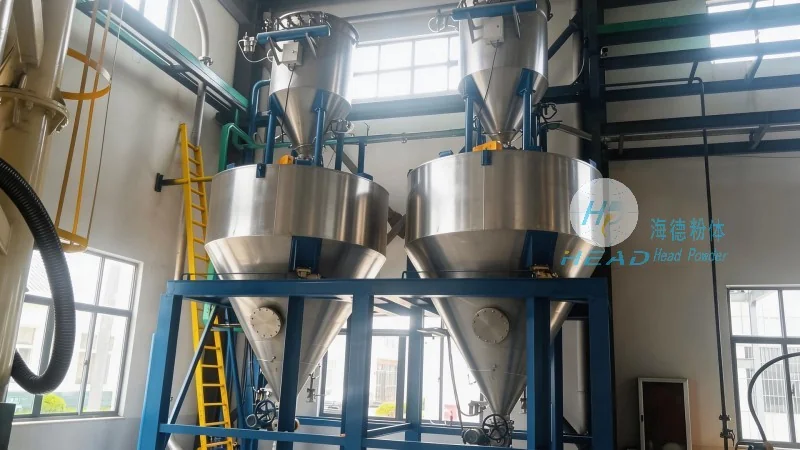
Quantitative feeding material pneumatic conveying equipment is a specialized system designed to transport bulk materials, such as powders and granules, from one location to another with precise control over the flow rate. This equipment is widely used in various industrial sectors, including pharmaceuticals, food processing, and chemical manufacturing, where accurate material handling is critical for operational efficiency and product quality. The system operates by using compressed air or gas to move material particles through a pipeline network, and the quantitative feeding mechanism ensures that the material is fed at a consistent rate, preventing overloading or underloading of the conveying line.
Company Introduction
HeadPowder, or Shandong HeadPowder Engineering Co., Ltd., is a leading manufacturer based in Shandong, China. With years of experience in the field of material handling technology, the company specializes in developing and supplying high-quality pneumatic conveying systems tailored to meet the diverse needs of industrial clients. The company's commitment to innovation and quality has enabled it to become a trusted partner for businesses seeking reliable material transport solutions.
Design Principles of Quantitative Feeding Material Pneumatic Conveying Equipment
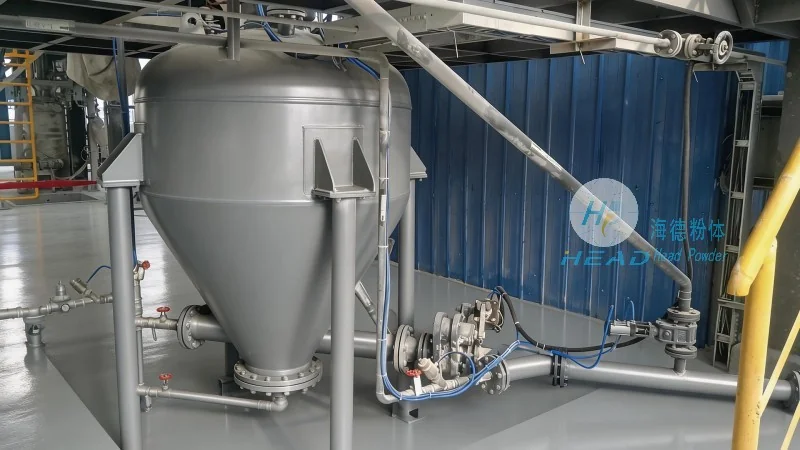
The design of quantitative feeding material pneumatic conveying equipment is based on the fundamental principles of pneumatic transport. The system typically consists of a feeding hopper, a blower or compressor to generate airflow, a pipeline network, and a receiving hopper. The quantitative feeding mechanism, often integrated with a control system, ensures that the material is fed into the pipeline at a consistent rate. The airflow, controlled by the blower, carries the material particles through the pipeline to the destination. Key design considerations include the selection of appropriate air velocity to prevent material deposition, the use of suitable pipeline materials to avoid corrosion or abrasion, and the implementation of pressure regulation to maintain stable conveying performance. For example, the air velocity is carefully calculated based on the material's density, particle size, and the pipeline diameter to ensure efficient transport without causing excessive pressure drops or material degradation.
Technical Advantages and Applications
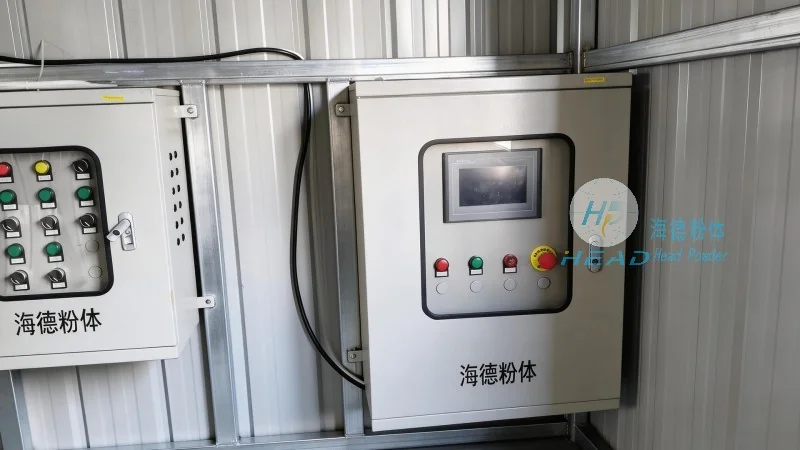
This equipment offers several advantages, including high conveying efficiency, minimal material degradation, and the ability to handle a wide range of materials, from fine powders to coarse granules. The quantitative feeding feature allows for precise control over the material flow, which is essential for processes that require exact dosing, such as in pharmaceutical production or food processing. Additionally, pneumatic conveying systems are relatively compact and can be installed in confined spaces, making them suitable for facilities with limited floor space. The control system often includes sensors and feedback mechanisms to adjust the airflow and feeding rate in real-time, ensuring consistent performance even when the material characteristics change.
Conclusion
In summary, quantitative feeding material pneumatic conveying equipment is a sophisticated solution for bulk material transport, combining precise feeding mechanisms with pneumatic transport technology. By understanding the design principles and operational capabilities of such systems, industrial users can optimize their material handling processes, improve productivity, and maintain product quality. HeadPowder continues to lead in the development of advanced pneumatic conveying solutions, providing reliable equipment that meets the demanding requirements of modern industrial applications.