HeadPowder, the abbreviation for Shandong HeadPowder Engineering Co., Ltd., is a professional manufacturer and supplier based in Shandong, China. The company specializes in the design, development, and production of advanced pneumatic conveying systems, particularly for materials like chlorinated polyethylene. With a strong focus on engineering excellence and customer satisfaction, HeadPowder provides customized solutions tailored to meet the specific needs of various industrial applications.
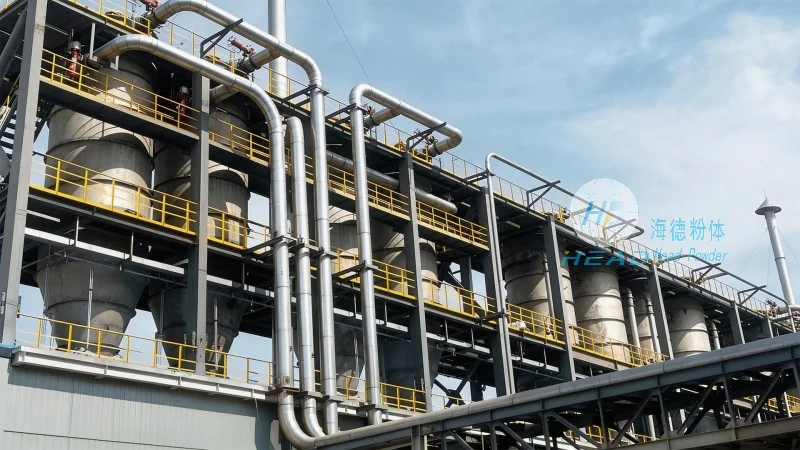
Principle of the Pneumatic Conveying System for Chlorinated Polyethylene
The pneumatic conveying system for chlorinated polyethylene operates on the fundamental principle of using air or gas as the conveying medium to transport solid particles. This method is widely used in the chemical and plastics industries due to its efficiency and ability to handle materials that are difficult to transport through traditional methods. The system typically consists of several key components, including a material hopper, a rotary valve, a conveyor pipe, a dust collector, and a control system. Each component plays a crucial role in ensuring the smooth and reliable transport of chlorinated polyethylene from the source to the destination.
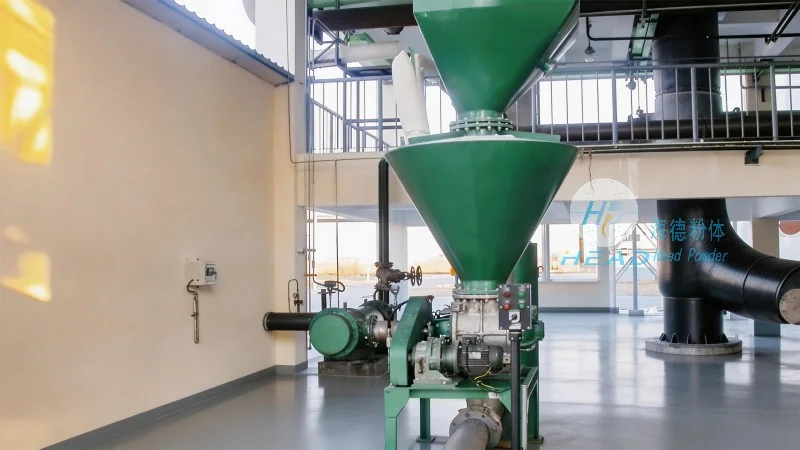
Components and Their Functions
The material hopper is designed to store the chlorinated polyethylene, providing a consistent feed to the system. It is equipped with a level indicator to monitor the material level and a discharge valve to control the flow rate. The rotary valve, also known as a star valve, acts as a gate to regulate the material flow from the hopper into the conveyor pipe. It ensures that the material is fed in a controlled manner, preventing blockages and maintaining system efficiency. The conveyor pipe is the main channel through which the material is transported. It is typically made of durable materials such as stainless steel or polyethylene to withstand the corrosive nature of chlorinated polyethylene and the abrasive effects of the material particles. The pipe is connected to a series of bends and straight sections, which are designed to minimize pressure loss and ensure the material moves smoothly. A dust collector is integrated into the system to capture any airborne particles that may be generated during the conveying process. This helps to maintain a clean working environment and prevents the accumulation of dust, which could otherwise affect the performance of the system or pose health risks to personnel. The control system, which may include sensors, controllers, and indicators, monitors the operation of the entire system. It provides real-time data on the material flow rate, pressure, and temperature, allowing operators to adjust the system parameters as needed to optimize performance and prevent issues such as blockages or overloading.
Operation Process
The operation of the pneumatic conveying system for chlorinated polyethylene begins with the material being loaded into the hopper. The rotary valve then opens to allow the material to enter the conveyor pipe. Simultaneously, the air compressor or blower starts to generate a flow of air or gas, which is introduced into the conveyor pipe. The air flow creates a negative pressure in the pipe, which draws the material particles into the pipe along with the air stream. As the material moves through the pipe, it is carried by the air flow until it reaches the destination point, such as a storage silo or a processing unit. At the destination, the material is discharged through a rotary valve or a gate valve, and the air is filtered and returned to the system or released into the atmosphere. The control system continuously monitors the entire process, adjusting the air flow rate and material feed rate to maintain optimal conditions. This ensures that the system operates efficiently and safely, minimizing downtime and maximizing productivity.
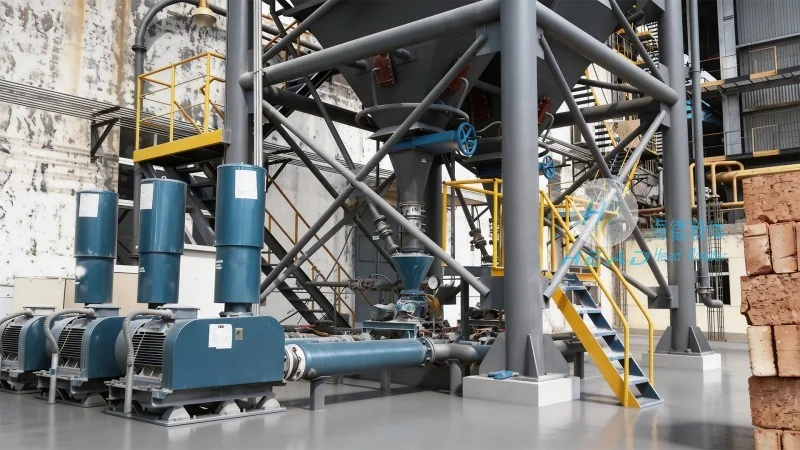
Advantages of the Pneumatic Conveying System
Compared to traditional methods such as belt conveyors or bucket elevators, the pneumatic conveying system for chlorinated polyethylene offers several advantages. First, it provides a clean and dust-free environment, which is crucial for handling materials that may be hazardous or cause health issues if inhaled. Second, the system is highly flexible and can be easily adapted to different production layouts and requirements. It can transport materials over long distances and through multiple levels or turns, which would be difficult or impossible with other methods. Third, the system is relatively low maintenance, as it has fewer moving parts compared to other conveying systems. This reduces the risk of breakdowns and lowers the overall operating costs. Fourth, the system can handle a wide range of material sizes and shapes, including fine powders and granules, without causing blockages or damage to the material. Finally, the system is energy-efficient, as it uses air as the conveying medium, which is a relatively low-cost and readily available resource. Overall, the pneumatic conveying system for chlorinated polyethylene is an effective and reliable solution for transporting this material, offering significant benefits in terms of efficiency, safety, and cost-effectiveness.




