When designing a pneumatic conveying system for nanopowders, several critical factors must be considered to ensure optimal performance, efficiency, and safety. The unique properties of nanopowders, such as their high surface area, reactivity, and tendency to agglomerate, demand a tailored approach that addresses these challenges effectively.
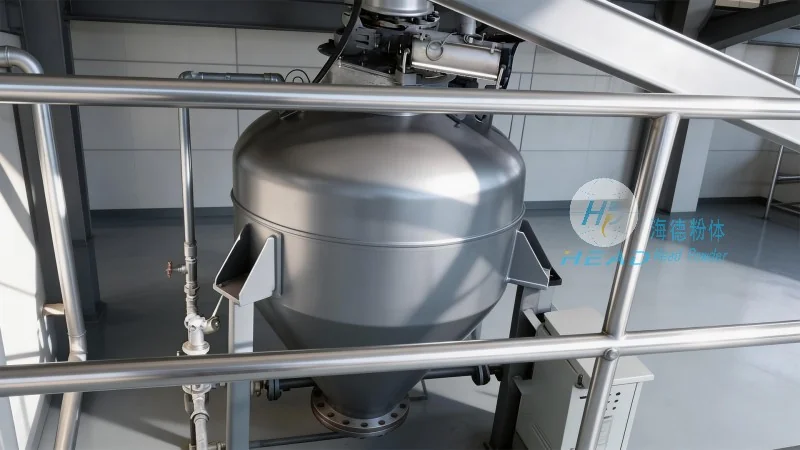
Understanding Nanopowder Characteristics and Their Impact on System Design
Nanopowders, defined as particles with at least one dimension in the nanometer range (1-100 nm), exhibit distinct physical and chemical properties compared to conventional powders. These properties include increased surface energy, enhanced reactivity, and a higher propensity for agglomeration and dust generation. Such characteristics directly influence the selection of conveying air velocity, particle size distribution, and the overall system configuration. For instance, higher air velocities may be required to prevent particle settling or agglomeration, while careful consideration of particle size and flow rate is essential to maintain system efficiency and avoid excessive pressure drops.
System Configuration and Component Selection for Nanopowder Handling
The configuration of a pneumatic conveying system for nanopowders typically involves a combination of positive and negative pressure systems, depending on the application requirements. Positive pressure systems, where air is blown into the system to push the powder, are often preferred for conveying nanopowders over long distances or through complex piping networks. Negative pressure systems, on the other hand, may be suitable for applications requiring dust-free environments or when the powder is to be collected from a source. Key components include the feeder (e.g., rotary valve or screw feeder), the conveying line (usually made of stainless steel or other corrosion-resistant materials to prevent particle contamination), the filter system (to capture fine particles and maintain air quality), and the receiver (for storing the conveyed powder). The choice of materials, such as stainless steel 316 or PTFE-lined components, is crucial to prevent nanopowder contamination and ensure system longevity.
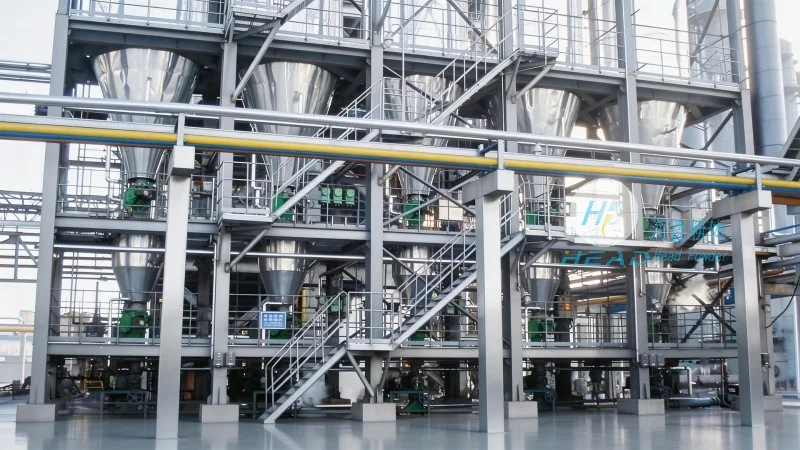
Design Considerations for Air Flow and Pressure Management
Proper air flow management is paramount in nanopowder pneumatic conveying systems. The air velocity must be sufficient to keep the powder suspended but not so high as to cause excessive wear on components or generate too much dust. The pressure drop across the system is another critical factor, as it affects the energy consumption and overall efficiency. Engineers must calculate the pressure drop through each component, including the feeder, conveying line, and filter, to ensure the system operates within the specified pressure range. Additionally, the use of air classifiers or cyclones may be necessary to separate coarse particles from the fine nanopowder, ensuring that only the desired particle size reaches the receiver. This step is particularly important for applications where particle size uniformity is critical, such as in pharmaceutical or electronic material production.
Feeder and Metering Solutions for Consistent Nanopowder Delivery
The feeder is a critical component that controls the flow rate of nanopowders into the conveying system. For nanopowders, which are prone to bridging or caking, a rotary valve or a screw feeder with anti-clogging features is often recommended. These feeders can provide a consistent and controlled flow rate, preventing surges or blockages that could disrupt the system. The feeder must also be designed to handle the specific properties of the nanopowder, such as its tendency to adhere to surfaces or its sensitivity to moisture. For example, a feeder with a heated or insulated design may be necessary to maintain the powder's temperature and prevent moisture absorption, which could affect its properties. The selection of the feeder type and its operating parameters (e.g., speed, torque) is based on the powder's bulk density, flowability, and the required conveying rate.
Filter and Dust Collection Systems for Air Quality and Safety
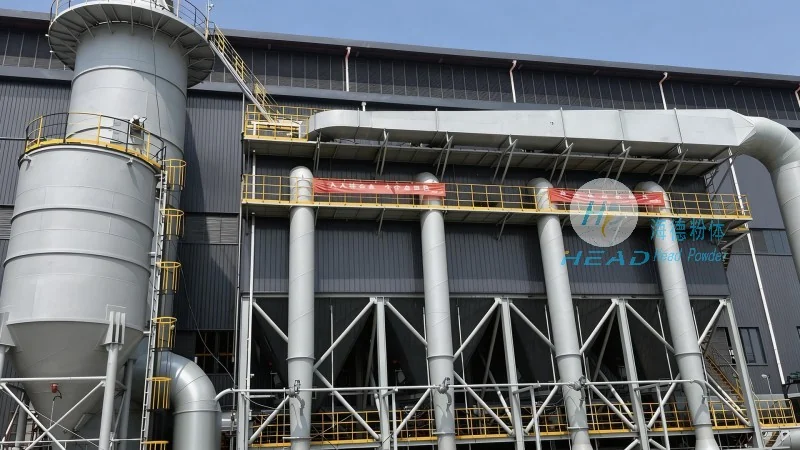
Due to the fine nature of nanopowders, effective dust collection is essential to maintain air quality and ensure worker safety. The filter system must be capable of capturing particles as small as nanometers, typically requiring high-efficiency particulate air (HEPA) or ultra-low penetration air (ULPA) filters. The filter's capacity and pressure drop must be carefully designed to avoid overloading and ensure continuous operation. Regular maintenance, such as filter cleaning or replacement, is necessary to prevent pressure buildup and maintain system performance. Additionally, the system should include a dust extraction and collection mechanism to prevent nanopowder release into the environment. This is particularly important for applications where the nanopowder is hazardous or has regulatory compliance requirements, such as in pharmaceutical or chemical industries.
System Integration and Automation for Efficient Operation
Modern nanopowder pneumatic conveying systems often incorporate automation and control systems to enhance efficiency and reduce operational costs. These systems can include sensors to monitor air flow, pressure, and powder level, as well as control valves to adjust the system parameters in real-time. Automation allows for precise control of the conveying process, ensuring consistent product quality and minimizing downtime. For example, a system with a level sensor in the receiver can automatically trigger the feeder to start when the level drops below a certain threshold, preventing emptying or overfilling. Additionally, the integration of a data logging system can help track system performance over time, allowing for predictive maintenance and optimization. This approach not only improves operational efficiency but also reduces maintenance costs and extends the system's lifespan.
Case Study: Design of a Nanopowder Pneumatic Conveying System for Pharmaceutical Applications
Consider a pharmaceutical company that needs to transport a nanopowder drug substance from a production line to a packaging facility. The system design must adhere to stringent regulatory requirements, including GMP (Good Manufacturing Practice) standards. The system configuration includes a positive pressure conveying line made of stainless steel 316, a rotary valve feeder with anti-clogging features, and a HEPA filter system. The air velocity is carefully calculated to maintain particle suspension without generating excessive dust, and the pressure drop is optimized to minimize energy consumption. The receiver is designed with a sealed, GMP-compliant container to prevent contamination. The system is integrated with an automated control system that monitors all parameters and logs data for regulatory compliance. This case study illustrates how the design considerations discussed above are applied in a real-world application, ensuring the safe and efficient handling of nanopowders in a pharmaceutical setting.




