HeadPowder, a leading manufacturer based in Shandong, China, specializes in the design and production of advanced pneumatic conveying systems tailored for handling crystal particles. This article provides a comprehensive overview of the equipment, focusing on its structural design and operational principles to help users understand its functionality and application.
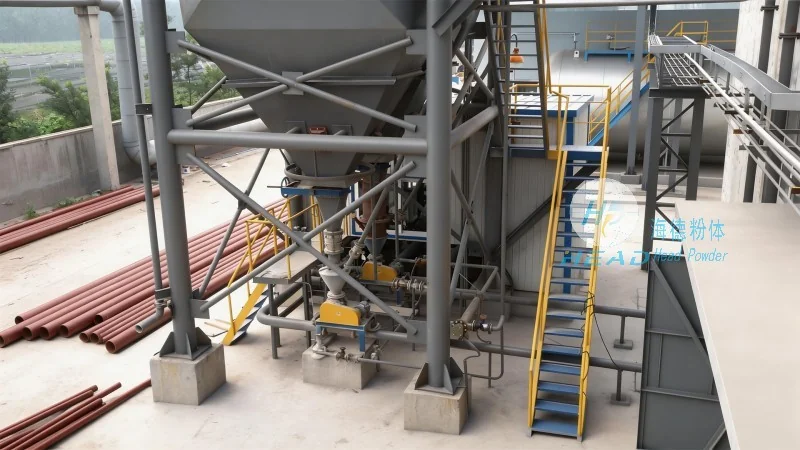
The crystal particle pneumatic conveying equipment is engineered to efficiently transport fine or granular materials, such as pharmaceutical powders, food additives, or chemical crystals, through an air-driven system. Unlike traditional mechanical conveyors, this equipment utilizes compressed air to move materials, offering advantages like reduced contamination, lower maintenance costs, and enhanced safety in handling sensitive materials.
Key Structural Components of the Pneumatic Conveying System
The system consists of several critical components that work in tandem to ensure smooth material transport. The primary elements include the hopper, which serves as the material storage and feeding unit, equipped with a discharge valve to control the flow of crystal particles. The hopper is connected to a pipeline system, typically made of stainless steel or other corrosion-resistant materials, to prevent material degradation and ensure durability.
At the heart of the system is the air compressor, responsible for generating the necessary pressure to move the particles. The compressor is connected to a filter and regulator unit that cleans the air and maintains consistent pressure levels, crucial for stable conveying performance. The pipeline network includes various fittings, such as elbows and tees, to direct the material flow and adjust the system's layout according to the application requirements.
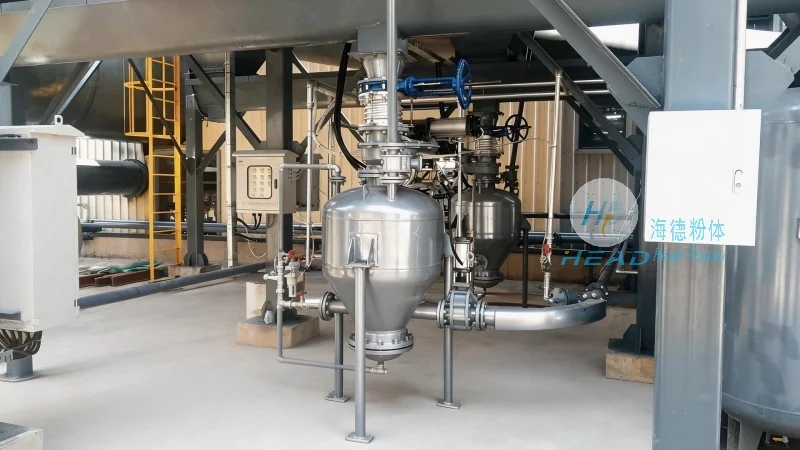
Another essential component is the conveying line, which may include a series of sections like the vertical riser, horizontal run, and possibly a cyclone separator at the discharge end. The vertical riser is designed to handle vertical material transport, often using a venturi or eductor to enhance air flow and particle suspension. The horizontal run connects the riser to the discharge point, where the cyclone separator separates the particles from the air stream, allowing the material to be collected in a receiving bin.
Working Principle of the Pneumatic Conveying Process
The operation of the crystal particle pneumatic conveying equipment follows a systematic process that ensures efficient material transfer. Initially, the crystal particles are fed into the hopper from a bulk storage or processing unit. The discharge valve is then opened, allowing the particles to enter the pipeline as the air compressor starts operating.
As compressed air is introduced into the pipeline, it creates a low-pressure zone that draws the particles into the air stream. The air velocity is carefully controlled to maintain a stable suspension of the particles, preventing them from settling or clogging the system. The venturi or eductor at the vertical riser further enhances the air flow, ensuring that the particles are adequately lifted and transported upward.
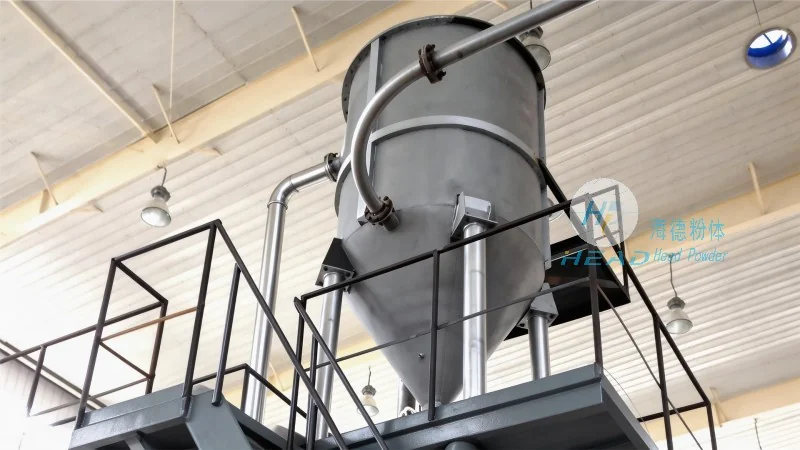
Upon reaching the horizontal run, the material continues to be carried by the air stream until it reaches the cyclone separator. The cyclone uses centrifugal force to separate the particles from the air, collecting the material in a hopper or bin. The cleaned air is then discharged back into the environment or recirculated through the system, depending on the design. This separation process is critical for maintaining the purity of the conveyed material and preventing contamination.
Advantages and Applications
The crystal particle pneumatic conveying equipment offers several advantages over traditional conveying methods. Its ability to handle fine or abrasive materials without causing wear and tear on the system components makes it ideal for industries such as pharmaceuticals, food processing, and chemical manufacturing. The system's enclosed design minimizes dust emissions, enhancing workplace safety and compliance with environmental regulations.
Moreover, the equipment's flexibility allows for easy integration into existing production lines, with modular components that can be customized to meet specific application requirements. This adaptability makes it suitable for various applications, including the transport of sensitive materials that require low contamination levels, or bulk materials that need to be moved over long distances.
In conclusion, the crystal particle pneumatic conveying equipment from HeadPowder is a reliable and efficient solution for handling crystal particles. Its robust structural design and well-defined working principles ensure consistent performance, making it a preferred choice for industries that demand high-quality material transport with minimal downtime and maintenance.




