Efficient and reliable material handling is a cornerstone of modern fertilizer production and distribution. Among the various technologies available, pneumatic conveying systems have emerged as a preferred solution for transporting bulk powder fertilizers. This article delves into the operation process and working principles of such systems, highlighting the technical aspects that ensure optimal performance and safety in industrial applications.
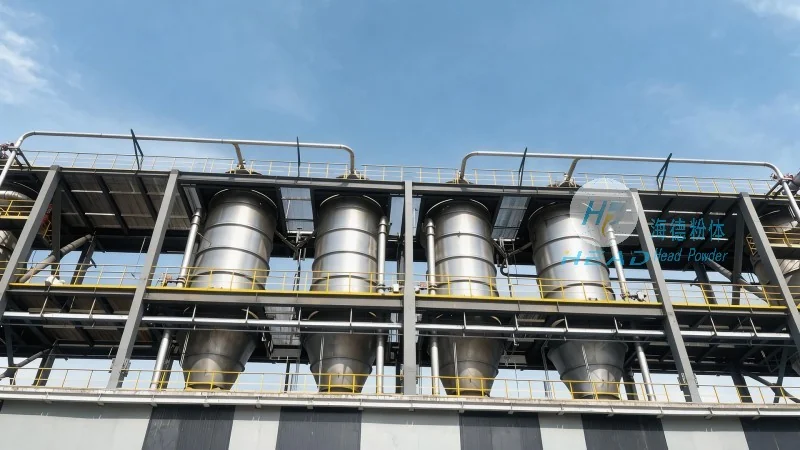
Introduction to Powder Fertilizer Pneumatic Conveying
Pneumatic conveying, also known as air conveying, is a method of transporting solid materials by suspending them in a stream of air or gas. In the context of fertilizer production, this technology is crucial for moving raw materials, intermediate products, and finished powders between processing units, storage silos, and packaging lines. The system combines the advantages of low maintenance, minimal product contamination, and the ability to handle a wide range of particle sizes and moisture contents, making it an ideal choice for the fertilizer industry.
Key Components of a Pneumatic Conveying System
At the heart of any pneumatic conveying system are several critical components that work in tandem to achieve efficient material transport. These include the conveying line, which serves as the main pathway for the material and air mixture; the inlet or feed hopper, where the fertilizer powder is introduced into the system; the blower or compressor, which generates the necessary air pressure to move the material; and the separator or cyclone, which separates the material from the air stream at the discharge point. Additionally, filters are often integrated to capture any fine particles and prevent air pollution, while regulators control the air pressure and flow rate to maintain system stability.
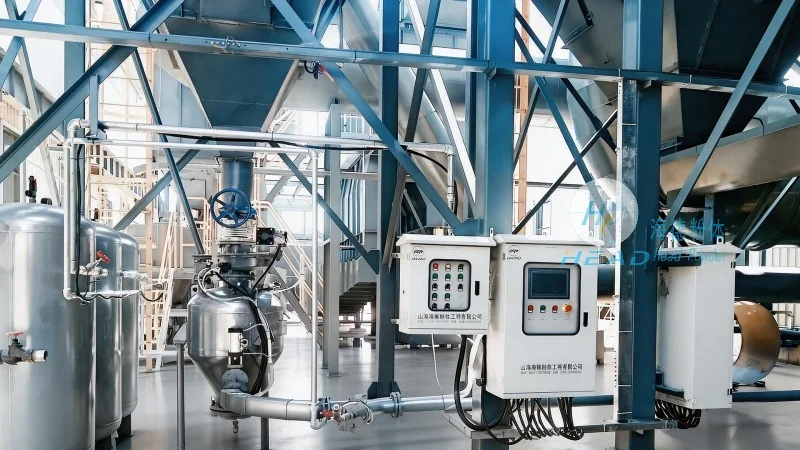
The Operation Process: Step-by-Step Breakdown
The operation of a pneumatic conveying system for fertilizer powders typically follows a sequence of stages, each designed to ensure smooth and continuous material transport. The process begins with the loading of the feed hopper, where the fertilizer powder is fed into the system. This is usually done using a screw feeder or a rotary valve, which controls the flow rate of the material into the conveying line. As the material enters the line, it is immediately mixed with the air stream generated by the blower. The air pressure and velocity are carefully calibrated to create a stable suspension of the powder particles, preventing clogging and ensuring uniform transport.
During the conveying phase, the material travels through the pipeline under the pressure of the air stream. The length and diameter of the pipeline, along with the air velocity, determine the efficiency of the system. For longer distances or higher material loads, a positive pressure system is often employed, where the entire pipeline is pressurized to push the material forward. Conversely, a negative pressure (or vacuum) system can be used for shorter distances or when the material needs to be drawn from a lower elevation. The choice of system depends on factors such as the distance to be covered, the material characteristics, and the required flow rate.
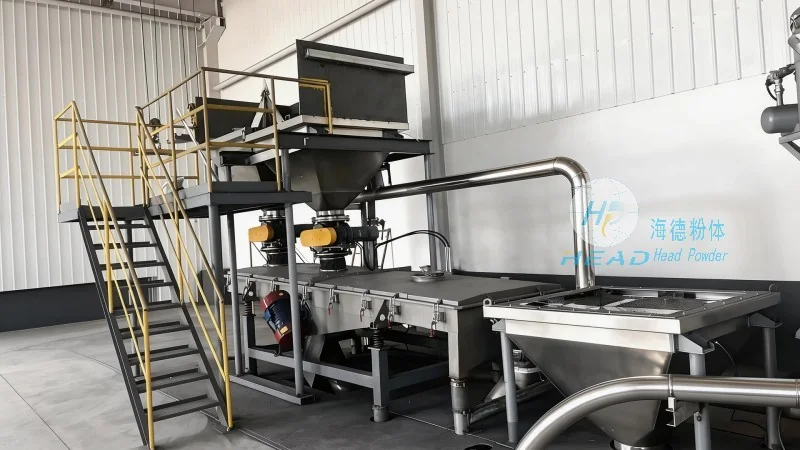
Upon reaching the discharge point, the material is separated from the air stream using a separator or cyclone. The separator works by utilizing centrifugal force to separate the heavier powder particles from the lighter air. The separated material is then collected in a discharge hopper or storage silo, while the air, now free of particles, is either vented to the atmosphere or recirculated back to the blower for energy efficiency. This separation step is critical to prevent product loss and maintain air quality within the system.
Working Principles: The Science Behind Pneumatic Conveying
The effectiveness of a pneumatic conveying system is rooted in the principles of fluid dynamics and particle mechanics. The primary principle is the creation of a stable suspension of the fertilizer powder in the air stream. This is achieved by maintaining a specific air velocity, which is typically 2 to 3 times the terminal velocity of the powder particles. The terminal velocity is the speed at which a particle falls through a fluid under gravity, and exceeding this velocity ensures that the particles remain suspended and do not settle out of the air stream.
Another key principle is the balance between the air pressure and the particle density. The system must generate enough air pressure to overcome the gravitational force acting on the powder and the frictional resistance within the pipeline. This pressure is often measured in terms of kilopascals (kPa) or pounds per square inch (psi), and is adjusted based on the system's design and the material being conveyed. For example, a system transporting fine, dry fertilizer may require higher air pressure than one handling coarse, moist material.
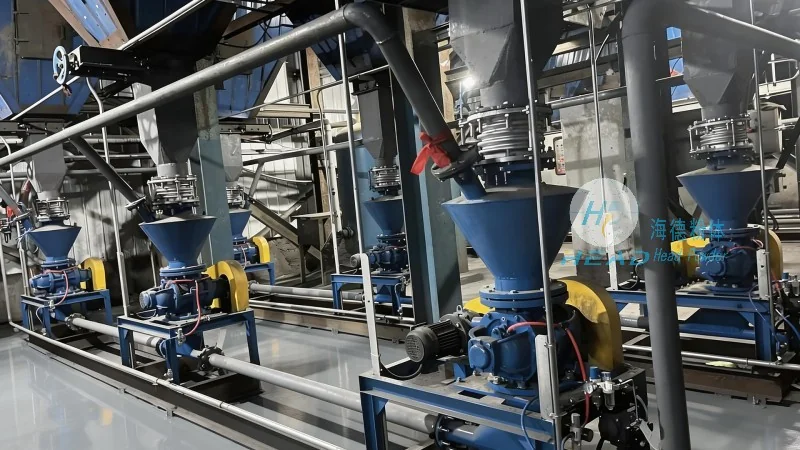
Furthermore, the design of the conveying line and components plays a crucial role in the system's performance. The pipeline diameter and length are optimized to minimize pressure drop, which is the reduction in air pressure as the material and air mixture travels through the system. A larger diameter reduces frictional losses, while a shorter length minimizes the overall pressure drop. The use of bends, elbows, and other fittings is also carefully considered to avoid excessive pressure losses and potential blockages.
Applications and Benefits in Fertilizer Industry
Pneumatic conveying systems are widely used in various stages of fertilizer production and handling. From the initial mixing of raw materials to the final packaging of finished products, these systems ensure that bulk materials are moved efficiently and safely. The benefits of using pneumatic conveying in the fertilizer industry include:




