For industrial applications involving the transport of coke particles, a coke particle pneumatic conveying line offers an efficient and reliable solution. This system is designed to handle the movement of coke from storage or processing areas to various destinations within a facility, ensuring smooth material flow and operational efficiency. The following content will explore the operation process and working principle of such a line, providing insights into how it functions and the key components involved.
Company Introduction
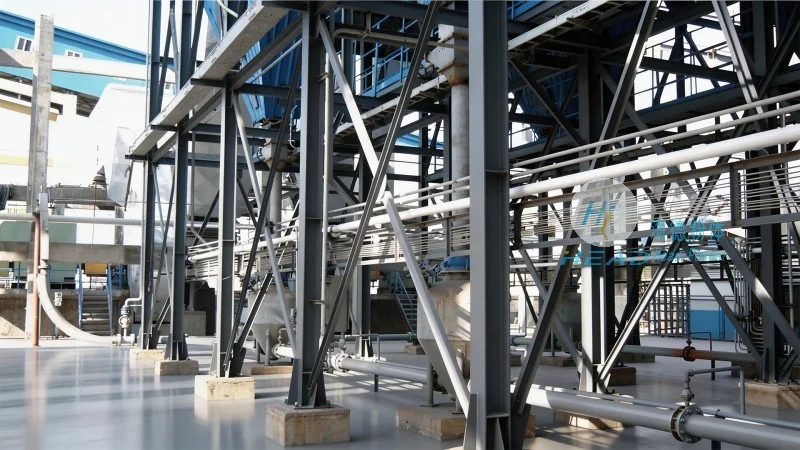
HeadPowder, a leading engineering company based in Shandong, China, specializes in the design, manufacturing, and installation of advanced material handling systems. With a strong commitment to quality and innovation, HeadPowder has established itself as a trusted partner in the industry, delivering tailored solutions for diverse material transport needs. The company's expertise in pneumatic conveying technology enables it to provide customized coke particle conveying lines that meet the specific requirements of clients across various sectors.
Overview of Coke Particle Pneumatic Conveying Line
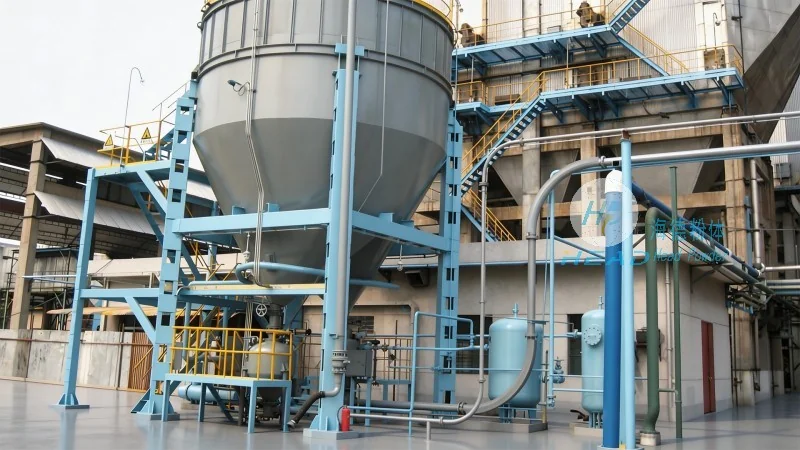
A coke particle pneumatic conveying line is a system that utilizes air or gas to transport solid particles, such as coke, through a pipeline. This method is particularly effective for handling bulk materials like coke, which are often heavy and abrasive. The system typically consists of a hopper, a feeder, a blower or compressor, a pipeline network, and a discharge unit. Each component plays a crucial role in the overall operation, ensuring that coke particles are moved safely and efficiently from the source to the destination.
Key Components of the Pneumatic Conveying System
The performance of a coke particle pneumatic conveying line depends on several critical components, each contributing to the system's functionality. The hopper serves as the storage and feeding unit, where coke is collected and prepared for transport. The feeder, often a rotary valve or a screw feeder, regulates the flow of coke into the pipeline, preventing blockages and ensuring a consistent feed rate. The blower or compressor generates the necessary air pressure to move the particles through the pipeline. The pipeline network, made of durable materials like stainless steel or special alloys, transmits the coke particles along the desired path. Finally, the discharge unit, such as a rotary valve or a hopper, releases the coke at the destination point, completing the transport process.
Operation Process of the Coke Particle Pneumatic Conveying Line
The operation of a coke particle pneumatic conveying line involves a series of steps that ensure the smooth and continuous movement of coke particles. The process begins with the loading of coke into the hopper. The feeder then controls the flow of coke from the hopper into the pipeline. Simultaneously, the blower or compressor starts operating, creating a flow of air or gas that moves through the pipeline. As the air flows, it entrains the coke particles, forming a slurry-like mixture that travels through the pipeline. The velocity of the air is carefully controlled to maintain the proper suspension of the particles, preventing deposition or blockages. At the discharge end, the air is separated from the coke particles, and the coke is collected in the discharge unit. The air is then filtered and recycled back to the blower, completing the cycle.
Working Principle of the Pneumatic Conveying System
The working principle of a coke particle pneumatic conveying line is based on the principle of fluidization and particle suspension. When air or gas is introduced into the pipeline at a sufficient velocity, it creates a low-pressure zone that draws the coke particles into the flow. The particles are then suspended in the air stream, moving along the pipeline as a dense phase or dilute phase flow, depending on the system design and operating conditions. The key to effective conveying is maintaining the correct air velocity and pressure to keep the particles in suspension without causing excessive wear on the system components. The system also incorporates features such as pressure relief valves and check valves to prevent backflow and ensure safe operation.
Advantages of Using a Coke Particle Pneumatic Conveying Line
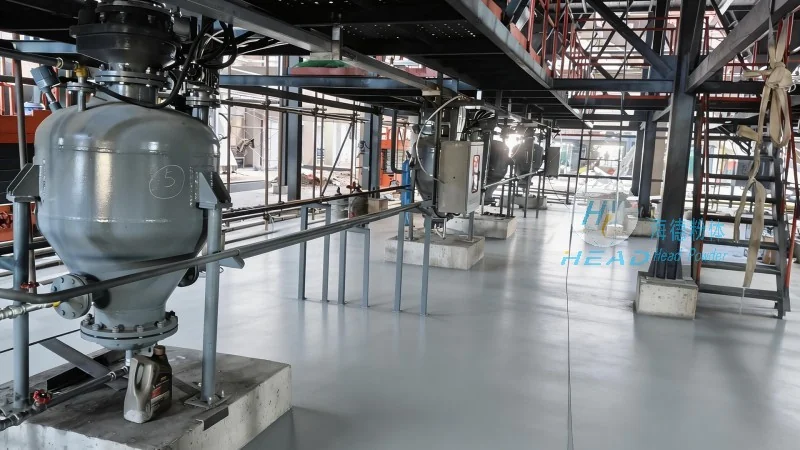
Implementing a coke particle pneumatic conveying line offers several advantages over traditional methods like belt conveyors or bucket elevators. Firstly, it provides a dust-free and enclosed transport system, reducing the risk of environmental contamination and improving workplace safety. Secondly, the system is highly flexible, allowing for changes in the transport route or destination without major modifications. Thirdly, it offers high efficiency in terms of material handling, as it can transport large quantities of coke over long distances with minimal energy consumption. Additionally, the system is compact and requires less floor space compared to other bulk material handling solutions, making it suitable for facilities with limited space.
Customization and Application Considerations
HeadPowder understands that each industrial application has unique requirements, and therefore, offers customized coke particle pneumatic conveying lines tailored to specific needs. The company works closely with clients to assess their material characteristics, transport distances, and operational constraints, ensuring that the designed system meets all requirements. Factors such as the size and density of coke particles, the required transport capacity, and the environmental regulations in the area are considered during the design phase. The resulting system is optimized for performance, reliability, and cost-effectiveness, providing a long-term solution for coke transport needs.




