Delving into the principles and practical applications of pneumatic conveying for husk powders reveals the technical foundations and operational nuances that drive efficient material handling. This article examines the core mechanisms behind this technology and explores the distinct characteristics of its application environments, providing a comprehensive guide that supports informed decisions in industrial operations.
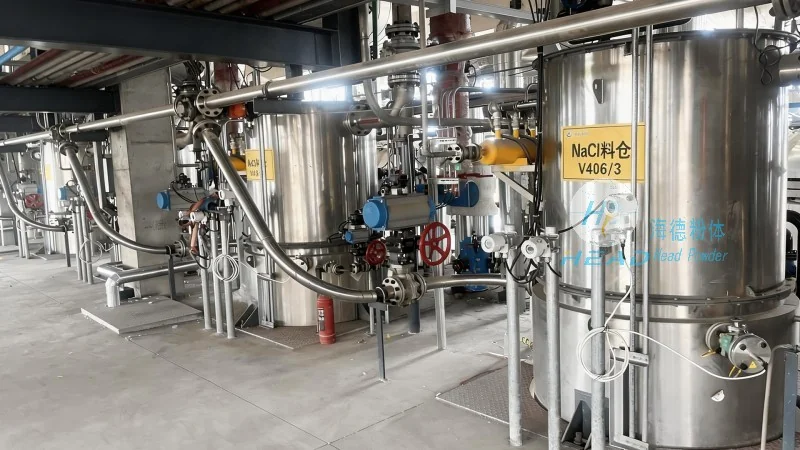
Foundational Principles of Pneumatic Conveying for Husk Powders
The fundamental principle of pneumatic conveying involves utilizing a gas stream, typically air, to transport particulate materials like husk powders through a pipeline system. This method relies on the generation of sufficient air velocity to overcome gravitational and frictional forces acting on the particles, enabling them to be suspended and transported. The system typically consists of a blower or compressor to generate the air flow, a hopper or feeder to introduce the husk powder, and a pipeline network that directs the material to its destination. The choice between dilute-phase and dense-phase systems depends on factors such as particle size, moisture content, and the distance to be covered, all of which influence the system's efficiency and effectiveness. For example, dilute-phase systems operate at higher air velocities, suitable for short distances and lighter particles, while dense-phase systems use lower velocities and higher pressure to move materials over longer distances or handle more abrasive particles.
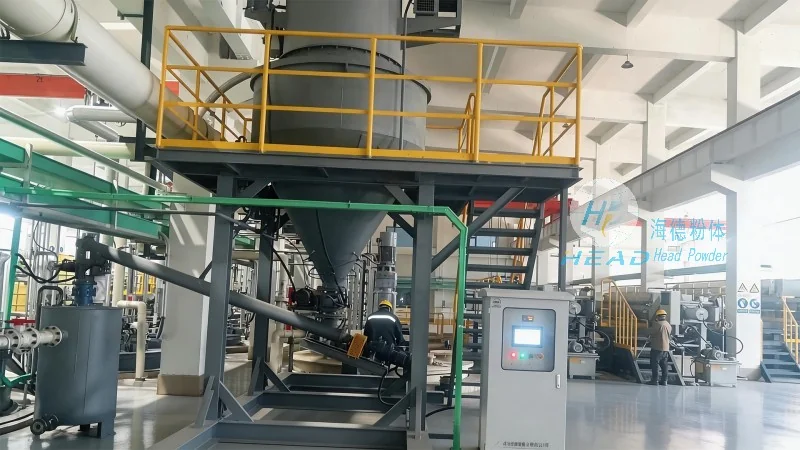
Key Components and Their Functions in Husk Powder Pneumatic Conveying Systems
A pneumatic conveying system for husk powders integrates several critical components that work in concert to ensure reliable operation. The blower or air compressor serves as the primary power source, generating the necessary air pressure and flow rate. The hopper or feeder is responsible for feeding the husk powder into the system, ensuring a consistent and controlled supply of material. The pipeline network, often made of stainless steel or corrosion-resistant plastic, transports the air and powder mixture. Additionally, filters and cyclones are commonly used to separate the powder from the air stream, preventing dust accumulation and maintaining system cleanliness. These components are designed to handle the specific properties of husk powders, such as their light weight and potential for static electricity, which can affect the conveying efficiency. For instance, static eliminators may be added to prevent particle buildup on the pipeline walls, while moisture sensors can help adjust the system to prevent clumping.
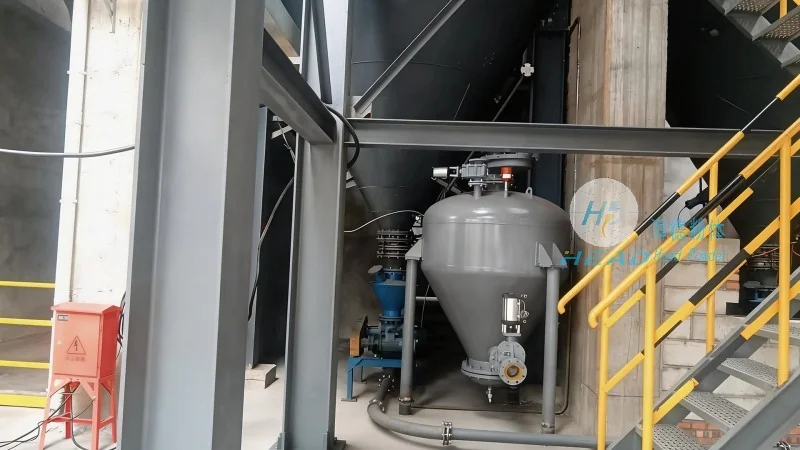
Diverse Application Scenarios and Operational Characteristics
The application scenarios for pneumatic conveying of husk powders span various industries, each with unique requirements that shape system design. In agricultural processing facilities, the system may be used to transport husk powders from storage silos to processing equipment, where consistent material flow is essential for maintaining production rates. In biomass energy plants, the technology is employed to move husk powders to combustion chambers or storage areas, where the ability to handle large volumes efficiently is critical. The operational characteristics, including pressure and flow rates, are tailored to the specific application to ensure optimal performance. For example, in food processing industries, the system may need to meet sanitary standards, requiring components like stainless steel and easy-to-clean designs. In contrast, in biomass power generation, the system may prioritize durability and efficiency over sanitation, as the environment is less sensitive to contamination.




