Lime powder conveying lines are essential equipment in industrial processes, particularly in sectors that handle bulk materials like lime. These systems are designed to transport lime powder efficiently from one location to another, ensuring consistent flow and minimal material loss. The technology behind these lines combines mechanical and pneumatic principles to achieve reliable and safe material handling. As a leading manufacturer, Shandong HeadPowder Engineering Co., Ltd. specializes in developing customized solutions tailored to the unique needs of various industries.
The Working Principle of Lime Powder Conveying Lines
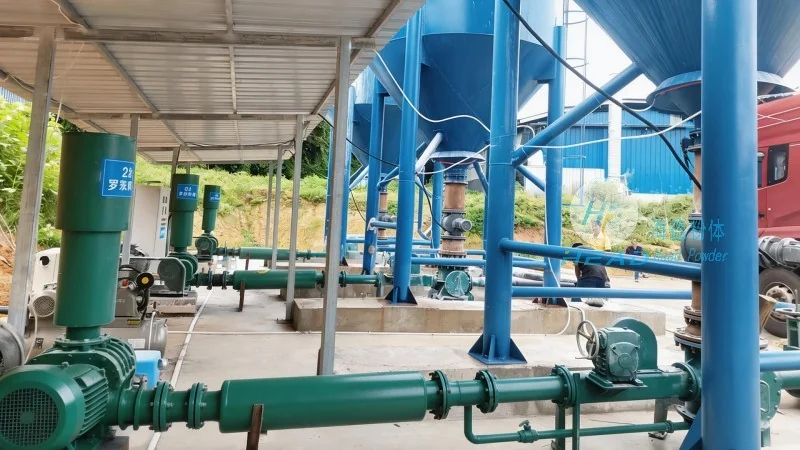
The core of a lime powder conveying line is its ability to move fine, dry powders through a system of pipes or ducts. The most common method is pneumatic conveying, which uses compressed air to create a flow that carries the powder. This approach is ideal for lime, as it is a light, non-abrasive material that can be easily suspended in air. The system typically includes a hopper for material storage, a feeder to control the flow rate, a conveying pipe, and a receiver for the discharged material. The air flow is regulated to maintain a consistent velocity, preventing the powder from settling or clogging the system. Mechanical conveying, such as screw conveyors or belt conveyors, is also used in some applications, especially for larger particle sizes or when the material is more abrasive. However, pneumatic systems are preferred for lime due to their ability to handle fine powders without causing degradation or contamination.
Key Components and Their Functions
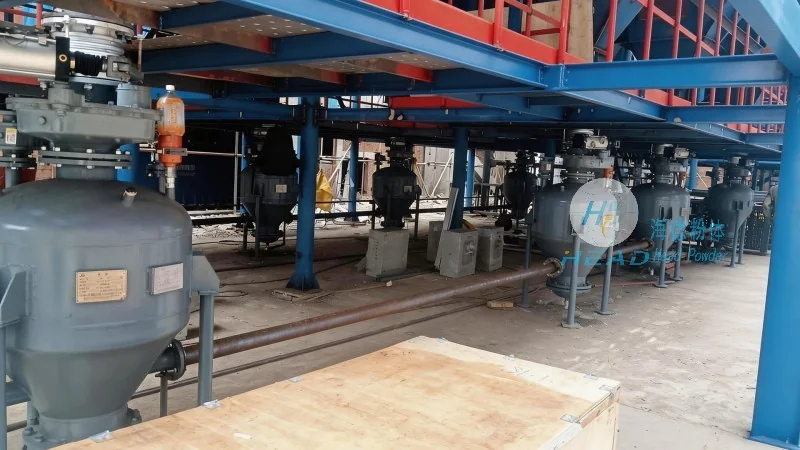
Several critical components work together to ensure the smooth operation of a lime powder conveying line. The hopper serves as the storage vessel, holding the lime powder until it is needed. It is designed with a sloped bottom to facilitate the material's flow into the feeder. The feeder, often a rotary valve or a star feeder, controls the rate at which the powder is released into the conveying system. This control is crucial for maintaining a steady flow and preventing overloading the downstream equipment. The conveying pipe is made of materials resistant to corrosion and abrasion, such as stainless steel or PVC, to withstand the lime's chemical properties. The pipe system is usually arranged in a loop or a straight line, depending on the layout of the facility. The receiver, or discharge hopper, collects the material at the end of the line, where it can be further processed or stored. In some systems, a filter or a dust collector is included to capture any fine particles that may escape during the conveying process, ensuring environmental compliance and product purity.
Working Scene Characteristics: Industrial Applications
Lime powder conveying lines are widely used in various industrial settings, each with distinct characteristics that influence the design and operation of the system. In the chemical industry, these lines are used to transport lime for flue gas desulfurization (FGD) processes, where lime is used to neutralize sulfur dioxide emissions. The working environment in this scenario is often characterized by high temperatures and corrosive gases, requiring the conveying system to be robust and durable. The system must also be able to handle large volumes of material, as FGD plants process significant amounts of flue gas daily. In the construction industry, lime powder is used as a raw material for cement production or as a soil stabilizer. The conveying lines in this sector are typically used in smaller-scale operations, with the system designed to handle lower flow rates and more frequent material changes. The working environment may involve outdoor storage and transportation, necessitating weather-resistant components and protection against moisture. In the environmental sector, lime powder is used for water treatment and waste management applications. The conveying lines here are often part of larger treatment plants, where the material is transported over longer distances and through complex pipe networks. The system must be able to maintain the material's quality, preventing clumping or degradation during transport. Additionally, the working scene may involve handling materials with varying moisture content, requiring the system to be adaptable and efficient in different conditions.
Advantages and Considerations for Lime Powder Conveying Lines
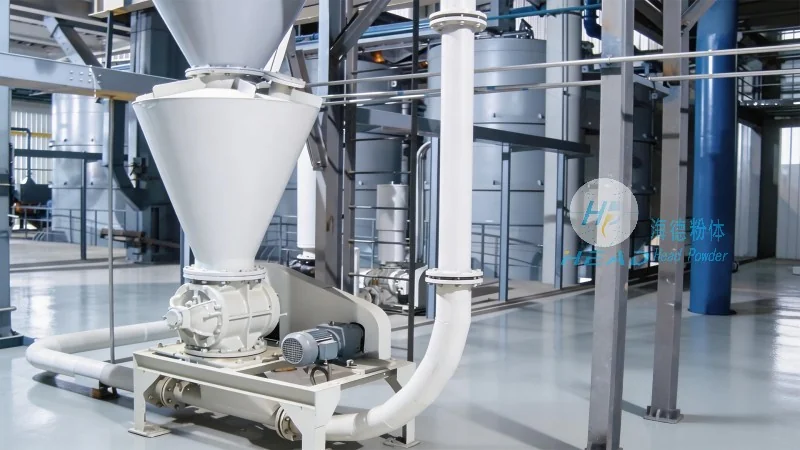
Implementing a lime powder conveying line offers several advantages, making it a preferred choice for many industries. One of the primary benefits is the reduction in labor costs, as automated systems eliminate the need for manual handling of bulk materials. This also improves safety by minimizing the risk of dust exposure and material spills. The efficiency of pneumatic conveying systems allows for faster material transport compared to traditional methods, increasing overall productivity. Another advantage is the ability to handle fine powders without causing degradation, which is critical for maintaining the material's quality and performance. However, there are also considerations to keep in mind when selecting a conveying line. The initial investment cost for pneumatic systems can be higher than mechanical alternatives, although the long-term savings in labor and material loss often offset this. Maintenance is another factor, as the system requires regular checks of air pressure, pipe integrity, and component wear. The choice of conveying method depends on the specific application, with pneumatic systems being more suitable for fine powders and long-distance transport, while mechanical systems are better for larger particles or shorter distances. Additionally, the working environment, such as temperature, humidity, and chemical exposure, must be considered to ensure the system's durability and reliability.




