For companies in the lithium-ion battery industry, the efficient and safe handling of nanomaterials is a critical challenge. The pneumatic conveying system designed by Shandong HeadPowder Engineering Co., Ltd. addresses these needs by providing a reliable solution for transporting nanomaterials used in battery production. This article provides an overview of the system's structure and working principles, highlighting its key components and operational mechanisms.
Key Components of the Pneumatic Conveying System
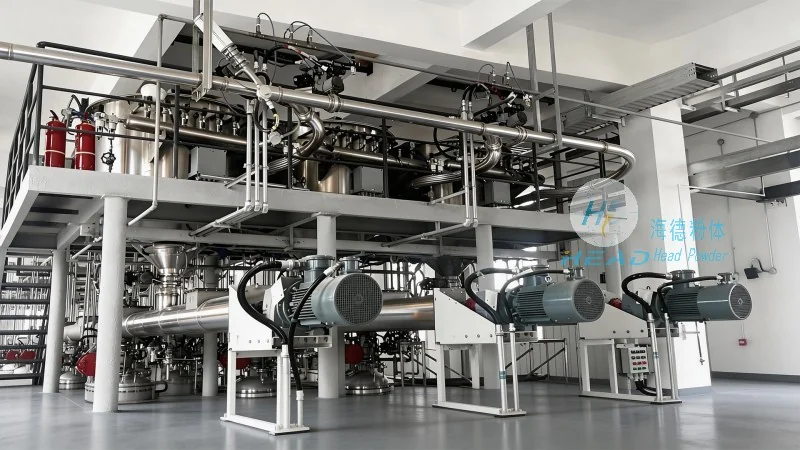
The pneumatic conveying system for lithium-ion battery nanomaterials consists of several essential components that work in tandem to ensure smooth material transport. The primary components include a material hopper, a rotary valve, a conveying pipeline, a dust collector, and a control system. Each component plays a specific role in the overall operation of the system.
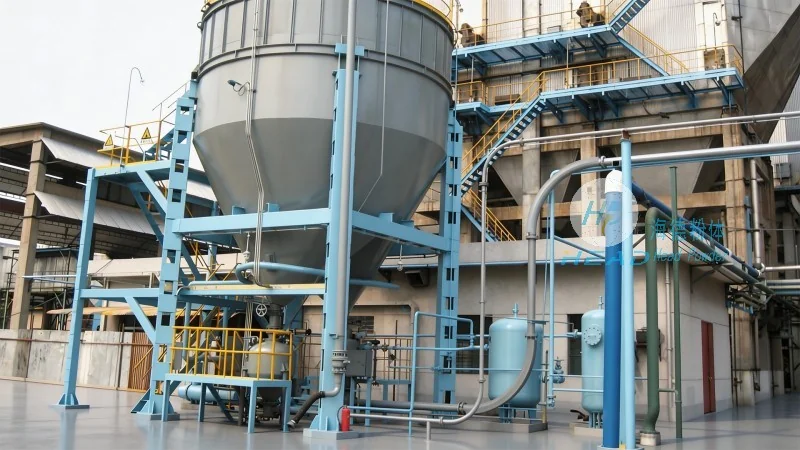
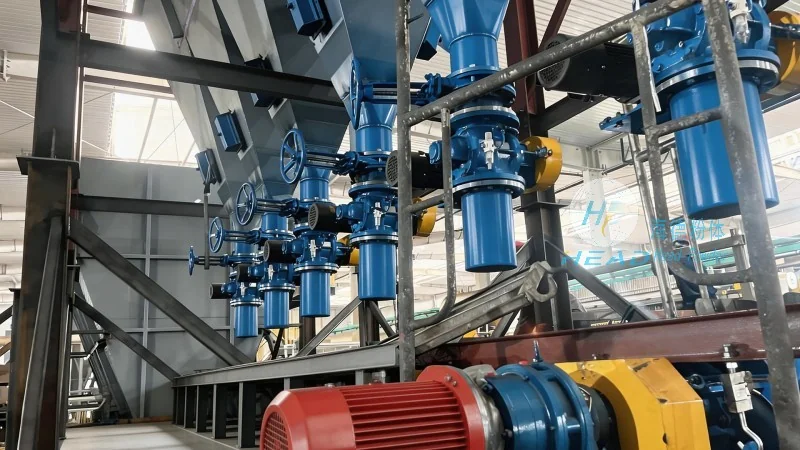
The material hopper is the initial storage unit where the nanomaterials are placed before being conveyed. It is designed with a large capacity to accommodate bulk quantities of material, ensuring a continuous supply for the conveying process. The hopper is equipped with a feeding mechanism that allows for controlled discharge of the material into the system. The rotary valve, located at the bottom of the hopper, acts as a gate to regulate the flow of material into the conveying pipeline. This component is crucial for maintaining a consistent flow rate and preventing backflow or material blockage.
The conveying pipeline is the core of the system, responsible for transporting the nanomaterials from the hopper to the destination point. It is typically made of stainless steel or other corrosion-resistant materials to withstand the abrasive nature of nanomaterials and ensure durability. The pipeline is designed with smooth internal surfaces to minimize friction and reduce the risk of material accumulation or clogging. The system may include multiple pipeline segments, such as vertical and horizontal sections, to accommodate the required transport path.
The dust collector is an integral part of the system, designed to capture and filter the fine particles of nanomaterials that may be generated during the conveying process. This component helps maintain a clean and safe working environment by preventing dust from spreading into the surrounding area. The dust collector is equipped with filtration systems that can capture particles as small as microns, ensuring compliance with environmental regulations and workplace safety standards.
The control system is responsible for monitoring and regulating the operation of the entire pneumatic conveying system. It includes sensors, controllers, and indicators that allow operators to track the flow rate, pressure, and other parameters in real-time. The control system can be programmed to adjust the conveying speed and pressure based on the material characteristics and system requirements, optimizing the overall performance and efficiency of the operation.
Working Principle of the Pneumatic Conveying System
The pneumatic conveying system operates on the principle of using compressed air to transport the nanomaterials through the pipeline. The process begins with the material being discharged from the hopper into the conveying pipeline via the rotary valve. As the compressed air is introduced into the pipeline, it creates a low-pressure zone that draws the material particles into the air stream. The air and material mixture then travels through the pipeline to the destination point, where the material is separated from the air and collected.
The conveying process can be categorized into two main types: dilute-phase and dense-phase conveying. Dilute-phase conveying involves a higher air velocity, which allows the material to be transported as a suspension in the air. This method is suitable for materials with low density and high flowability. Dense-phase conveying, on the other hand, uses a lower air velocity and higher material concentration, resulting in a more stable and controlled flow. This method is ideal for materials that are prone to clogging or have a higher density.
The system's working principle also involves the use of pressure differentials to move the material. The compressed air is supplied from a compressor, which generates the necessary pressure to drive the material through the pipeline. The pressure drop along the pipeline is managed by the system's design, ensuring that the material reaches the destination point without excessive pressure loss or material degradation.
The separation process at the destination point is critical for the efficient operation of the system. The material is typically separated from the air using a cyclone separator or a bag filter. The cyclone separator uses centrifugal force to separate the material from the air, while the bag filter uses fabric bags to trap the particles. The separated material is then collected in a container or hopper, ready for further processing or use in the battery production line.
Advantages of the Pneumatic Conveying System
The pneumatic conveying system for lithium-ion battery nanomaterials offers several advantages over traditional material handling methods. One of the key benefits is its ability to handle fine and abrasive materials without causing damage or degradation. The system's design minimizes material friction and impact, ensuring that the nanomaterials remain in their original state, which is crucial for maintaining the quality of the final battery products.
Another advantage is the system's flexibility and scalability. The conveying pipeline can be easily extended or modified to accommodate changes in production volume or layout. The system can also be integrated with other production equipment, such as mixers or reactors, to create a seamless material handling process. This flexibility makes the system suitable for various production scales, from small-scale pilot plants to large-scale manufacturing facilities.
The system also provides a safe and clean working environment. By using enclosed pipelines and dust collectors, the system prevents dust from spreading into the workplace, reducing the risk of respiratory issues or other health hazards. The enclosed design also minimizes the exposure of operators to the nanomaterials, ensuring compliance with occupational safety standards.
Furthermore, the pneumatic conveying system offers high efficiency and low maintenance costs. The system's components are designed for durability and reliability, with minimal moving parts that require regular maintenance. The use of compressed air as the conveying medium reduces the need for mechanical components, such as conveyor belts or buckets, which can be prone to wear and tear. This results in lower operational costs and longer system lifespan.
Application in Lithium-Ion Battery Production
The pneumatic conveying system is widely used in the production of lithium-ion batteries, particularly for handling nanomaterials such as lithium cobalt oxide (LCO), lithium iron phosphate (LFP), and other active materials. These materials are often in the form of fine powders or nanoscale particles, which require careful handling to maintain their properties and prevent agglomeration.
In the battery production process, the nanomaterials are typically mixed with other components, such as binders and conductive agents, to form the cathode or anode material. The pneumatic conveying system ensures that these materials are transported accurately and uniformly to the mixing equipment, maintaining the desired composition and particle size distribution. This is critical for achieving the desired battery performance, such as high energy density and long cycle life.
The system's ability to handle bulk quantities of nanomaterials efficiently reduces the time and labor required for material handling, allowing manufacturers to increase production throughput. By integrating the system with automated production lines, manufacturers can achieve higher levels of precision and consistency in the battery production process, leading to improved product quality and reduced waste.
Additionally, the system's flexibility allows it to be adapted to different production stages, such as material storage, mixing, and packaging. This adaptability makes it a versatile solution for various battery production facilities, regardless of their size or production capacity.
Conclusion
The pneumatic conveying system designed by Shandong HeadPowder Engineering Co., Ltd. is a reliable and efficient solution for handling nanomaterials in lithium-ion battery production. Its robust design, advanced components, and flexible operation make it an ideal choice for manufacturers seeking to improve their material handling processes. By understanding the system's structure and working principles, companies can make informed decisions about implementing this technology to enhance their production capabilities and maintain a competitive edge in the battery industry.




