Welcome to Shandong HeadPowder Engineering Co., Ltd., a leading manufacturer specializing in advanced pneumatic conveying solutions for powder carbon additives. Our focus is on providing efficient and reliable equipment that meets the demanding requirements of modern industrial applications. This article explores the fundamental principles behind powder carbon additive pneumatic conveying machines, along with key characteristics of their operational environments.
Understanding the Core Principles of Pneumatic Conveying for Carbon Additives
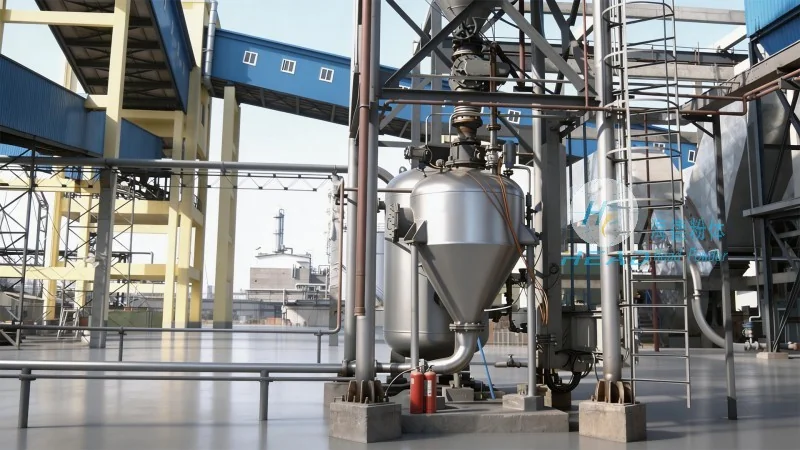
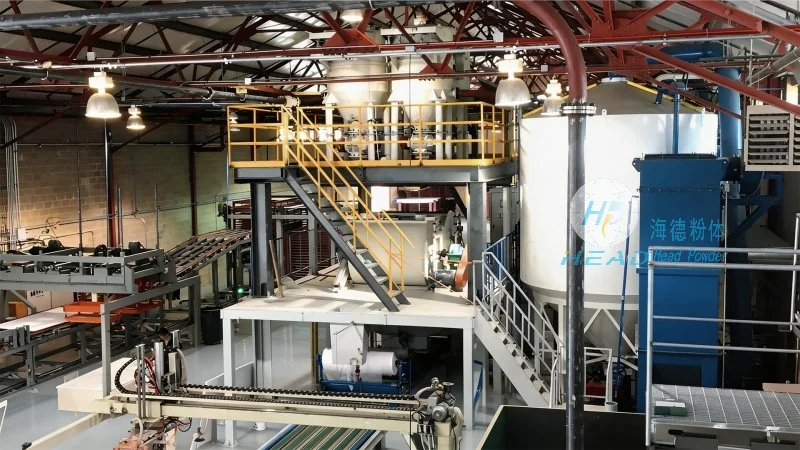
Pneumatic conveying systems utilize air or gas to transport bulk powders, such as carbon additives, through a pipeline network. The process involves creating a pressure differential between the inlet and outlet of the system, which propels the material forward. There are two primary types of pneumatic conveying: dilute phase and dense phase. Dilute phase systems operate at higher velocities, typically 20-30 m/s, and are suitable for short to medium distances. Dense phase systems, on the other hand, use lower velocities (5-15 m/s) and higher pressure, making them ideal for longer distances and more sensitive materials. For carbon additives, which often require gentle handling to prevent agglomeration or degradation, dense phase conveying is frequently preferred. The principle of operation involves feeding the powder into a hopper, where it is then drawn into the conveying line by a vacuum or pressure source. The air-powder mixture travels through the pipeline, with the carbon additive particles suspended in the air stream. At the discharge point, the air is separated from the powder, often using cyclones or filters, and the carbon additive is collected in a receiving bin.
Key Working Scene Characteristics of Powder Carbon Additive Pneumatic Conveying Machines
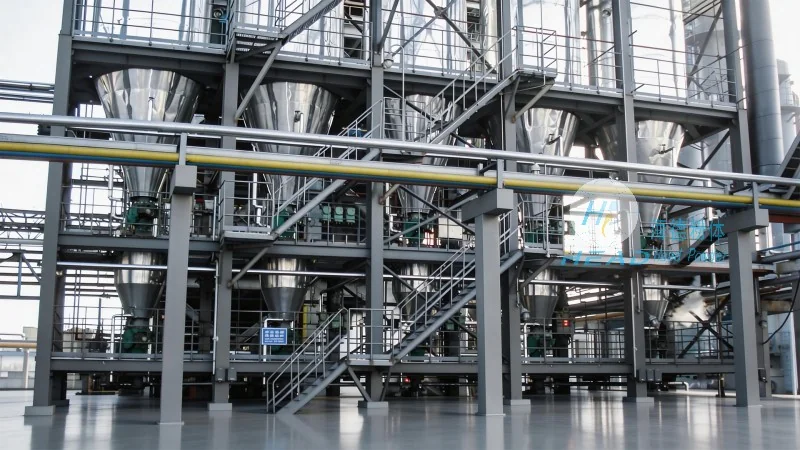
The operational environment of a powder carbon additive pneumatic conveying machine is critical to its performance and efficiency. Several key characteristics define these working scenes, including material properties, system design, and application requirements. First, the physical and chemical properties of the carbon additive play a significant role. Carbon additives, such as calcined petroleum coke or graphite, vary in particle size, density, and moisture content. These factors influence the selection of conveying velocity, pressure, and equipment components. For example, fine powders may require higher air velocities to prevent blockages, while coarser materials can be conveyed at lower speeds. Second, the system design must accommodate the specific handling needs of carbon additives. This includes considerations like hopper design to prevent material bridging or caking, pipeline materials that resist corrosion from acidic or abrasive particles, and filtration systems to maintain product purity. Third, the application context is another critical factor. In steelmaking, for instance, carbon additives are used to adjust the carbon content in molten steel. The conveying system must ensure precise dosing and minimal contamination, which is achieved through closed-loop systems and controlled pressure. Similarly, in foundries, carbon additives are used in the production of castings, where the system must handle high volumes of material with consistent flow rates. The working scene also includes factors like space constraints, as industrial facilities often have limited room for large equipment, requiring compact and modular designs. Additionally, environmental considerations, such as dust control and air quality, are essential in modern manufacturing, making enclosed systems with efficient filtration a standard feature.
Company Overview: Shandong HeadPowder Engineering Co., Ltd.
HeadPowder, a division of Shandong HeadPowder Engineering Co., Ltd., is headquartered in Shandong, China. With years of experience in the engineering and manufacturing of pneumatic conveying systems, the company has established itself as a trusted partner for industries relying on carbon additives. Our team of engineers and technicians specializes in customizing solutions to meet the unique needs of each client, ensuring that the equipment is tailored to the specific properties of the carbon additive and the operational requirements of the facility. We focus on delivering high-quality, durable equipment that enhances productivity while maintaining product integrity. Our commitment to innovation and customer satisfaction has made us a leading choice for businesses seeking reliable and efficient pneumatic conveying solutions for their carbon additive applications.




