Graphite powder, a versatile material widely used in various industrial applications, often requires efficient and reliable transportation methods to meet production demands. Pneumatic conveying, a technology that utilizes air or gas to transport solid materials, has become a preferred solution for handling graphite powder due to its advantages in safety, flexibility, and cost-effectiveness. This article explores the fundamental principles of pneumatic conveying for graphite powder and highlights the key characteristics of its working scenes, providing insights into how this technology enhances operational efficiency in industrial settings.
Understanding Pneumatic Conveying: The Core Mechanism
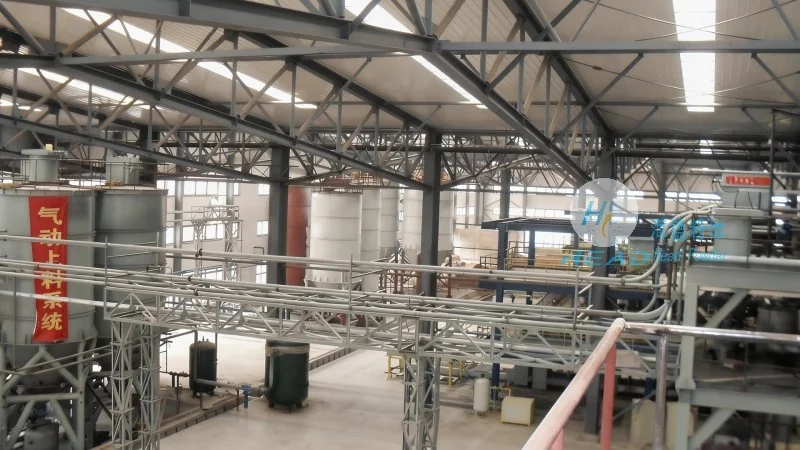
Pneumatic conveying operates on the principle of transporting solid particles through a pipeline using a moving gas stream. In the context of graphite powder, the process involves several key components and mechanisms that ensure smooth material transfer. The system typically consists of a material hopper, a feeder, a conveying line, and a receiver. The feeder controls the flow rate of graphite powder into the pipeline, while the conveying line, often equipped with pressure or vacuum systems, propels the material forward. The gas, usually air, is introduced at a controlled velocity to create a suspension of graphite particles, allowing them to be carried through the pipeline to the destination.
The primary mechanism behind pneumatic conveying is the creation of a two-phase flow, where solid particles and gas coexist and move together. The velocity of the gas must be sufficient to overcome the gravitational forces acting on the particles and to maintain them in suspension. This velocity is critical and is determined by factors such as particle size, density, and the desired conveying distance. For graphite powder, which is typically fine and light, the required gas velocity is often lower compared to coarser materials, making it suitable for pneumatic transport. The system may operate under positive pressure (pressure conveying) or negative pressure (vacuum conveying), each with its own advantages depending on the application and layout of the conveying line.
Key Characteristics of Working Scenes for Graphite Powder Pneumatic Conveying
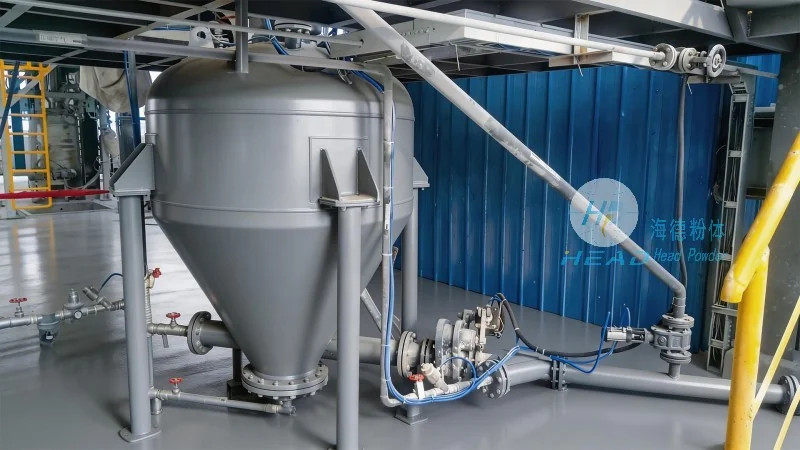
The working scenes where pneumatic conveying is applied for graphite powder vary based on the specific industrial processes and production requirements. These scenes are characterized by several factors that influence the design and operation of the conveying system. First, the scale of production and the volume of graphite powder to be transported play a significant role. In large-scale manufacturing facilities, such as those producing graphite electrodes or lubricants, the conveying system must handle high throughput rates, often requiring multiple pipelines or high-capacity feeders. Second, the distance and layout of the conveying line are crucial. For short distances, low-pressure systems may suffice, while longer distances may necessitate high-pressure or vacuum systems to maintain material flow and prevent particle deposition. Third, the environment and safety considerations are paramount. Graphite powder is non-combustible and generally safe, but the system must be designed to prevent dust accumulation and ensure proper ventilation to maintain a safe working environment. Additionally, the need for cleanliness and contamination control is important, especially in applications where graphite is used in food or pharmaceutical industries, where the material must remain free from impurities.
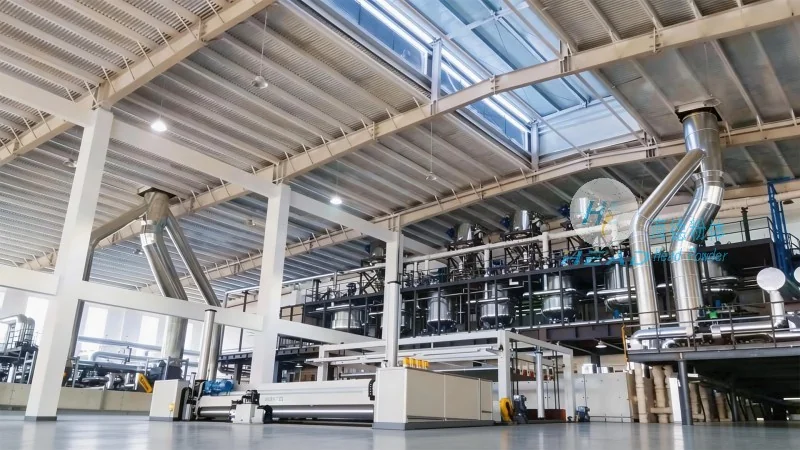
Another important characteristic of the working scenes is the integration with other production equipment. Pneumatic conveying systems are often integrated with processing units, such as mixers, grinders, or reactors, to form a continuous production line. This integration allows for seamless material transfer from one stage to the next, reducing downtime and improving overall efficiency. For example, in a graphite electrode manufacturing plant, the conveying system may transport graphite powder from a storage silo to a mixing unit, where it is combined with other additives before being fed into a pressing machine. The smooth operation of the conveying system directly impacts the productivity of the entire production process.
Advantages and Considerations in Pneumatic Conveying for Graphite Powder
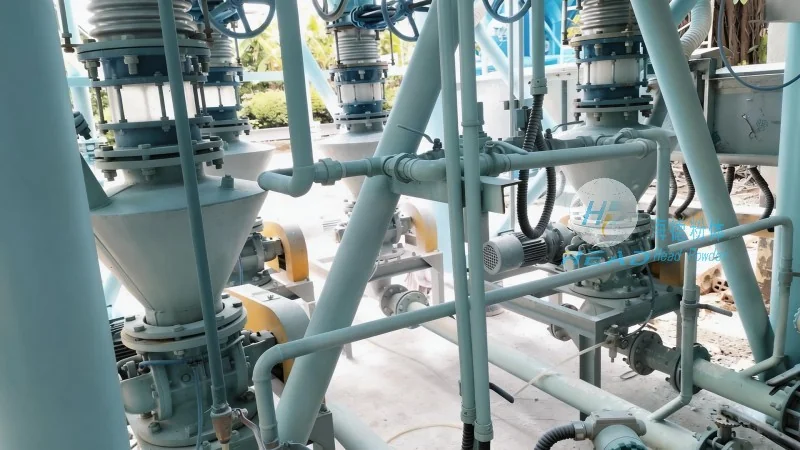
Pneumatic conveying offers several advantages when used for graphite powder, making it a preferred choice over traditional methods like bucket elevators or belt conveyors. One of the main advantages is the ability to handle fine and abrasive materials without causing excessive wear on the equipment. Graphite particles are relatively soft and can be easily transported through pipelines without damaging the system components. Another advantage is the flexibility in system design, as pneumatic conveying can be adapted to various layouts and distances, allowing for customization to fit the specific needs of the production facility. The system also provides better control over material flow, enabling precise regulation of the powder feed rate, which is crucial for maintaining consistent product quality.
However, there are also considerations to keep in mind when implementing pneumatic conveying for graphite powder. One of the main challenges is the potential for particle segregation and agglomeration, especially for fine powders. To mitigate this, the system may include features such as agitators or vibrators to keep the particles in suspension and prevent clumping. Another consideration is the energy consumption, as pneumatic conveying requires a significant amount of air or gas, which can impact operational costs. The system must be designed to optimize energy use while maintaining efficient material transport. Additionally, maintenance and cleaning of the pipelines and components are important to prevent clogging and ensure long-term system performance.




