Shandong HeadPowder Engineering Co., Ltd., based in Shandong, China, specializes in industrial pneumatic conveying systems. The company, commonly known as headpowder, focuses on providing efficient solutions for handling fine powders, particularly in power plants and industrial facilities where desulfurization and dust removal processes generate large volumes of fly ash. This article details the operation process and working principle of a desulfurization and dust removal fly ash powder pneumatic conveying line, highlighting key components and the systematic approach to transporting these materials.
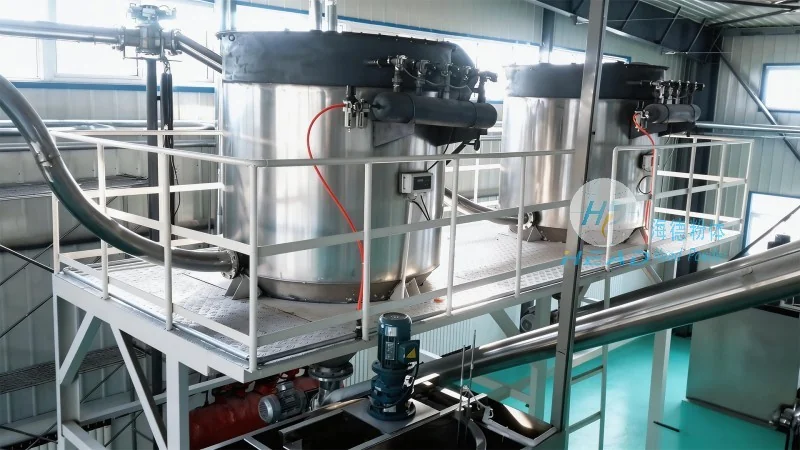
Overview of the Desulfurization and Dust Removal Fly Ash Powder Pneumatic Conveying System
The desulfurization and dust removal fly ash powder pneumatic conveying line is a critical component in modern power generation and industrial plants, designed to safely and efficiently transport fly ash from desulfurization and dust removal units to storage or disposal sites. The system integrates several key equipment pieces that work in concert to ensure reliable and continuous operation. These components typically include an ash hopper or collector, a rotary airlock valve, a pneumatic conveying pipeline, a dust separator or filter, and a blower or air compressor to generate the necessary air pressure for conveying. The entire system is engineered to handle the specific characteristics of fly ash, such as its fine particle size, moisture content, and potential corrosive properties, ensuring minimal loss and maximum efficiency.
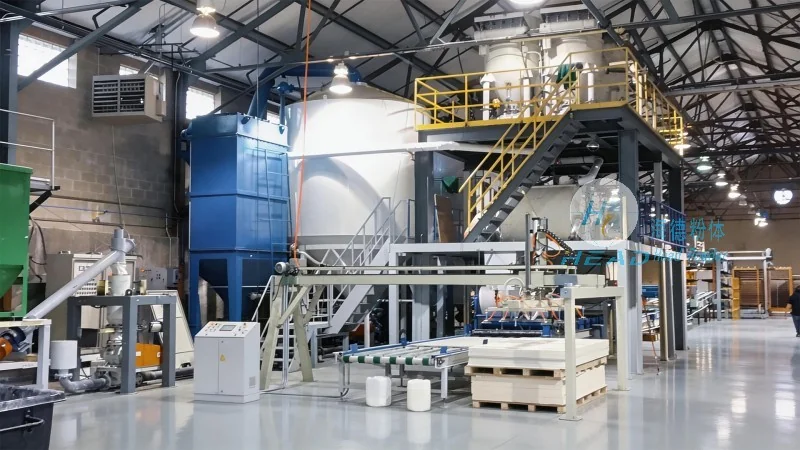
Key Components and Their Functions in the Pneumatic Conveying Line
Each component of the desulfurization and dust removal fly ash powder pneumatic conveying line plays a vital role in the overall operation. The ash hopper or collector is the initial point where fly ash is gathered from desulfurization and dust removal equipment. It is designed to hold a sufficient volume of ash to maintain a steady flow to subsequent equipment. The rotary airlock valve, located at the outlet of the hopper, acts as a controlled gate to regulate the flow of ash into the pneumatic conveying pipeline. This valve prevents backflow of air and ensures a consistent feed rate, which is crucial for maintaining the efficiency of the conveying process. The pneumatic conveying pipeline is the main channel through which the fly ash is transported. It is typically made of stainless steel or other corrosion-resistant materials to withstand the abrasive and potentially acidic nature of the ash. The pipeline may include bends, elbows, and straight sections, with appropriate supports to maintain structural integrity and minimize pressure drop. At the receiving end of the pipeline, a dust separator or filter is installed to remove any fine particles from the air stream before it is discharged to the atmosphere. This component helps to comply with environmental regulations and protect the surrounding environment from dust pollution. Finally, the blower or air compressor provides the necessary air pressure and volume to move the ash through the pipeline. The choice of blower type—such as positive pressure or negative pressure systems—depends on the specific application and the distance over which the ash needs to be conveyed.
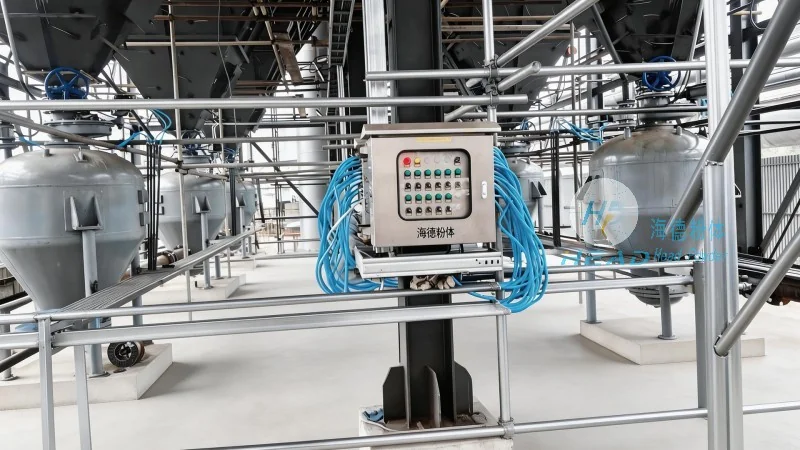
Operation Process of the Desulfurization and Dust Removal Fly Ash Powder Pneumatic Conveying Line
The operation of the desulfurization and dust removal fly ash powder pneumatic conveying line follows a systematic sequence of steps. The process begins with the accumulation of fly ash in the ash hopper. As the ash level rises, the rotary airlock valve opens, allowing a controlled amount of ash to enter the pneumatic conveying pipeline. Simultaneously, the blower starts operating, generating a high-pressure air stream that moves through the pipeline. The air stream carries the ash particles forward, creating a suspension of ash in air. The ash travels through the pipeline, passing through any bends or elbows, and reaches the receiving end. At the receiving end, the dust separator or filter captures the ash particles from the air stream, allowing the clean air to be discharged. The collected ash is then deposited into a storage silo or transported for further processing or disposal. The entire process is automated, with sensors and control systems monitoring the flow rate, pressure, and other parameters to ensure optimal performance. The system is designed to operate continuously, with minimal downtime, and can be adjusted to handle varying ash loads depending on the plant's operation schedule.
Working Principle of the Pneumatic Conveying System
The working principle of the desulfurization and dust removal fly ash powder pneumatic conveying line is based on the fundamental concept of pneumatic transport, where solid particles are suspended and transported by a moving air stream. In this system, the blower creates a pressure difference between the inlet and outlet of the pipeline. The high-pressure air at the inlet draws the ash particles from the hopper into the pipeline, forming a dense phase or dilute phase flow, depending on the air velocity and particle size. The dense phase conveying, also known as plug flow, involves a higher air velocity and a lower air-to-solid ratio, resulting in a more stable and efficient transport of larger particles. The dilute phase conveying, on the other hand, uses a lower air velocity and a higher air-to-solid ratio, suitable for fine particles like fly ash. The system may employ a combination of both phases to optimize the conveying distance and efficiency. The key to the system's efficiency is the balance between the air pressure, air volume, and the characteristics of the ash particles. Proper design of the pipeline diameter, length, and bends is essential to minimize pressure drop and ensure that the air stream has sufficient energy to transport the ash without causing excessive wear on the equipment. The rotary airlock valve and the dust separator are critical in maintaining the system's integrity, preventing backflow and ensuring that the ash is effectively separated from the air stream. Overall, the working principle of the pneumatic conveying line is a sophisticated application of fluid dynamics and material handling technology, tailored to the specific needs of handling fine, abrasive materials like fly ash from desulfurization and dust removal processes.
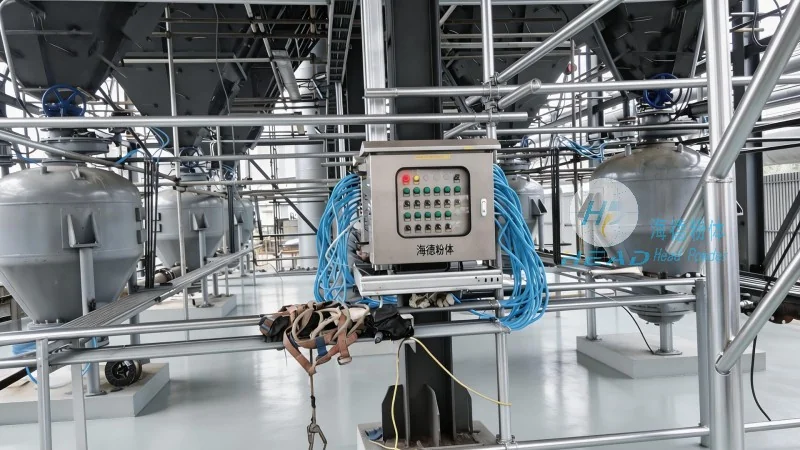
Advantages and Applications of the Desulfurization and Dust Removal Fly Ash Powder Pneumatic Conveying Line
The desulfurization and dust removal fly ash powder pneumatic conveying line offers several advantages over traditional mechanical conveying methods, making it a preferred choice in industrial applications. One of the primary advantages is the ability to transport ash over long distances without the need for intermediate storage or transfer points. This reduces the risk of ash buildup and contamination, and minimizes the space required for the system. The system is also highly flexible, as it can be easily adjusted to handle varying ash loads and can be integrated with other plant processes. Additionally, the pneumatic conveying line is less prone to blockages compared to mechanical systems, as the air stream helps to keep the pipeline clear of debris. The system is particularly suitable for applications where the ash needs to be transported to a remote storage facility or for disposal, as it can handle the required distances efficiently. The use of corrosion-resistant materials and the design of the system to handle abrasive particles also contribute to its long service life and low maintenance requirements. In summary, the desulfurization and dust removal fly ash powder pneumatic conveying line is an essential component in modern power plants and industrial facilities, providing an efficient and reliable method for handling fly ash generated from desulfurization and dust removal processes.




