Diatomite, a natural sedimentary rock composed of fossilized diatoms, is widely used in various industries due to its unique properties such as high porosity, lightweight, and excellent filtering capabilities. The efficient handling of diatomite powder is crucial for industrial processes, and pneumatic conveying systems have emerged as a reliable solution for transporting these fine powders over long distances or within complex production lines. This article provides an in-depth look at diatomite powder pneumatic conveying equipment, exploring its structural components, operational principles, and the technical considerations that make it suitable for this specific application.
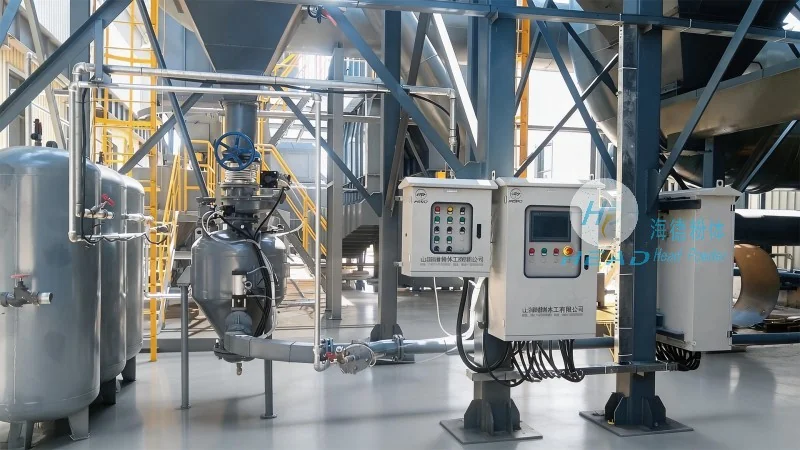
Overview of Pneumatic Conveying Systems for Diatomite Powder
Pneumatic conveying, also known as powder handling equipment, is a method of transporting bulk materials through a pipeline using air or other gases. Unlike mechanical conveying systems that rely on belts, screws, or buckets, pneumatic systems utilize the force of compressed air to move powders, offering advantages such as flexibility in layout, minimal maintenance, and the ability to handle materials that are difficult to transport with traditional methods. For diatomite powder, which often has fine particle sizes and can be prone to dusting or caking, pneumatic conveying provides a clean, dust-free, and efficient solution.
Key Structural Components of Diatomite Powder Pneumatic Conveying Equipment
The diatomite powder pneumatic conveying system typically consists of several core components that work in tandem to ensure smooth material transport. The primary components include the material feeder, the conveying pipeline, the air supply system, the separation and collection unit, and the control system. Each component plays a critical role in the overall operation of the equipment.
Material Feeder: Ensuring Consistent Feed Rate
The material feeder is the first component in the system, responsible for delivering diatomite powder to the conveying pipeline at a controlled and consistent rate. For diatomite, which can vary in bulk density and flowability, the feeder must be designed to handle these variations without causing blockages or uneven flow. Common types of feeders used in pneumatic conveying systems include rotary valves, screw feeders, and vibratory feeders. These devices ensure that the powder is introduced into the pipeline in a controlled manner, preventing surges or backflow that could disrupt the conveying process.
Conveying Pipeline: Design for Low Pressure Drop and Material Flow
The conveying pipeline is the main channel through which diatomite powder travels from the feeder to the collection point. The design of the pipeline is critical for minimizing pressure drop and ensuring efficient material transport. The pipeline is usually made of stainless steel or other corrosion-resistant materials to withstand the abrasive nature of diatomite particles and to prevent contamination. The diameter and length of the pipeline are carefully selected based on the material's properties, such as particle size distribution, bulk density, and the required conveying distance. For diatomite powder, which is typically fine and light, a larger diameter pipeline may be used to reduce friction losses and maintain a stable flow velocity.
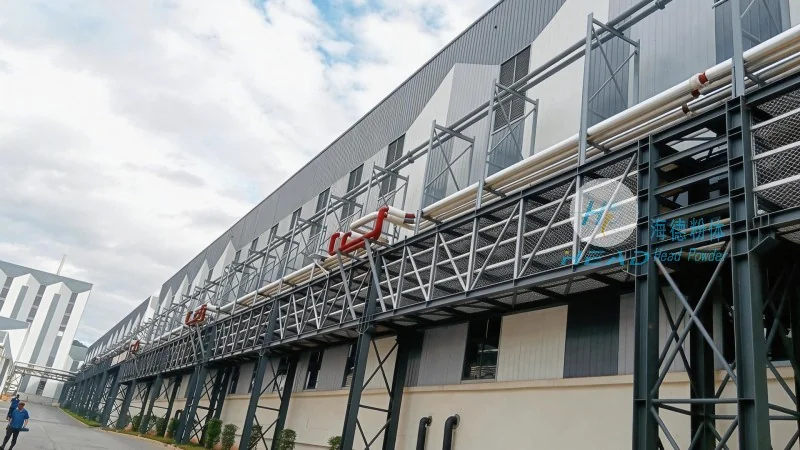
Air Supply System: Compressed Air and Pressure Control
The air supply system provides the necessary pressure and volume of air to move the diatomite powder through the pipeline. This system includes a compressor, air filter, and pressure regulator. The compressor generates high-pressure air, which is then filtered to remove contaminants that could damage the system or contaminate the powder. The pressure regulator ensures that the air pressure remains stable throughout the conveying process, preventing fluctuations that could affect the material flow rate. For diatomite powder, which requires a specific air-to-material ratio to achieve optimal conveying efficiency, the air supply system must be precisely controlled to maintain this ratio.
Separation and Collection Unit: Cleaning and Containment
The separation and collection unit is the final component of the pneumatic conveying system, responsible for separating the diatomite powder from the air stream and collecting it in a designated container. This unit typically consists of a cyclone separator, a filter, and a dust collection system. The cyclone separator uses centrifugal force to separate the heavier powder particles from the air, while the filter removes any remaining fine particles to ensure that the exhaust air is clean and meets environmental regulations. The collected diatomite powder is then discharged into a storage bin or processing unit. For diatomite, which is often used in applications where purity is critical (such as filtration media or catalysts), the separation unit must be designed to minimize contamination and ensure that the powder remains free of foreign particles.
Control System: Monitoring and Adjusting Conveying Parameters
The control system is an integral part of the diatomite powder pneumatic conveying equipment, responsible for monitoring and adjusting the various parameters of the system to ensure optimal operation. This system typically includes sensors and controllers that monitor air pressure, material flow rate, and system temperature. The controller adjusts the feeder speed, air pressure, and other parameters in real-time to maintain the desired conveying conditions. For example, if the material flow rate decreases, the controller may increase the air pressure or adjust the feeder speed to maintain a consistent flow. The control system also includes safety features such as pressure relief valves and emergency shut-off switches to prevent accidents and protect the equipment and personnel.
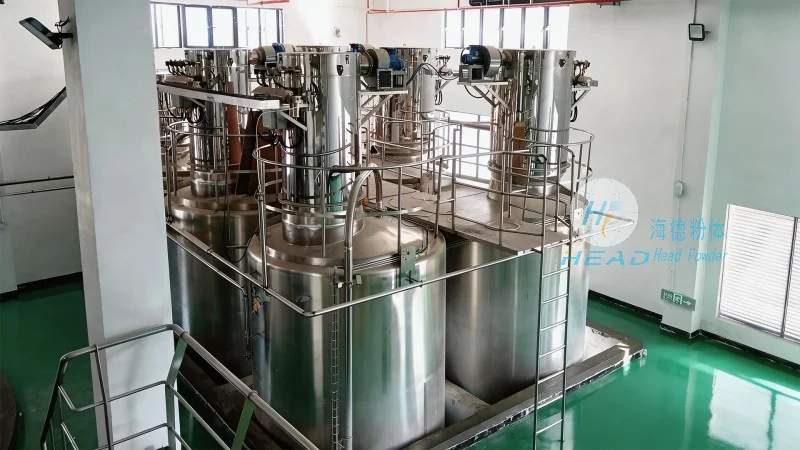
Working Principle of Diatomite Powder Pneumatic Conveying
The working principle of the diatomite powder pneumatic conveying system is based on the principle of fluidization and suspension. When compressed air is introduced into the conveying pipeline, it creates a low-pressure zone that draws the diatomite powder into the pipeline. The air and powder mixture forms a suspension, where the powder particles are suspended in the air stream and transported through the pipeline. The velocity of the air stream is critical for maintaining the suspension of the powder particles. If the air velocity is too low, the powder particles may settle and cause blockages; if it is too high, the pressure drop may become excessive, leading to energy inefficiency. The optimal air velocity for diatomite powder is typically determined based on the particle size and density of the material.
Technical Considerations for Diatomite Powder Pneumatic Conveying
When designing and operating a diatomite powder pneumatic conveying system, several technical considerations must be taken into account to ensure efficient and reliable operation. These considerations include the material's properties, the conveying distance, the required flow rate, and the environmental regulations. The particle size distribution of diatomite is a key factor, as fine particles are more prone to dusting and require higher air velocities for efficient conveying. The bulk density of diatomite, which can vary depending on the source and processing method, affects the material's flowability and the required air-to-material ratio. The conveying distance is another important factor, as longer distances may require additional boosters or larger diameter pipelines to maintain the material flow. Environmental regulations, such as dust emission limits, also play a role in the design of the separation and collection unit, which must be capable of capturing a high percentage of the powder particles to prevent air pollution.
Advantages of Using Pneumatic Conveying for Diatomite Powder
Pneumatic conveying systems offer several advantages over traditional mechanical conveying methods for diatomite powder. One of the primary advantages is the ability to handle fine and abrasive powders without causing wear and tear on the equipment. The system is also flexible in layout, allowing for the integration of multiple conveying lines or the connection of different processing units. Additionally, pneumatic conveying provides a clean and dust-free environment, which is essential for applications where the purity of the diatomite powder is critical. The system is also relatively easy to install and maintain, with minimal moving parts compared to mechanical systems. Finally, pneumatic conveying can be integrated with other process equipment, such as mixers or classifiers, to form a complete production line.
Applications of Diatomite Powder Pneumatic Conveying Equipment
Diatomite powder pneumatic conveying equipment is used in a wide range of industries, including filtration, catalysis, construction, and food processing. In the filtration industry, diatomite is used as a filter media for water treatment and industrial filtration processes. The pneumatic conveying system allows for the efficient transport of diatomite from storage to the filtration units, ensuring a consistent supply of high-quality filter media. In the construction industry, diatomite is used as a lightweight aggregate in concrete and plaster, and the pneumatic conveying system enables the easy transport of the powder to the mixing plants. In the food processing industry, diatomite is used as a clarifying agent in beverages and as a carrier for vitamins and minerals, and the clean and dust-free conveying system ensures that the powder remains free of contaminants and meets food safety standards.




