Efficient and reliable bulk material transport is crucial in industrial processes, especially when dealing with substances like copper sulfate. Pneumatic conveying systems offer a sophisticated solution for handling such materials, ensuring safety, efficiency, and minimal environmental impact. This article explores the application of pneumatic conveying in the bulk transport of copper sulfate, highlighting the technological advantages and practical implementation considerations.
Understanding Pneumatic Conveying Systems
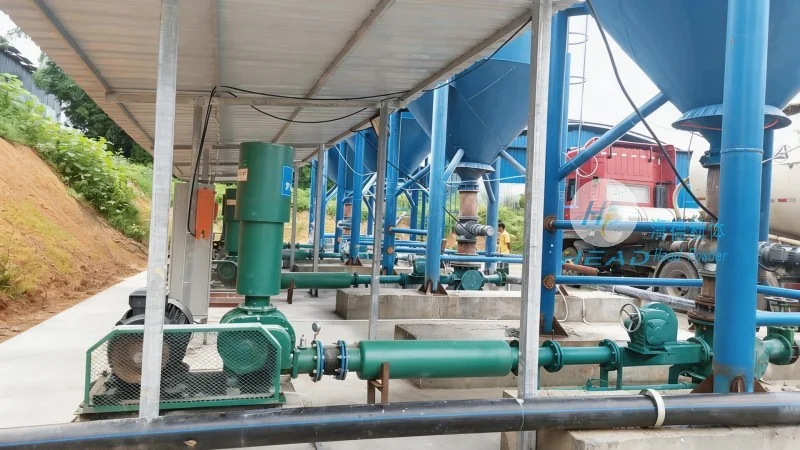
Pneumatic conveying, also known as pneumatic transport, is a method of transporting bulk materials through a pipeline using air or other gases. Unlike mechanical systems that rely on belts, buckets, or screws, pneumatic systems utilize pressure differentials to move materials. This technology is particularly advantageous for materials that are dusty, corrosive, or require controlled handling, such as copper sulfate. The system typically consists of a hopper, a conveying line, a control valve, and a receiver. Air is introduced into the system, creating a flow that pulls or pushes the material through the pipeline. The design of the system, including the type of air flow (positive or negative pressure) and the material's properties, determines the most effective conveying method.
Advantages of Pneumatic Conveying for Copper Sulfate
When transporting copper sulfate in bulk, pneumatic conveying offers several key benefits. First, it provides a closed system, which prevents dust emissions and contamination, ensuring compliance with environmental regulations. This is critical for copper sulfate, a substance that can be hazardous if released into the environment. Second, the system allows for precise control over the flow rate and pressure, enabling consistent and uniform delivery of the material to processing units. Third, pneumatic conveying reduces the risk of material degradation, as the material is not subjected to mechanical stress or abrasion during transport. Additionally, the system can be integrated with other industrial processes, such as mixing or drying, to streamline operations and improve overall efficiency.
Application in Industrial Settings
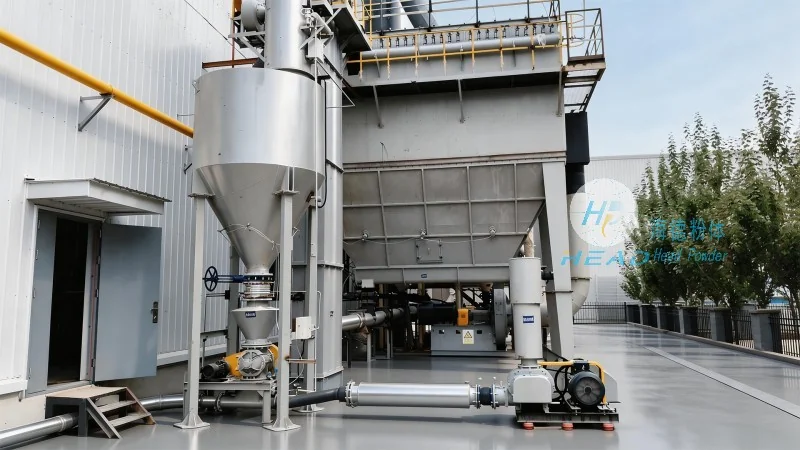
In industrial applications, copper sulfate is commonly used in agriculture, water treatment, and chemical manufacturing. The bulk transport of this material requires a system that can handle its specific properties, including its granular or powdered form and potential moisture content. Pneumatic conveying systems are well-suited for these applications due to their ability to handle a wide range of material sizes and flow rates. For example, in a fertilizer production plant, copper sulfate may be transported from storage silos to mixing equipment, where it is combined with other nutrients. The pneumatic system ensures that the material is delivered in a controlled manner, preventing clogging or uneven distribution. Similarly, in a water treatment facility, copper sulfate is used as a coagulant to remove impurities from water. The system must be able to deliver the material to the treatment tanks at the correct concentration, which is achieved through precise control of the conveying parameters.
Key Considerations for Implementation
Implementing a pneumatic conveying system for copper sulfate requires careful consideration of several factors. The first is the material's characteristics, such as its density, moisture content, and particle size distribution. These factors influence the system's design, including the size of the conveying line and the type of air flow. The second consideration is the system's capacity and flow rate requirements. The system must be able to handle the desired throughput, which depends on the production rate and processing needs. Third, the system's maintenance and operational costs must be evaluated. Pneumatic systems generally have lower maintenance requirements compared to mechanical systems, but the cost of air compressors and energy consumption must be factored in. Finally, the system's integration with existing infrastructure and processes must be considered to ensure smooth operation and minimal disruption.
Case Study: Successful Implementation by Shandong HeadPowder Engineering Co., Ltd.
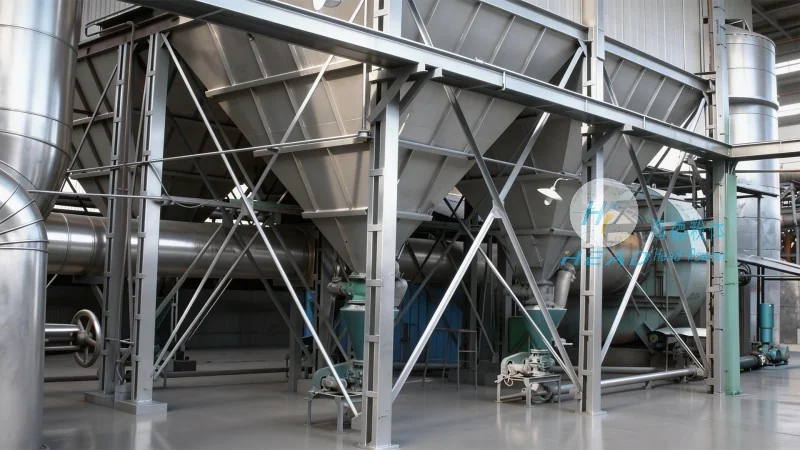
Shandong HeadPowder Engineering Co., Ltd., a leading provider of bulk material handling solutions, has successfully implemented pneumatic conveying systems for copper sulfate in various industrial applications. The company specializes in designing and manufacturing customized pneumatic systems tailored to the specific needs of its clients. For instance, a client in the agricultural sector required a system to transport copper sulfate from storage silos to fertilizer mixing equipment. HeadPowder engineers designed a positive pressure pneumatic system with a large hopper and a high-capacity air compressor. The system was able to handle the high throughput required by the client, ensuring consistent delivery of the material to the mixing tanks. The client reported significant improvements in operational efficiency and reduced downtime due to the system's reliability. Another client, a water treatment facility, used a negative pressure pneumatic system to transport copper sulfate to their treatment tanks. The system was designed to handle the material's moisture content and prevent clogging, which was a common issue with traditional mechanical systems. The client noted a reduction in maintenance costs and improved compliance with environmental regulations due to the closed system design.
Conclusion
Pneumatic conveying is a highly effective and versatile method for the bulk transport of copper sulfate. Its advantages, including environmental protection, precise control, and reduced material degradation, make it an ideal solution for industrial applications. By carefully considering the material's properties and system requirements, companies can implement a pneumatic conveying system that enhances operational efficiency and ensures compliance with regulations. Shandong HeadPowder Engineering Co., Ltd. offers expertise and customized solutions to help clients achieve these benefits, demonstrating the practical application of pneumatic conveying in the handling of copper sulfate.




