Foundry dust, a byproduct of metal casting processes, poses significant challenges in terms of handling, transportation, and disposal. Efficient air-driven transport systems are crucial for managing this material, ensuring safe and effective movement from production sites to treatment or disposal facilities. This article focuses on the design calculations and equipment selection for air-driven transport of foundry dust, highlighting key considerations and best practices to optimize performance and reliability.
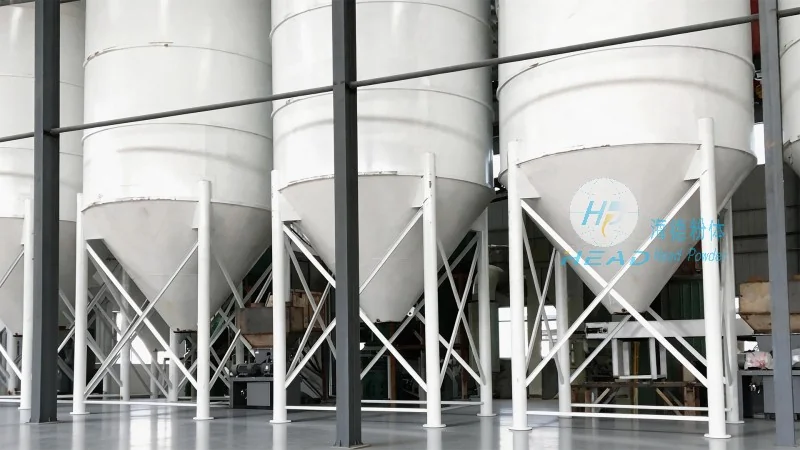
Key Design Considerations for Foundry Dust Air-Driven Transport
The design of an air-driven transport system for foundry dust involves several critical factors that must be carefully evaluated. First, the physical properties of the dust, such as particle size distribution, moisture content, and bulk density, directly impact the system's performance. Larger particles may require higher air velocities to maintain suspension, while moisture can affect flowability and potential caking. Additionally, the system's capacity, determined by the required throughput rate, must align with production demands to avoid bottlenecks or underutilization.
Another essential consideration is the air supply system, which includes the blower or compressor, ductwork, and air distribution components. The choice of equipment depends on the system's pressure and flow requirements. For instance, positive pressure systems use blowers to force air through the ducts, while negative pressure systems employ vacuum pumps to draw material into the system. The selection of the blower type—such as centrifugal, regenerative, or rotary lobe—depends on the specific pressure and flow needs, as well as the dust characteristics. Proper sizing of the blower is critical to ensure sufficient air velocity to keep the dust particles suspended and maintain consistent flow rates.
Equipment Selection for Foundry Dust Air-Driven Transport
When selecting equipment for foundry dust air-driven transport, several factors must be considered to ensure optimal performance and longevity. The primary components include the dust collector, conveyor system, and control mechanisms. The dust collector, often a cyclone or bag filter, is responsible for separating the dust from the air stream, preventing it from re-entering the environment. The choice of collector depends on the dust's properties and the required filtration efficiency. For foundry dust, which may contain fine particles, a high-efficiency cyclone or a combination of cyclone and bag filter is typically recommended to achieve effective separation.
The conveyor system, which can be a pipeline or a flexible hose, must be constructed from materials resistant to the dust's chemical and physical properties. For example, stainless steel or high-density polyethylene (HDPE) is commonly used to prevent corrosion and wear. The pipeline diameter and length are critical parameters, as they affect the air velocity and pressure drop. Proper sizing ensures that the air velocity remains within the optimal range for dust suspension, typically between 20 to 30 meters per second for fine particles. The use of bends, elbows, and other fittings must be minimized to reduce pressure losses and maintain consistent flow.
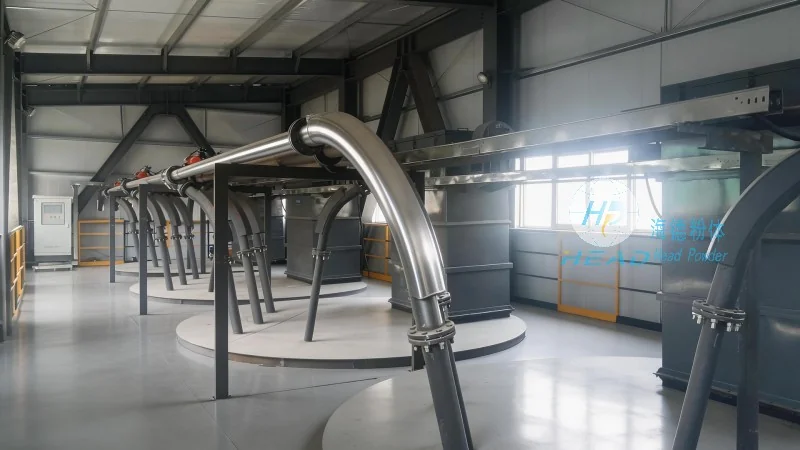
Control systems, including pressure sensors, flow meters, and valves, are essential for monitoring and regulating the transport process. These components help maintain consistent air pressure and flow rates, ensuring the system operates within its design parameters. Automated control systems can also enhance safety by detecting overpressure or underflow conditions and triggering appropriate responses. The integration of these control elements with the overall system design is crucial for reliable operation and minimal downtime.
Design Calculations for Air-Driven Transport Systems
Accurate design calculations are fundamental to the successful implementation of an air-driven transport system for foundry dust. These calculations involve determining the necessary air velocity, pressure drop, and system capacity to meet the operational requirements. The first step is to estimate the dust flow rate, which is based on the production rate and the material's bulk density. The flow rate is then used to calculate the required air volume and pressure to maintain the dust in suspension.
Using the dust's particle size distribution, the minimum air velocity for suspension can be determined. For example, fine particles (less than 10 microns) typically require higher air velocities (around 25-30 m/s) compared to coarser particles (greater than 100 microns), which may only need 15-20 m/s. The pressure drop across the system components, including ducts, fittings, and the dust collector, is calculated using empirical formulas or computational fluid dynamics (CFD) simulations. These calculations help identify potential bottlenecks and optimize the system layout to minimize energy consumption and operational costs.
The selection of the blower or compressor is based on the calculated pressure and flow requirements. The power rating of the equipment is determined by the system's total pressure and flow rate, accounting for efficiency losses in the ductwork and components. Proper sizing ensures that the system operates efficiently, avoiding overloading the equipment and reducing energy costs. Additionally, the design calculations should consider the system's scalability, allowing for future expansion or changes in production capacity without requiring major modifications.
Services Offered by Shandong HeadPowder Engineering Co., Ltd.
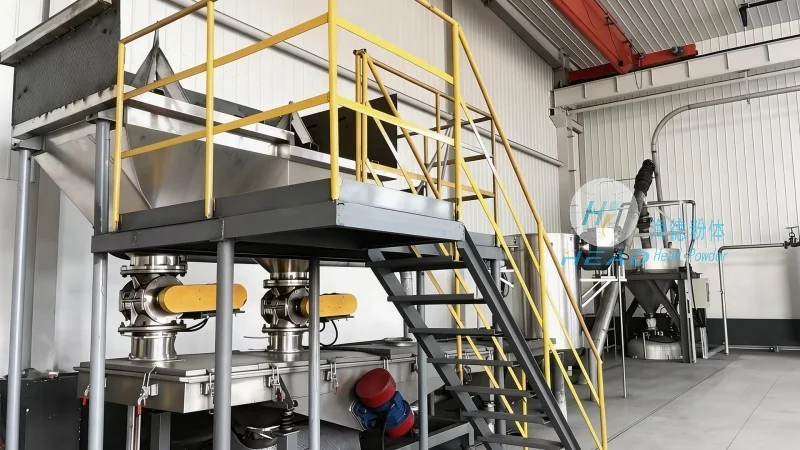
Shandong HeadPowder Engineering Co., Ltd., a leading provider of engineering solutions for material handling and dust management, specializes in designing and implementing air-driven transport systems for foundry dust. With a team of experienced engineers and a commitment to quality, the company offers comprehensive services tailored to the specific needs of foundry operations. These services include detailed design calculations, equipment selection, system installation, and commissioning.
The company's approach to project execution is systematic and client-focused. Initially, a thorough assessment of the foundry's dust characteristics, production rates, and operational requirements is conducted. This assessment helps in understanding the unique challenges and opportunities of each project. Based on the findings, a customized design is developed, incorporating the latest technologies and best practices to ensure optimal performance and reliability.
During the design phase, the company considers all relevant factors, including the dust's physical properties, the required system capacity, and the available space for installation. The design calculations are performed using industry-standard software and methodologies, ensuring accuracy and compliance with safety and environmental regulations. The equipment selection process involves evaluating various options, such as different types of blowers, dust collectors, and conveyor systems, to identify the most suitable solutions for the specific application.
After the design is finalized, the company handles the procurement and installation of the equipment. The installation process is carried out by skilled technicians who follow strict safety protocols and quality standards. Commissioning involves testing the system to verify that it meets the design specifications and operational requirements. The company provides training to the foundry's personnel on the operation and maintenance of the system, ensuring long-term reliability and minimal downtime.




