Bauxite, the primary raw material for aluminum production, requires efficient and reliable transportation from mining sites to processing facilities. Traditional methods such as belt conveyors or trucks often face challenges like material degradation, high maintenance costs, and environmental concerns. Pneumatic conveying systems offer a superior solution by utilizing air pressure to transport bulk materials like bauxite, ensuring minimal product damage, reduced operational costs, and improved safety. This article explores the design principles, key components, and practical applications of bauxite pneumatic conveying systems, with a focus on the expertise of Shandong HeadPowder Engineering Co., Ltd. (headpowder), a leading provider in the field.
Key Design Considerations for Bauxite Pneumatic Conveying
The successful design of a bauxite pneumatic conveying system involves several critical factors that must be carefully evaluated to meet the specific requirements of the project. First, the material characteristics of bauxite, including its particle size distribution, density, and moisture content, play a pivotal role in determining the most suitable conveying method. For example, fine-grained bauxite may require a higher air velocity to prevent clogging, while coarser particles can be handled with lower velocities, optimizing energy consumption. Second, the system layout and distance between the loading and discharge points are crucial. The design must account for the vertical and horizontal distances, as well as any obstacles or changes in elevation, to ensure smooth material flow without excessive pressure drops. Third, the choice of air compressor and blower type is essential. Positive displacement blowers are commonly used for high-pressure, low-volume applications, while centrifugal fans are suitable for low-pressure, high-volume operations. The selection depends on the system's capacity, pressure requirements, and the need for energy efficiency. Additionally, the material of construction for the conveying lines and equipment must be resistant to corrosion and abrasion, as bauxite can be highly abrasive. Materials like stainless steel, carbon steel with protective coatings, or specialized alloys are often employed to extend the system's lifespan and maintain product purity.
Core Components of a Bauxite Pneumatic Conveying System
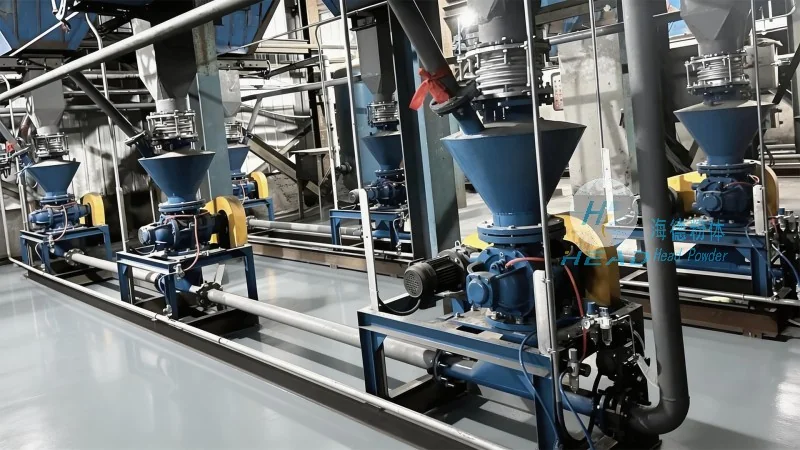
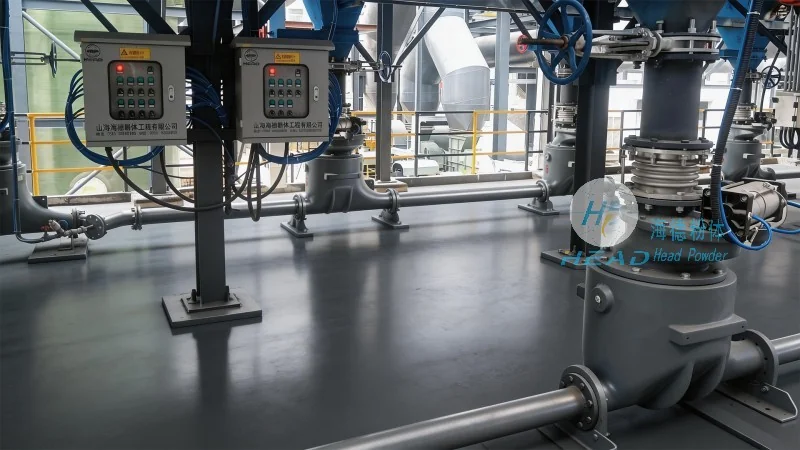
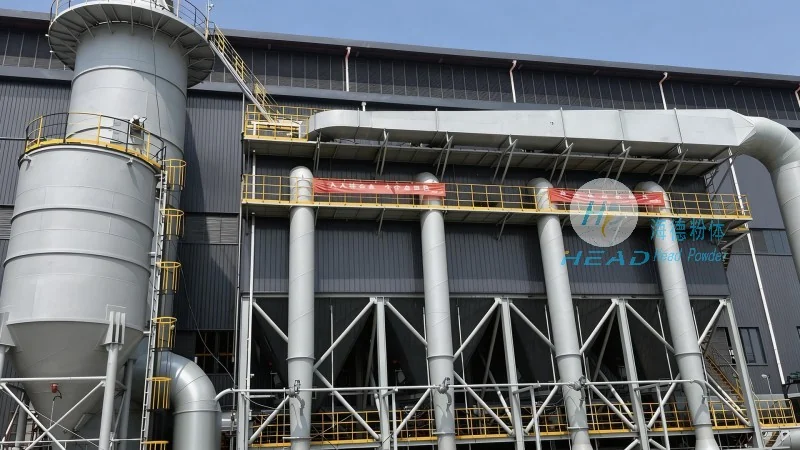
A bauxite pneumatic conveying system typically consists of several interconnected components that work in harmony to achieve efficient material transport. The primary components include the material feed hopper, which stores and feeds the bauxite into the system; the air compressor or blower, which generates the necessary air pressure to move the material; the conveying line, which transports the material and air mixture; the separation and collection equipment, such as cyclones or filters, which separate the material from the air; and the discharge hopper or silo, which stores the conveyed bauxite for further processing. The feed hopper is designed with a sloped bottom and a rotary or vibratory feeder to ensure a consistent and controlled flow of material into the conveying line. The air compressor, often a high-pressure positive displacement type, provides the required pressure to overcome the resistance in the system and maintain the material in suspension. The conveying line is usually made of stainless steel or PVC, with appropriate fittings and elbows to handle changes in direction and elevation. The separation equipment, such as a cyclone separator, uses centrifugal force to separate the bauxite particles from the air stream, collecting the material in a hopper and returning the air to the system for recirculation. This closed-loop system minimizes air loss and reduces energy consumption. The discharge hopper is equipped with a valve or gate to control the release of the conveyed bauxite, ensuring a steady supply to downstream processing equipment.




